The Click Report

Audio Brief

Listen to the latest top stories and editorial summary.

Business

Banking, Business

CBN Reforms Lift Market Capitalization of GTCO, Zenith, 10 Other Banks to N25.6tn

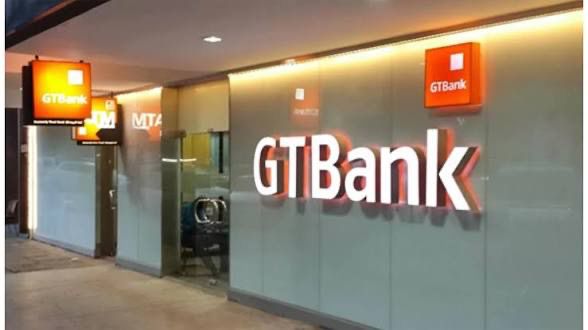
Investor confidence in Nigeria’s banking sector has continued to strengthen following the Central Bank of Nigeria’s (CBN) reform measures, driving the combined market capitalization of 12 listed deposit money banks to N25.6 trillion as of July 17, 2026. The figure represents an increase of N9.45 trillion, or 58.6 per cent, from N16.12 trillion recorded at the end of December 2025. The banking sector’s impressive performance has been underpinned by key CBN reforms, including the ongoing bank recapitalization exercise, improved foreign exchange stability, tighter monetary policy and enhanced corporate governance standards. With the Nigerian Exchange Limited (NGX) recording a total market capitalization of N157.06 trillion as of July 17, 2026, the 12 listed banks accounted for about 16.3 per cent of the market’s value. The banks include Access Holdings Plc, First Holdco Plc, Ecobank Transnational Incorporated (ETI), Guaranty Trust Holding Company (GTCO), Zenith Bank Plc, United Bank for Africa (UBA), Fidelity Bank Plc, Sterling Financial Holdings Company Plc, Wema Bank Plc, FCMB Group Plc, Stanbic IBTC Holdings Plc and Jaiz Bank Plc. GTCO retained its position as the most valuable banking stock on the NGX with a market capitalization of N4.72 trillion, up from N3.3 trillion in 2025. Zenith Bank followed closely with N4.68 trillion, compared to N2.54 trillion a year earlier, while First Holdco’s market value more than doubled to N4.36 trillion from N2.01 trillion. Stanbic IBTC Holdings and UBA also crossed the N2 trillion market capitalization mark, with valuations of N2.65 trillion and N2.01 trillion, respectively. Among the N1 trillion category, ETI’s market capitalisation climbed from N994.34 billion to N1.56 trillion, while Fidelity Bank rose from N954.03 billion to N1.38 trillion. Access Holdings increased from N1.12 trillion to N1.37 trillion, while Wema Bank’s valuation surged from N818.43 billion to N1.22 trillion. The gains have also been reflected in share price performance. GTCO’s stock has appreciated by 42.45 per cent year-to-date to close at N129.20 per share, while Zenith Bank recorded an 84.47 per cent year-to-date gain. First Holdco’s share price advanced by 100.31 per cent, supported by strong 2025 full-year results and first-quarter 2026 earnings. Market analysts attribute the sustained rally to the CBN’s recapitalisation policy introduced in March 2024, which required commercial banks with international licences to maintain a minimum capital base of N500 billion, while banks with national and regional licences were mandated to hold N200 billion and N50 billion, respectively. The recapitalisation drive was further supported by NGX Invest, the Exchange’s digital platform that simplified public offer and rights issue subscriptions, enabling banks to raise fresh capital more efficiently and attracting greater investor participation. Commenting on the sector’s performance, Vice President of Highcap Securities Limited, David Adonri, said the banking industry has remained one of the strongest-performing sectors on the NGX, with the recapitalization programme significantly boosting investor demand for bank stocks. According to him, banks have continued to post strong market performance, with several capital-raising exercises heavily oversubscribed. He noted that ETI, Jaiz Bank, Wema Bank, First Holdco and Stanbic IBTC Holdings have recorded some of the strongest share price gains in 2026, reflecting sustained investor confidence in the sector’s growth prospects and financial stability.

Business, Energy

Lagos Energy Reforms to Reshape Facility Management, Spur Sustainable Growth

The International Facility Management Association (IFMA), Nigeria Chapter, has announced a range of strategic initiatives aimed at boosting professional capacity, driving industry research and preparing facility managers for Nigeria’s changing energy landscape. The plans were unveiled at the IFMA Corporate Membership event, themed “Evaluating the Impact of New Energy Regulations on Facility Management, The Lagos State Example.” The association also reaffirmed its commitment to strengthening collaboration with government and private sector stakeholders to build a more resilient and future-ready facility management industry. Among the key initiatives are the establishment of an IFMA Learning and Innovation Centre, the creation of a Research and Development Platform, the launch of an industry Talent Bank, and expanded partnerships to address the country’s facility management skills gap through Technical and Vocational Education and Training (TVET). Speaking at the event, IFMA Nigeria President, Sheriff Daramola, said the association is focused on building an ecosystem that equips professionals with the knowledge, technology and practical skills needed to meet the evolving demands of the industry. According to him, the proposed Learning and Innovation Centre will serve as a hub for training, certification, innovation and corporate collaboration. He added that the Talent Bank will connect employers with verified professionals to improve recruitment and tackle industry-wide skills shortages, while the Research and Development Platform will promote practical, data-driven solutions in areas such as energy efficiency, workplace experience, asset performance, facility management technology and financing. Delivering the keynote address, Lagos State Commissioner for Energy and Mineral Resources, Biodun Ogunleye, said the state’s ongoing electricity sector reforms present significant opportunities for facility managers to play a more strategic role in developing sustainable, efficient and resilient infrastructure. He noted that the Lagos State Electricity Law, alongside the establishment of key institutions including the Lagos State Electricity Regulatory Commission (LASERC), the Lagos Independent System Operator (LAISO) and the Lagos State Electrification Agency (LSEA), has created the foundation for a competitive electricity market that promotes investment, innovation and a more reliable power supply.

Business, Energy, Politics

NUPRC Rebuilds Investor Confidence in Nigeria’s Oil Industry

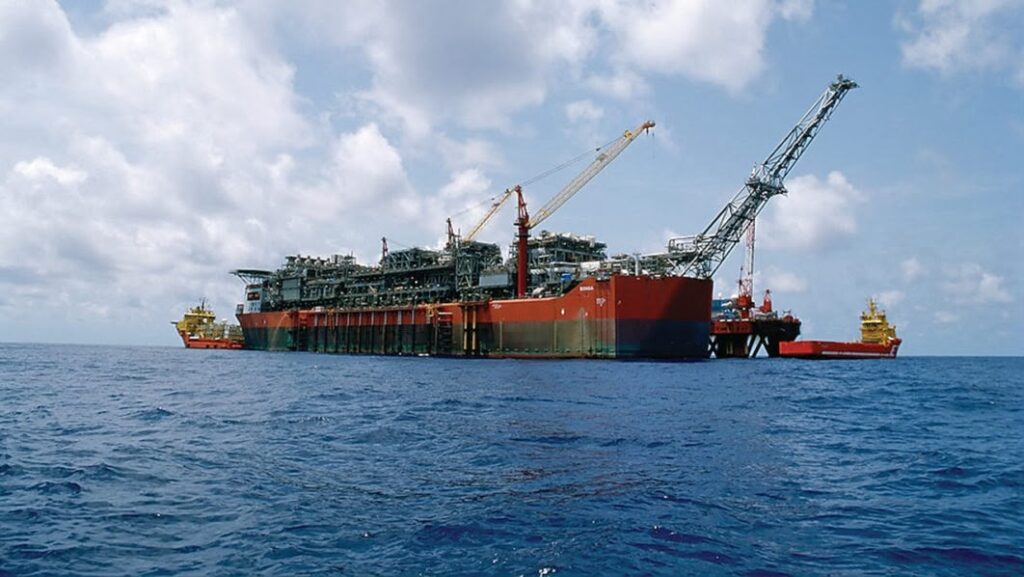
Six months into her tenure as Chief Executive of the Nigerian Upstream Petroleum Regulatory Commission (NUPRC), Mrs. Oritsemeyiwa Eyesan is driving reforms aimed at strengthening regulatory certainty, improving operational efficiency, accelerating decision-making, and enhancing transparency. The early results are becoming increasingly visible, with higher oil production, renewed investor confidence, and stronger interest in Nigeria’s licensing regime. The 2025 licensing round recorded encouraging participation, attracting not only indigenous oil companies but also major international oil companies (IOCs) and, for the first time, significant interest from international independent operators. The development is seen as a sign of growing confidence in Nigeria’s upstream sector. Speaking on the outcome, Eyesan said the level of participation reflects renewed faith in the industry. “The level of participation tells me people have faith in the industry. Not just Nigerian companies, but IOCs and international independents. That is a signal. The question now is whether we build on it, and that depends entirely on whether the regulatory environment continues to move in the direction we have set,” she said. Nigeria’s upstream performance has also improved significantly. In June 2026, combined crude oil and condensate production reached 1.735 million barrels per day (bpd), exceeding the Organisation of Petroleum Exporting Countries (OPEC) production quota of 1.5 million bpd by four per cent. It also marked the country’s highest crude output since April 2020. Production has risen steadily throughout the year, climbing from 1.62 million bpd in January to 1.48 million in February, 1.54 million in March, 1.66 million in April, 1.7 million in May, and 1.735 million bpd in June. According to the commission, the increase was driven by improved operational stability, completed maintenance activities, and the absence of major infrastructure disruptions. Gas production also recorded gains, reaching 7.93 billion cubic feet (bcf) per day, up from 7.88 bcf/d in May 2025. Non-associated gas production slightly exceeded associated gas for the first time, reflecting increased investment in dedicated gas projects. Domestic gas supply rose to a record 2.18 bcf per day, while gas flaring declined to 0.57 bcf/d, representing 6.9 per cent of total production, in line with Nigeria’s target of ending routine gas flaring by 2030. Eyesan said the increase in domestic gas supply demonstrates that the sector is delivering greater value to Nigerians. “This is not only a production story. It is a story about an industry beginning to serve the country, it sits inside more gas reaching Nigerian homes, Nigerian industry and Nigerian power. The numbers matter. What they represent matters more,” she said. Before joining the commission, Eyesan spent three decades at the Nigerian National Petroleum Company (NNPC), where she held several senior positions, including Executive Vice President, Upstream, and Chief Strategy and Sustainability Officer. She also led efforts that doubled NNPC subsidiary production from 150,000 to 300,000 barrels per day and played a key role in resolving the long-running Production Sharing Contract (PSC) dispute. Upon assuming office, she identified three key priorities for the commission: increasing production and revenue, improving regulatory efficiency and predictability, and promoting safe, transparent and sustainable operations. To strengthen engagement with industry players, the commission established the Chief Executive Operators Leadership Forum, bringing together the NNPC, Oil Producers Trade Section (OPTS), Independent Petroleum Producers Group (IPPG) and other stakeholders every month to address production challenges, approval timelines and infrastructure integrity. The commission has also accelerated the digitisation of its operations, covering correspondence, permits, reporting systems and financial processes, while introducing a 90-day programme to fast-track field development plans, well interventions and rig mobilisation. In March, NUPRC signed the PEL5 agreement with SeaSeis Geophysical Limited and TGS to conduct broadband 3D seismic acquisition across 11,700 square kilometres offshore the Eastern Niger Delta. The project is expected to improve exploration decisions by providing higher-quality geological data. According to Eyesan, improved data quality is essential to attracting new investment. “Exploration is fundamentally driven by confidence in data and processes. PEL5 is about ensuring that the subsurface case for Nigeria’s offshore acreage is made as compellingly as it can be and that investors have the data quality they need to make decisions with confidence,” she said. The commission is also working to reduce regulatory bottlenecks by collaborating with the Nigerian Nuclear Regulatory Authority to create a single-window reporting system, eliminating duplicate compliance requirements for operators. “When you have multiple laws, you will likely have higher costs because each law comes with its own fees and charges. The only way to safeguard investments is to reduce the cost of operating here,” Eyesan noted. The National Bureau of Statistics (NBS) recently commended the commission for improving transparency in oil and gas data, with Statistician-General Adeyemi Adeniran highlighting the importance of NUPRC’s data in compiling Nigeria’s Gross Domestic Product (GDP). Looking ahead, the commission remains focused on achieving the Federal Government’s target of producing two million barrels per day by 2027 and three million barrels daily by 2030. Eyesan described the goal as an engineering and investment challenge that requires international expertise alongside local capacity. “We are rushing against time. If we are serious about ramping up production, we cannot rely solely on in-country resources. We need to bring in people who have done this at scale internationally and be honest about whether our processes are designed to attract them,” she said. The commission plans to expand international independent participation in future licensing rounds, particularly for deepwater projects that require significant technical expertise and investment. As part of its climate commitments, NUPRC has directed upstream operators to adopt measurement-based methane and greenhouse gas reporting by January 2027, replacing estimation-based reporting with verified emissions data in line with Nigeria’s net-zero target by 2060 and methane reduction goals. The commission is also finalising service-level agreements that will establish publicly available timelines for regulatory approvals, strengthening accountability and investor confidence. Eyesan believes developing skilled manpower remains critical to sustaining long-term growth in the industry. She noted that investment declines following the Petroleum Industry Act slowed talent development across the sector, stressing that rebuilding technical capacity will be essential to achieving

Business, Economy

The Rise of Dollar Denominated Petrol

The federal government’s naira-for-crude policy appears to be facing a major setback following Dangote Petroleum Refinery’s decision to begin selling petroleum products in US dollars, a move that could have far-reaching implications for fuel prices, inflation, transport costs and the value of the naira. Rather than being viewed as a routine commercial decision, the refinery’s move is widely seen as a sign of the government’s inability to sustain the much-publicised naira-for-crude initiative. It also highlights the continued vulnerability of Nigeria’s domestic fuel market to fluctuations in the foreign exchange market, despite the country’s growing refining capacity. Effective July 13, 2026, Dangote Refinery fixed the ex-depot price of Premium Motor Spirit (PMS) at $0.779 per litre, diesel at $1.087 per litre, and aviation fuel at $0.942 per litre. The company also cancelled all previously issued invoices denominated in naira. The decision followed the refinery’s increasing reliance on crude oil purchased in dollars after supplies under the federal government’s naira-for-crude arrangement reportedly became insufficient. Dangote Refinery, a $20 billion investment and the world’s largest single-train refinery, has a refining capacity of 650,000 barrels per day, enough to meet Nigeria’s domestic fuel demand while exporting surplus refined products across Africa. However, industry reports indicate that the refinery received only seven domestic crude cargoes in May, far below its monthly requirement of between 13 and 15 cargoes. The shortfall forced the company to import a significant portion of its crude feedstock in dollars, exposing it to exchange-rate risks. At the current official exchange rate of about N1,380 to one US dollar, the refinery’s new PMS price translates to approximately N1,075 per litre before transportation costs, depot margins, regulatory charges and marketers’ profits are added. Although the immediate impact on pump prices may appear limited, analysts say the bigger concern is that petrol prices are now directly linked to movements in the foreign exchange market. For instance, if the exchange rate weakens to N1,500/$, the base cost of petrol would rise to about N1,169 per litre before additional charges. At N1,600/$, the cost would increase further to roughly N1,246 per litre. This means Nigerians could face higher fuel prices even if global crude oil prices and refining costs remain unchanged, simply because of a weaker naira. Ironically, this is the exact scenario the naira-for-crude initiative was designed to prevent. Introduced in 2024, the policy aimed to supply domestic refiners with crude oil in naira in order to reduce demand for foreign exchange, strengthen local refining, conserve foreign reserves and stabilise domestic fuel prices. Industry observers now argue that inconsistent implementation has significantly weakened those objectives. Professor Emeritus of Petroleum Economics, Wumi Iledare, said Dangote Refinery had simply announced the price at which it was willing to sell its products in a deregulated market. According to him, aligning revenues with the same currency used to purchase crude oil is a commercially sound response to foreign exchange exposure rather than an attempt to fix prices. While acknowledging the economic logic behind the decision, Iledare noted that Nigeria’s downstream petroleum market is still far from fully competitive. With state-owned refineries yet to operate at optimal capacity and imported fuel remaining expensive, Dangote Refinery has emerged as the country’s dominant supplier. As a result, a pricing decision by a single refinery can quickly have nationwide economic consequences. Industry stakeholders have also expressed concern over the development. The Petroleum Products Retail Outlets Owners Association of Nigeria (PETROAN) warned that conducting fuel transactions in dollars could encourage the gradual dollarisation of the Nigerian economy. Similarly, the Independent Petroleum Marketers Association of Nigeria (IPMAN) cautioned that marketers would now have to compete for scarce foreign exchange, increasing pressure on the naira and exposing fuel prices to greater volatility. Reports also indicate that some depot operators have already increased loading prices by as much as N113 per litre in anticipation of higher replacement costs. The implications could extend beyond the petroleum sector. According to the National Bureau of Statistics (NBS), Nigeria’s headline inflation stood at 15.93 per cent in May 2026, while food inflation was 16.96 per cent. Fuel remains one of the country’s biggest inflation drivers because road transport accounts for the movement of most goods and passengers across the country. In addition, thousands of manufacturers, hospitals, schools and small businesses continue to rely on petrol and diesel-powered generators due to unreliable electricity supply. Consequently, any sustained increase in fuel prices is expected to push up transportation costs, food prices, production expenses and the overall cost of living. The latest development has also exposed what many analysts describe as a contradiction in the government’s energy reform agenda. The federal government promoted the naira-for-crude policy as a key strategy for reducing pressure on foreign exchange, strengthening energy security and stabilising domestic fuel prices. However, it failed to ensure the consistent supply of crude oil to local refiners in naira, a condition widely regarded as essential to the policy’s success. Once refiners were forced to source more crude in dollars, Dangote Refinery’s decision to switch to dollar-denominated sales became a commercial necessity rather than a voluntary choice. Ultimately, the refinery has acted in line with standard business practice by matching its revenue with the currency in which most of its costs are incurred. Analysts argue that the larger issue lies not with the refinery’s decision but with the policy inconsistencies that made it unavoidable. Unless the federal government urgently restores a transparent and reliable framework for supplying crude oil to domestic refiners in naira, experts warn that local refining alone may not guarantee lower fuel prices. Instead, the cost of petrol at filling stations could increasingly depend less on refining activities in Lekki and more on fluctuations in the value of the naira against the US dollar.

Banking

Access Bank Secures 16 Euromoney Honours for Innovation, Strategy

Lagos, Nigeria – July 17, 2026: Access Bank Plc has earned 16 honours at the prestigious Euromoney Awards for Excellence 2026, marking one of the strongest performances by any African financial institution this year and reinforcing its position as a leading global banking brand. The awards recognize the bank’s achievements across customer experience, sustainable finance, SME banking, digital banking, corporate responsibility and market leadership in several African markets. The recognition highlights Access Bank’s commitment to innovation, sustainability, customer focused solutions and responsible growth. For more than 30 years, the Euromoney Awards for Excellence have been regarded as one of the banking industry’s highest honours, recognising institutions for leadership, innovation, governance, customer service, financial performance and long-term value creation. Access Bank received awards for corporate responsibility in Angola, Botswana and Nigeria; digital banking in Cameroon; customer experience in the Democratic Republic of Congo and Kenya (National Bank of Kenya); SME banking in Ghana, Nigeria and Zambia; sustainable finance and ESG leadership in Rwanda and Zambia; and Best Bank awards in The Gambia, Sierra Leone and Zambia. The recognition reflects the bank’s continued investment in digital transformation, customer experience, financial inclusion, sustainability, SME development and operational resilience. It also underscores the strength of its governance framework and strategic execution as it expands across Africa while strengthening international trade and investment corridors. Access Bank said the awards validate its long-term strategy of connecting Africa to the world by supporting SMEs, promoting financial inclusion, empowering women-led businesses, encouraging youth entrepreneurship and expanding access to digital financial services. Commenting on the achievement, Managing Director/Chief Executive Officer of Access Bank Plc, Roosevelt Ogbonna, said the awards reflect the confidence customers have in the bank and the commitment of its employees. “These awards are a tribute to the trust our customers place in us, the dedication of our employees and the strength of the communities and markets we serve. They affirm that our commitment to innovation, customer excellence, sustainability and responsible growth continues to deliver meaningful impact at scale,” he said. Ogbonna added that the recognition demonstrates that African financial institutions can compete successfully on the global stage while creating lasting value for customers, investors and communities. According to the bank, the recognition will translate into improved digital services, enhanced security, greater international connectivity and stronger customer confidence, while reinforcing its credibility among investors, correspondent banks, regulators and development finance institutions.