The Click Report

Audio Brief

Listen to the latest top stories and editorial summary.

Business

Business

AMCON Seeks Buyers as NTEL Goes Up for Sale

The Asset Management Corporation of Nigeria (AMCON) has begun the process of divesting its interest in telecommunications company NTEL/NATCOM, describing the firm as one of its most successful asset recovery stories following a major operational turnaround. AMCON’s Managing Director and Chief Executive Officer, Gbenga Alade, announced the development during an interactive session with senior media executives in Lagos. He also revealed that the Corporation recovered about N165 billion in the first half of 2026, representing a 64 per cent increase from the N107 billion recovered during the same period in 2025. According to Alade, the planned sale of NTEL follows the successful divestment of the Ibadan Electricity Distribution Company (IBEDC) and forms part of AMCON’s broader strategy to unlock value from distressed assets while attracting credible investors into key sectors of the economy. He explained that the divestment process is being conducted through a transparent and structured framework aimed at securing strategic investors capable of driving the company’s long-term growth. Alade noted that NTEL, which succeeded the defunct Nigerian Telecommunications Limited (NITEL), has undergone a comprehensive transformation programme designed to improve its competitiveness, strengthen operations and enhance its appeal to investors. He described the restructuring as a significant milestone in the revival of Nigeria’s legacy telecommunications assets and expressed confidence that the company’s board and management have laid a solid foundation for its next phase of development. According to him, the transformation has positioned NTEL to compete more effectively in both the domestic and international telecommunications market. Alade assured stakeholders that AMCON would continue to provide updates as the divestment progresses, stressing the Corporation’s commitment to transparency throughout the process. He added that the planned sale aligns with AMCON’s statutory mandate of maximising value from distressed assets, supporting economic growth and strengthening confidence in Nigeria’s financial system. Beyond the proposed divestment, Alade highlighted the Corporation’s improved financial performance, disclosing that recoveries reached approximately N165 billion between January and June 2026, while maintaining a cost-to-recovery ratio of 2.3 per cent, which he said reflects improved operational efficiency. The AMCON chief also welcomed a recent Supreme Court judgment that strengthens the Corporation’s debt recovery powers. He said the apex court affirmed that the AMCON Act constitutes a special legal framework established to address the banking sector crisis that followed the 2008 financial meltdown. According to Alade, the court further ruled that AMCON is exempt from paying stamp duties and confirmed the Corporation’s legal authority to dispose of collateral assets in recovering outstanding debts, regardless of the amount owed by a debtor. While describing the ruling as a significant legal victory, he said the Corporation remains vigilant against attempts by debtors to frustrate its recovery efforts through prolonged legal challenges. Responding to calls for AMCON to be wound down, Alade alleged that many of those advocating its closure are debtors seeking to avoid repayment. He maintained that any decision regarding the Corporation’s future rests solely with its Board and the Central Bank of Nigeria (CBN). He also disclosed that AMCON has strengthened collaboration with debt recovery agents, solicitors and receiver managers by increasing engagement, providing legal guidance on the AMCON Act and reviewing commission structures to improve recovery performance. According to Alade, these measures are expected to enhance the effectiveness of the Corporation’s debt recovery operations and sustain its recent progress.

Energy, Governance

Ibom Power MD: N28bn Federal Government Debt Shut Down Nigeria’s Only State-Owned 191MW Plant

Nigeria’s only wholly state-owned power plant, Ibom Power Plc, has blamed a N28 billion debt owed by the Federal Government for the prolonged shutdown of its 191-megawatt facility in Akwa Ibom State. Speaking in an interview with Platforms Africa, the Managing Director of Ibom Power, Camillus Umoh, revealed that the plant generated electricity for fewer than 30 days out of the last 360 days in 2025 due to a lack of gas supply. According to Umoh, the crisis began after Acugas, the plant’s gas supplier, suspended deliveries over years of unpaid invoices and adopted a “pay-before-supply” policy to avoid accumulating further debts. He explained that even during the few days the plant was operational, it often generated only 30 to 40 percent of its installed capacity because of limited gas availability. Umoh said the debt owed to Ibom Power is part of the estimated N4 trillion legacy debt affecting Nigeria’s Electricity Supply Industry (NESI), where power generation companies are not fully paid for electricity supplied to the national grid. He disclosed that the Federal Government has paid N12.3 billion of the N28 billion owed to the company, leaving an outstanding balance of N15.7 billion. However, he noted that the repayment arrangement includes both cash and bonds, with the bonds redeemable only at a discount. He also pointed out that the debts are being settled without interest or compensation for years of depreciation. The prolonged liquidity challenges have also prevented the company from carrying out critical maintenance on its General Electric turbines, increasing operational risks. Beyond the gas shortage, Umoh highlighted transmission constraints as another major obstacle. He said the 51-year-old Aba–Itu transmission line can evacuate only about 60MW, while the Calabar–Itu transmission line has remained out of service for four years following repeated vandalism. Despite these setbacks, Umoh said the plant is capable of generating between 82MW and 83MW whenever gas is available more than Akwa Ibom State’s current electricity demand of between 65MW and 71MW. He added that the facility was originally designed to export electricity to other states and eventually expand its capacity to 685MW under a second phase. He stressed that while the technical challenges are manageable, resolving the sector’s liquidity crisis and ensuring reliable payment for electricity generated remain essential to restoring stable operations and preventing similar disruptions across Nigeria’s power sector.

Business, Energy

Sahara Group Urges Financing Model That Reflects Africa’s Energy Transition Realities

Sahara Group has called for a fresh approach to Africa’s energy transition, infrastructure financing and energy journalism, urging stakeholders to adopt strategies that reflect the continent’s unique realities. The company made the call on Wednesday during the third edition of its thought leadership forum, Asharami Square, themed “Energising Africa’s Future: Legacy, Impact and Transformation.” Speaking at the event, Sahara Group’s Director of Governance and Sustainability, Ejiro Gray, said the company’s “Beyond XXX” vision is focused on shaping the future rather than celebrating past achievements. Gray stressed that Africa’s energy transition should be driven by local realities and supported by balanced, evidence-based journalism capable of examining the complexities of energy development and sustainability. “Effective journalism should not only tell us what happened; it should help us understand why it matters, whose interests are affected and what perspectives are missing from the conversation,” she said. Delivering the keynote address, the Special Adviser to the President on Power Infrastructure, Sadiq Wanka, said reforms in Nigeria’s electricity sector are creating new opportunities for investment. According to him, the major challenge facing the sector is no longer technology but mobilising capital, developing bankable projects and creating an environment that attracts long-term investment. “The issue is no longer technology. The real challenge is mobilising capital at scale, structuring bankable opportunities and creating an ecosystem that attracts long-term financing,” Wanka said. He noted that ongoing reforms are opening investment opportunities in embedded generation, mini-grids, renewable energy, transmission infrastructure and industrial power solutions, while encouraging journalists to report more extensively on policy implementation and investment opportunities. A panel discussion featuring Professor Abigail Ogwezzy-Ndisika of the University of Lagos, Chief Executive Officer of the Lagos State Electricity Regulatory Commission, Temitope George, Managing Director of Investment Banking at Chapel Hill Denham, Kemi Awodein, and moderated by Argus Media Associate Editor for Africa, Adebiyi Olusolape, examined financing options for Africa’s energy future. The panelists agreed that although Africa has significant domestic capital, attracting greater investment will require stronger governance, improved investor confidence and better project preparation. Speaking on the role of the media, Professor Ogwezzy-Ndisika called for more investigative and solutions-driven reporting on the energy sector. “Energy reporting must go beyond headline events and announcements. Journalists need to ask deeper questions, examine the evidence and connect policy decisions to their impact on communities and everyday lives,” she said. George highlighted the importance of ensuring projects are investment-ready, while Awodein said governance, transparency and clear value creation remain essential for attracting long-term capital. The event also featured the unveiling of the Asharami Square Energy Reporting Fellowship Judging Panel, an initiative aimed at strengthening energy journalism across Africa. Sahara Group’s Head of Corporate Communications, Bethel Obioma, said the fellowship is designed to equip journalists with a deeper understanding of the technical, commercial, environmental and policy issues shaping the energy sector. He added that the initiative aligns with the company’s “Beyond XXX” vision of investing in people and platforms that will contribute to Africa’s energy future, with Professor Ogwezzy-Ndisika serving as the programme’s lead assessor.

Business, Energy

31 Firms Awarded Licenses for 37 Oil Blocks

Thirty-one companies have emerged as successful bidders for 37 oil and gas blocks in Nigeria’s 2025 Licensing Round following the conclusion of the commercial bid conference held in Abuja. The exercise, organised by the Nigerian Upstream Petroleum Regulatory Commission (NUPRC) at the Transcorp Event Centre, attracted 143 companies, which submitted nearly 200 bids for 37 of the 50 oil and gas blocks on offer. The awarded assets span the Niger Delta’s onshore, shallow water and deep offshore regions, as well as the Benin, Anambra and Chad basins, and the Benue Trough. Thirteen of the 50 blocks offered did not receive any bids. According to the commission, the 2025 licensing round marked the first time Nigeria’s frontier basins including the Benue Trough, Chad Basin, Anambra Basin and Benin Basin recorded significant investor participation. The successful companies are SSonic Petroleum Limited, CFP Pipeline and Flowlines, Dutchford E&P Limited, Attabanson Global Company Limited, Rosem Energy Limited, Pivot-GIS Limited, Network E&P, Asharami, LexOil, BVOF, Gupsco Energy Limited, Saratoga, Volante, Concept-Reel Petroleum Services Limited, Clinton Oil Field, Nuway Oaklane Limited, Ramec, Italia, Blueridge E&P, Up Energies Limited, AYM Shafa, Blackrock Holdings Limited, Funtay Integrated Business Limited, Riparian Development and Production Limited, Nikstallis, Stardeep Petroleum, Dakoda & U Limited, Southborne Oil and Gas Limited, Lanaka Petroleum, Highban Resources Limited and Eyre Energy Limited. NUPRC stated that the successful bidders would receive their final awards only after paying the required signature bonuses and obtaining the approval of the Minister of Petroleum Resources, in line with the Petroleum Industry Act (PIA) 2021. Speaking after the bidding process, NUPRC Chief Executive Oritsemeyiwa Eyesan congratulated the successful companies and urged them to make prompt payment of their signature bonuses and commence development of the awarded assets. She also warned that any awarded asset left undeveloped could be withdrawn under the commission’s “drill or drop” policy.

Business, Energy

Fuel Loading Halted at Dangote Over Dollar Sale Dispute, FG Steps In

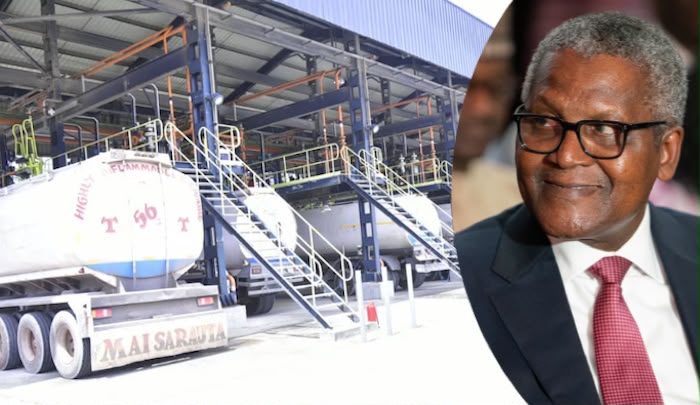
Petroleum marketers have slowed fuel purchases amid uncertainty over the Dangote Petroleum Refinery’s decision to adopt a dollar-based pricing model for petrol, raising concerns about possible disruptions in supply and higher pump prices. Industry operators said they were taking a cautious approach as they awaited clarity on the refinery’s new pricing template and the cost of imported petroleum products before committing to large-scale purchases. The National Publicity Secretary of the Independent Petroleum Marketers Association of Nigeria (IPMAN), Chinedu Ukadike, said marketers were reluctant to buy large volumes because they could not predict whether petrol prices would rise or fall after making purchases. According to him, existing fuel stocks were purchased at prices between N1,250 and N1,300 per litre, while uncertainty over new crude supplies and imported products had made it difficult for marketers to determine future pricing. In the South-West, IPMAN said the situation had forced some marketers to suspend fresh purchases, while a number of filling stations temporarily closed after exhausting their stock. The association, however, maintained that there was no fuel scarcity and urged motorists not to engage in panic buying. Despite the concerns, a spokesperson for the Dangote Group dismissed reports that the refinery had suspended fuel loading, insisting that petroleum products were still being loaded at the Lekki facility and describing claims to the contrary as “fake news.” Meanwhile, discussions between the Federal Government and the Dangote Petroleum Refinery over the new pricing model are ongoing. According to a senior government official, the dispute centres on the continued issuance of fuel import licences and the volume of crude oil supplied to the refinery in naira. The Federal Competition and Consumer Protection Commission (FCCPC) reiterated that the naira remains the only legal tender for domestic commercial transactions and expressed concern that recent declines in global crude oil prices have yet to translate into lower pump prices for Nigerian consumers.

Banking, Business

CBN’s Cardoso Says Naira Should Compete, Not Be Shielded

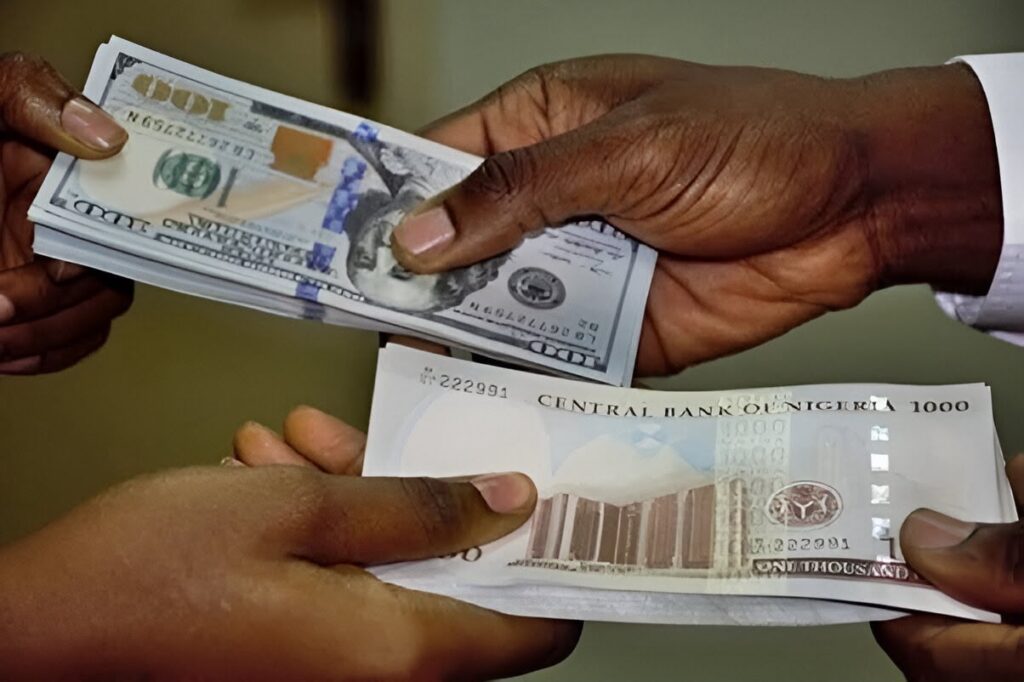
Governor of the Central Bank of Nigeria (CBN), Olayemi Cardoso, has said the naira should remain market-driven and competitive rather than being artificially supported, as the apex bank retained its benchmark interest rate and reaffirmed its commitment to reducing inflation to single digits. Cardoso made the remarks after the Monetary Policy Committee (MPC) meeting in Abuja on Tuesday, where the committee left the Monetary Policy Rate (MPR) unchanged at 26.5 per cent. His comments come weeks after the International Monetary Fund (IMF) said the naira remains undervalued despite recent gains against the United States dollar in both the official and parallel foreign exchange markets. The IMF estimated that the naira is trading about 25.6 per cent below its value based on Nigeria’s economic fundamentals, even after recent foreign exchange reforms introduced by the Federal Government. Responding to the assessment, Cardoso defended the CBN’s exchange-rate reforms, insisting that the bank remains committed to a transparent and liquid foreign exchange market where prices are determined by willing buyers and willing sellers. “Our focus is to sustain a transparent and liquid market driven by willing buyers and willing sellers. Nigeria needs a competitive currency whose value is determined by economic fundamentals such as stronger oil and non-oil exports, increased foreign direct investment, improved domestic productivity and lower import dependence,” he said. He added that the foreign exchange market has become more transparent, with daily turnover at times exceeding one billion dollars, reflecting growing confidence in the reforms introduced by the apex bank. Announcing the outcome of the MPC meeting, Cardoso said the committee retained the Monetary Policy Rate at 26.5 per cent, maintained the asymmetric corridor at +50/-450 basis points, kept the Cash Reserve Ratio (CRR) at 45 per cent for deposit money banks and 16 per cent for merchant banks, retained the 75 per cent CRR on non-Treasury Single Account public sector deposits, and left the liquidity ratio unchanged at 30 per cent. He explained that the decision followed a careful assessment of moderating domestic inflation and growing global uncertainties, particularly renewed tensions in the Middle East, which could trigger higher energy prices and increase inflationary pressures. According to Cardoso, headline inflation eased slightly to 15.91 per cent in June from 15.93 per cent in May, ending three consecutive months of increases. Core inflation also declined to 15.92 per cent from 16.82 per cent, supported largely by exchange-rate stability. However, he noted that food inflation rose to 17.52 per cent due to supply disruptions in major food-producing areas and higher transportation costs. He said the moderation in inflation suggests that the central bank’s monetary tightening measures are beginning to deliver results, despite external challenges. “We are pleased that inflation has moderated, albeit slightly. That gives us an indication that the tools we have implemented so far are beginning to produce results,” Cardoso said. He acknowledged that the conflict in the Middle East had slowed the pace of disinflation but reaffirmed the CBN’s determination to restore price stability. “We will do what is necessary to contain inflation and bring it down to single digits, which remains our target,” he added. The MPC projected that inflation would continue to ease over the medium term, supported by exchange-rate stability, the delayed effects of previous monetary tightening and improved food supply during the harvest season. It, however, warned that a prolonged escalation of the Middle East conflict remains a major risk to the outlook. Cardoso also highlighted improvements in key macroeconomic indicators, revealing that Nigeria’s gross external reserves increased to $52.52 billion as of July 17, up from $50.47 billion at the end of May, providing enough cover for about 11 months of imports. He further disclosed that the Purchasing Managers’ Index (PMI) returned to expansion territory at 50.1 in June, indicating improving business activity. The CBN governor stressed the need for stronger coordination between fiscal and monetary authorities to improve the effectiveness of policies aimed at controlling inflation, maintaining macroeconomic stability and supporting economic growth. Addressing concerns over reduced bank lending, Cardoso described the slowdown as temporary, attributing it to the withdrawal of COVID-19 regulatory forbearance, ongoing bank recapitalisation and loan portfolio restructuring. He expressed confidence that lending would recover as banks complete the transition. He also reassured Nigerians that all existing banknotes and coins remain legal tender, explaining that the reduced circulation of lower denominations is largely due to declining demand as digital payments become more widely adopted. According to him, the CBN will continue to promote financial inclusion through expanded digital payment systems and other initiatives aimed at increasing access to financial services across the country.

Banking, Economy

CBN Leaves Interest Rate Unchanged at 26.5%

The Monetary Policy Committee (MPC) of the Central Bank of Nigeria (CBN) has retained the benchmark Monetary Policy Rate (MPR) at 26.5 per cent for the second consecutive meeting. CBN Governor Olayemi Cardoso announced the decision on Tuesday at the end of the committee’s 306th meeting in Abuja. According to Cardoso, the committee resolved to maintain the MPR at 26.5 per cent. The decision comes after the MPC also held the rate at its previous meeting, following a 50-basis-point reduction announced in February 2026.

Business, Energy

Sahara Group Hosts Asharami Square 3.0 to Advance Africa’s Energy Future

Sahara Group will convene policymakers, investors, industry leaders, and energy experts for the third edition of Asharami Square, its thought leadership platform focused on advancing discussions on Africa’s energy future. According to a statement by the company, the event, themed “Energising Africa’s Future: Legacy, Impact, and Transformation,” will feature a panel comprising Professor Abigail Ogwezzy-Ndisika, Director of the Institute of Continuing Education, University of Lagos; Temitope George, Chief Executive Officer of the Lagos State Electricity Regulatory Commission (LASERC); Adebiyi Olusolape, Associate Editor, Africa, Argus Media; and Kemi Awodein, Managing Director, Investment Banking, Chapel Hill Denham. The event will explore how collaboration among governments, industry, financial institutions, academia, and the media can help unlock investment, strengthen energy infrastructure, and expand access to electricity while supporting Africa’s energy transition. A major highlight of the event will be the unveiling of the judging panel for the newly launched Asharami Square Energy Reporting Fellowship, an initiative designed to promote credible and solutions-focused journalism on Africa’s energy sector. Speaking ahead of the event, Sahara Group’s Head of Corporate Communications, Bethel Obioma, said the platform was created to encourage conversations that translate into practical outcomes. “Africa’s energy future will be shaped by the strength of our partnerships and our ability to turn dialogue into action,” Obioma said. She added that the company remains committed to investing in ideas, partnerships, and platforms that will contribute to a sustainable energy future for the continent. Also speaking, Sahara Group’s Director of Governance and Sustainability, Ejiro Gray, said Africa’s energy transition should be driven by solutions tailored to the continent’s realities. “Africa’s energy transition must be defined by solutions that reflect our unique realities,” Gray said, adding that Asharami Square helps bridge technical expertise and public understanding by promoting evidence-based discussions on energy, sustainability, and development. The programme will open with a keynote address by Sadiq Wanka, Special Adviser to the President on Power Infrastructure, who is expected to outline the Federal Government’s policy direction and infrastructure priorities for expanding energy access. A panel discussion will follow, focusing on financing gaps, regulatory reforms, data-driven decision-making, and the role of the media in improving public understanding of Africa’s energy transition. Since its launch in 2024, Asharami Square has served as a platform for dialogue on energy transition and sustainability across Africa. Sahara Group said the introduction of the Energy Reporting Fellowship is intended to support the development of journalists with specialised knowledge of the energy sector.

Banking, Business

CBN confirms Accountant-General directed opening of PFIPC accounts

The Central Bank of Nigeria (CBN) has confirmed that it opened two domiciliary accounts linked to the controversial Presidential Foreign Investment Promotion Council (PFIPC) following a directive from the Office of the Accountant-General of the Federation (OAGF), but maintained that the accounts were never funded or used. The disclosure was made on Monday by the CBN’s Director of Banking Services, Abdullahi Hamisu, while appearing before the House of Representatives Ad Hoc Committee investigating the legal basis, operations and budgetary allocation of the PFIPC, including the N1.3 billion allocated to the council in the 2026 Appropriation Act. Representing CBN Governor Olayemi Cardoso, Hamisu told the committee that the apex bank received a formal directive dated July 29, 2025, from the Office of the Accountant-General instructing it to open two domiciliary accounts for the Presidential Economic Advisory Council/Presidential Foreign Investment Promotion Council. He said one account was denominated in United States dollars while the other was in British pounds sterling, adding that both were opened after the bank completed its standard account-opening procedures. Hamisu, however, stated that the accounts remained dormant throughout their existence and were never funded or used for any financial transactions. Addressing questions from lawmakers on whether the CBN requested evidence of an enabling law establishing the council before opening the accounts, he said the bank acted on the directive from the Office of the Accountant-General. “We don’t ask for an enabling Act. We received a mandate from the Office of the Accountant-General of the Federation to open the accounts for the council,” Hamisu told the committee. The development comes amid conflicting claims by government institutions over the existence and operations of the PFIPC. On July 1, the Presidency alleged that Adeniyi Adeyemi, who claims to be the Director-General of the council, used forged documents to facilitate the opening of a CBN account after allegedly misleading the Office of the Accountant-General. In a statement issued by the Special Adviser to the President on Information and Strategy, Bayo Onanuga, the Presidency also alleged that police investigations uncovered 34 bank accounts linked to Adeyemi, including nine accounts opened in the names of entities described as fictitious agencies. However, the Office of the Accountant-General has maintained that the PFIPC has no operational account with the CBN. Its Director of Public Relations, Bawa Mokwa, said that while an application to open an account was initiated, the process was not completed because the required documentation needed to activate the account was never submitted. The controversy surrounding the PFIPC intensified in June after the Presidency distanced itself from the council, insisting that no such body exists under the administration of President Bola Tinubu despite the council receiving a budgetary allocation in the 2026 Appropriation Act, occupying an office within the Federal Secretariat and reportedly recruiting about 300 staff members. Chief of Staff to the President, Femi Gbajabiamila, also denied appointing Adeyemi as Director-General of the council. Adeyemi has continued to insist that his appointment was legitimate and has called on President Tinubu to establish an independent panel to investigate the controversy surrounding the PFIPC.

Business, Energy

FG Seeks Investors’ Backing for N729bn Power Bond to Clear Gencos’ Debt

The Federal Government is preparing to issue a second bond valued at about N729 billion under the Presidential Power Sector Debt Reduction Programme (PPSDRP) as part of efforts to settle verified legacy debts owed to electricity Generation Companies (Gencos) and improve liquidity in the Nigerian Electricity Supply Industry (NESI). Ahead of the bond issuance, the government will host an investors’ forum on Tuesday, July 21, to engage prospective investors and provide details of the transaction. The planned issuance follows the successful launch of a N501 billion bond in January 2026. Combined, the two bonds will raise approximately N1.23 trillion, completing the first phase of the N4 trillion debt reduction programme approved by President Bola Tinubu to address long-standing financial obligations in the power sector. In a statement issued in Abuja, the Nigerian Bulk Electricity Trading Plc (NBET) disclosed that the first coupon payment and principal repayment on the January bond, which matured on July 14, were settled in full and on schedule. According to NBET, the timely repayment reflects the Federal Government’s commitment to honouring its financial obligations while reinforcing investor confidence in the programme. The agency explained that the N1.23 trillion to be raised through the first two bond issuances represents Series 1 and Series 2 of the Capital Market Multi-Instrument Issuance Programme, which forms the opening phase of the broader N4 trillion initiative. NBET noted that the January bond demonstrated the government’s market-driven and fiscally responsible approach to clearing verified debts owed to Gencos, improving liquidity and supporting the long-term sustainability of the electricity market. Speaking on the planned issuance, NBET Managing Director and Chief Executive Officer, Johnson Akinnawo, described the second bond as another significant milestone in the government’s efforts to restore financial stability and investor confidence in the power sector. He said the issuance underscores the government’s commitment to resolving verified legacy obligations through a transparent, structured and market-based financing mechanism. Akinnawo added that strengthening liquidity across the electricity value chain would improve the financial health of industry participants, encourage fresh investments and support sustainable power generation. He recalled that the Federal Executive Council (FEC) approved the establishment of the N4 trillion Presidential Power Sector Debt Reduction Programme in 2025, with NBET designated as the sponsoring institution responsible for settling verified legacy debts. According to him, the programme will be implemented through multiple debt issuances by NBET Finance Company Plc, a special purpose vehicle established for the initiative. He further explained that the debt instruments are backed by the full faith and credit of the Federal Government and supported by a comprehensive risk mitigation framework to ensure successful execution. Akinnawo said the proposed N729 billion bond represents another key step towards resolving long-standing liabilities in the electricity sector and creating a more stable, bankable and investment-friendly electricity market. He maintained that improving liquidity across the power value chain would strengthen market participants, attract new investment and promote sustainable electricity generation for the benefit of Nigerians.