The Click Report

Audio Brief

Listen to the latest top stories and editorial summary.

Banking

Banking, Business

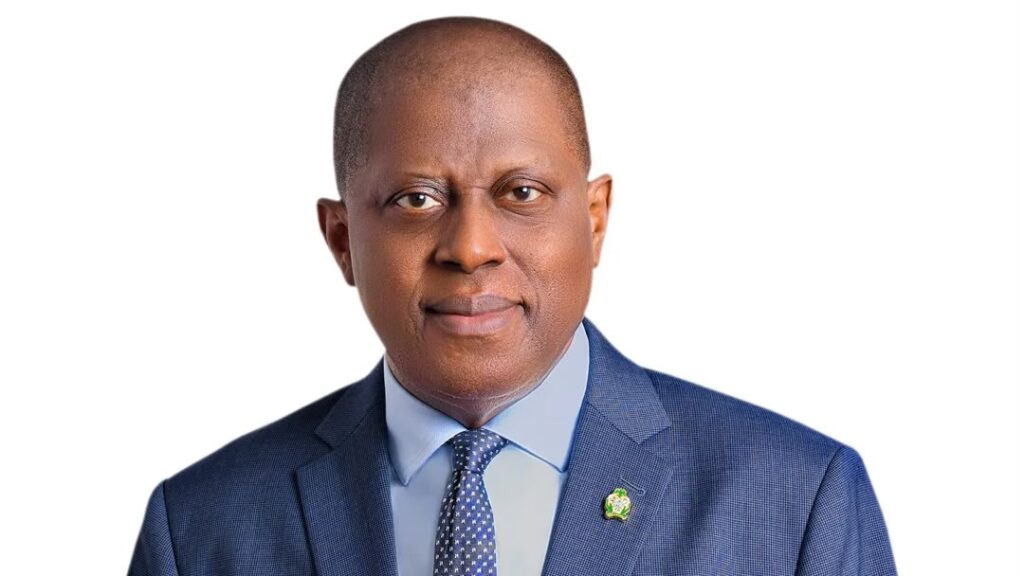
CBN’s Cardoso Says Naira Should Compete, Not Be Shielded

Governor of the Central Bank of Nigeria (CBN), Olayemi Cardoso, has said the naira should remain market-driven and competitive rather than being artificially supported, as the apex bank retained its benchmark interest rate and reaffirmed its commitment to reducing inflation to single digits. Cardoso made the remarks after the Monetary Policy Committee (MPC) meeting in Abuja on Tuesday, where the committee left the Monetary Policy Rate (MPR) unchanged at 26.5 per cent. His comments come weeks after the International Monetary Fund (IMF) said the naira remains undervalued despite recent gains against the United States dollar in both the official and parallel foreign exchange markets. The IMF estimated that the naira is trading about 25.6 per cent below its value based on Nigeria’s economic fundamentals, even after recent foreign exchange reforms introduced by the Federal Government. Responding to the assessment, Cardoso defended the CBN’s exchange-rate reforms, insisting that the bank remains committed to a transparent and liquid foreign exchange market where prices are determined by willing buyers and willing sellers. “Our focus is to sustain a transparent and liquid market driven by willing buyers and willing sellers. Nigeria needs a competitive currency whose value is determined by economic fundamentals such as stronger oil and non-oil exports, increased foreign direct investment, improved domestic productivity and lower import dependence,” he said. He added that the foreign exchange market has become more transparent, with daily turnover at times exceeding one billion dollars, reflecting growing confidence in the reforms introduced by the apex bank. Announcing the outcome of the MPC meeting, Cardoso said the committee retained the Monetary Policy Rate at 26.5 per cent, maintained the asymmetric corridor at +50/-450 basis points, kept the Cash Reserve Ratio (CRR) at 45 per cent for deposit money banks and 16 per cent for merchant banks, retained the 75 per cent CRR on non-Treasury Single Account public sector deposits, and left the liquidity ratio unchanged at 30 per cent. He explained that the decision followed a careful assessment of moderating domestic inflation and growing global uncertainties, particularly renewed tensions in the Middle East, which could trigger higher energy prices and increase inflationary pressures. According to Cardoso, headline inflation eased slightly to 15.91 per cent in June from 15.93 per cent in May, ending three consecutive months of increases. Core inflation also declined to 15.92 per cent from 16.82 per cent, supported largely by exchange-rate stability. However, he noted that food inflation rose to 17.52 per cent due to supply disruptions in major food-producing areas and higher transportation costs. He said the moderation in inflation suggests that the central bank’s monetary tightening measures are beginning to deliver results, despite external challenges. “We are pleased that inflation has moderated, albeit slightly. That gives us an indication that the tools we have implemented so far are beginning to produce results,” Cardoso said. He acknowledged that the conflict in the Middle East had slowed the pace of disinflation but reaffirmed the CBN’s determination to restore price stability. “We will do what is necessary to contain inflation and bring it down to single digits, which remains our target,” he added. The MPC projected that inflation would continue to ease over the medium term, supported by exchange-rate stability, the delayed effects of previous monetary tightening and improved food supply during the harvest season. It, however, warned that a prolonged escalation of the Middle East conflict remains a major risk to the outlook. Cardoso also highlighted improvements in key macroeconomic indicators, revealing that Nigeria’s gross external reserves increased to $52.52 billion as of July 17, up from $50.47 billion at the end of May, providing enough cover for about 11 months of imports. He further disclosed that the Purchasing Managers’ Index (PMI) returned to expansion territory at 50.1 in June, indicating improving business activity. The CBN governor stressed the need for stronger coordination between fiscal and monetary authorities to improve the effectiveness of policies aimed at controlling inflation, maintaining macroeconomic stability and supporting economic growth. Addressing concerns over reduced bank lending, Cardoso described the slowdown as temporary, attributing it to the withdrawal of COVID-19 regulatory forbearance, ongoing bank recapitalisation and loan portfolio restructuring. He expressed confidence that lending would recover as banks complete the transition. He also reassured Nigerians that all existing banknotes and coins remain legal tender, explaining that the reduced circulation of lower denominations is largely due to declining demand as digital payments become more widely adopted. According to him, the CBN will continue to promote financial inclusion through expanded digital payment systems and other initiatives aimed at increasing access to financial services across the country.

Banking, Economy

CBN Leaves Interest Rate Unchanged at 26.5%

The Monetary Policy Committee (MPC) of the Central Bank of Nigeria (CBN) has retained the benchmark Monetary Policy Rate (MPR) at 26.5 per cent for the second consecutive meeting. CBN Governor Olayemi Cardoso announced the decision on Tuesday at the end of the committee’s 306th meeting in Abuja. According to Cardoso, the committee resolved to maintain the MPR at 26.5 per cent. The decision comes after the MPC also held the rate at its previous meeting, following a 50-basis-point reduction announced in February 2026.

Banking, Business

CBN confirms Accountant-General directed opening of PFIPC accounts

The Central Bank of Nigeria (CBN) has confirmed that it opened two domiciliary accounts linked to the controversial Presidential Foreign Investment Promotion Council (PFIPC) following a directive from the Office of the Accountant-General of the Federation (OAGF), but maintained that the accounts were never funded or used. The disclosure was made on Monday by the CBN’s Director of Banking Services, Abdullahi Hamisu, while appearing before the House of Representatives Ad Hoc Committee investigating the legal basis, operations and budgetary allocation of the PFIPC, including the N1.3 billion allocated to the council in the 2026 Appropriation Act. Representing CBN Governor Olayemi Cardoso, Hamisu told the committee that the apex bank received a formal directive dated July 29, 2025, from the Office of the Accountant-General instructing it to open two domiciliary accounts for the Presidential Economic Advisory Council/Presidential Foreign Investment Promotion Council. He said one account was denominated in United States dollars while the other was in British pounds sterling, adding that both were opened after the bank completed its standard account-opening procedures. Hamisu, however, stated that the accounts remained dormant throughout their existence and were never funded or used for any financial transactions. Addressing questions from lawmakers on whether the CBN requested evidence of an enabling law establishing the council before opening the accounts, he said the bank acted on the directive from the Office of the Accountant-General. “We don’t ask for an enabling Act. We received a mandate from the Office of the Accountant-General of the Federation to open the accounts for the council,” Hamisu told the committee. The development comes amid conflicting claims by government institutions over the existence and operations of the PFIPC. On July 1, the Presidency alleged that Adeniyi Adeyemi, who claims to be the Director-General of the council, used forged documents to facilitate the opening of a CBN account after allegedly misleading the Office of the Accountant-General. In a statement issued by the Special Adviser to the President on Information and Strategy, Bayo Onanuga, the Presidency also alleged that police investigations uncovered 34 bank accounts linked to Adeyemi, including nine accounts opened in the names of entities described as fictitious agencies. However, the Office of the Accountant-General has maintained that the PFIPC has no operational account with the CBN. Its Director of Public Relations, Bawa Mokwa, said that while an application to open an account was initiated, the process was not completed because the required documentation needed to activate the account was never submitted. The controversy surrounding the PFIPC intensified in June after the Presidency distanced itself from the council, insisting that no such body exists under the administration of President Bola Tinubu despite the council receiving a budgetary allocation in the 2026 Appropriation Act, occupying an office within the Federal Secretariat and reportedly recruiting about 300 staff members. Chief of Staff to the President, Femi Gbajabiamila, also denied appointing Adeyemi as Director-General of the council. Adeyemi has continued to insist that his appointment was legitimate and has called on President Tinubu to establish an independent panel to investigate the controversy surrounding the PFIPC.

Banking, Business

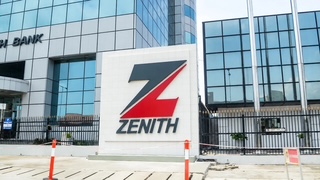
CBN Reforms Lift Market Capitalization of GTCO, Zenith, 10 Other Banks to N25.6tn

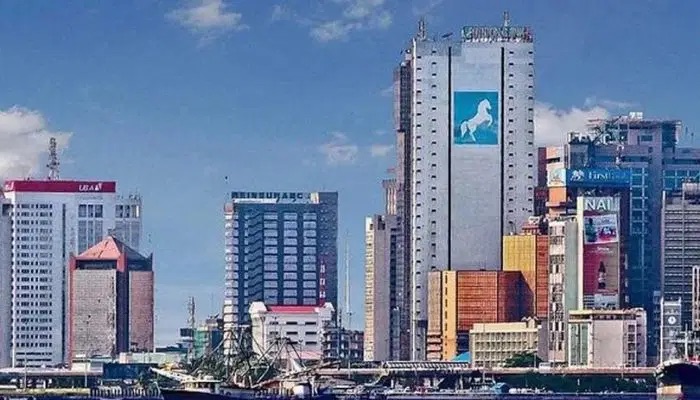
Investor confidence in Nigeria’s banking sector has continued to strengthen following the Central Bank of Nigeria’s (CBN) reform measures, driving the combined market capitalization of 12 listed deposit money banks to N25.6 trillion as of July 17, 2026. The figure represents an increase of N9.45 trillion, or 58.6 per cent, from N16.12 trillion recorded at the end of December 2025. The banking sector’s impressive performance has been underpinned by key CBN reforms, including the ongoing bank recapitalization exercise, improved foreign exchange stability, tighter monetary policy and enhanced corporate governance standards. With the Nigerian Exchange Limited (NGX) recording a total market capitalization of N157.06 trillion as of July 17, 2026, the 12 listed banks accounted for about 16.3 per cent of the market’s value. The banks include Access Holdings Plc, First Holdco Plc, Ecobank Transnational Incorporated (ETI), Guaranty Trust Holding Company (GTCO), Zenith Bank Plc, United Bank for Africa (UBA), Fidelity Bank Plc, Sterling Financial Holdings Company Plc, Wema Bank Plc, FCMB Group Plc, Stanbic IBTC Holdings Plc and Jaiz Bank Plc. GTCO retained its position as the most valuable banking stock on the NGX with a market capitalization of N4.72 trillion, up from N3.3 trillion in 2025. Zenith Bank followed closely with N4.68 trillion, compared to N2.54 trillion a year earlier, while First Holdco’s market value more than doubled to N4.36 trillion from N2.01 trillion. Stanbic IBTC Holdings and UBA also crossed the N2 trillion market capitalization mark, with valuations of N2.65 trillion and N2.01 trillion, respectively. Among the N1 trillion category, ETI’s market capitalisation climbed from N994.34 billion to N1.56 trillion, while Fidelity Bank rose from N954.03 billion to N1.38 trillion. Access Holdings increased from N1.12 trillion to N1.37 trillion, while Wema Bank’s valuation surged from N818.43 billion to N1.22 trillion. The gains have also been reflected in share price performance. GTCO’s stock has appreciated by 42.45 per cent year-to-date to close at N129.20 per share, while Zenith Bank recorded an 84.47 per cent year-to-date gain. First Holdco’s share price advanced by 100.31 per cent, supported by strong 2025 full-year results and first-quarter 2026 earnings. Market analysts attribute the sustained rally to the CBN’s recapitalisation policy introduced in March 2024, which required commercial banks with international licences to maintain a minimum capital base of N500 billion, while banks with national and regional licences were mandated to hold N200 billion and N50 billion, respectively. The recapitalisation drive was further supported by NGX Invest, the Exchange’s digital platform that simplified public offer and rights issue subscriptions, enabling banks to raise fresh capital more efficiently and attracting greater investor participation. Commenting on the sector’s performance, Vice President of Highcap Securities Limited, David Adonri, said the banking industry has remained one of the strongest-performing sectors on the NGX, with the recapitalization programme significantly boosting investor demand for bank stocks. According to him, banks have continued to post strong market performance, with several capital-raising exercises heavily oversubscribed. He noted that ETI, Jaiz Bank, Wema Bank, First Holdco and Stanbic IBTC Holdings have recorded some of the strongest share price gains in 2026, reflecting sustained investor confidence in the sector’s growth prospects and financial stability.
Banking

Access Bank Secures 16 Euromoney Honours for Innovation, Strategy

Lagos, Nigeria – July 17, 2026: Access Bank Plc has earned 16 honours at the prestigious Euromoney Awards for Excellence 2026, marking one of the strongest performances by any African financial institution this year and reinforcing its position as a leading global banking brand. The awards recognize the bank’s achievements across customer experience, sustainable finance, SME banking, digital banking, corporate responsibility and market leadership in several African markets. The recognition highlights Access Bank’s commitment to innovation, sustainability, customer focused solutions and responsible growth. For more than 30 years, the Euromoney Awards for Excellence have been regarded as one of the banking industry’s highest honours, recognising institutions for leadership, innovation, governance, customer service, financial performance and long-term value creation. Access Bank received awards for corporate responsibility in Angola, Botswana and Nigeria; digital banking in Cameroon; customer experience in the Democratic Republic of Congo and Kenya (National Bank of Kenya); SME banking in Ghana, Nigeria and Zambia; sustainable finance and ESG leadership in Rwanda and Zambia; and Best Bank awards in The Gambia, Sierra Leone and Zambia. The recognition reflects the bank’s continued investment in digital transformation, customer experience, financial inclusion, sustainability, SME development and operational resilience. It also underscores the strength of its governance framework and strategic execution as it expands across Africa while strengthening international trade and investment corridors. Access Bank said the awards validate its long-term strategy of connecting Africa to the world by supporting SMEs, promoting financial inclusion, empowering women-led businesses, encouraging youth entrepreneurship and expanding access to digital financial services. Commenting on the achievement, Managing Director/Chief Executive Officer of Access Bank Plc, Roosevelt Ogbonna, said the awards reflect the confidence customers have in the bank and the commitment of its employees. “These awards are a tribute to the trust our customers place in us, the dedication of our employees and the strength of the communities and markets we serve. They affirm that our commitment to innovation, customer excellence, sustainability and responsible growth continues to deliver meaningful impact at scale,” he said. Ogbonna added that the recognition demonstrates that African financial institutions can compete successfully on the global stage while creating lasting value for customers, investors and communities. According to the bank, the recognition will translate into improved digital services, enhanced security, greater international connectivity and stronger customer confidence, while reinforcing its credibility among investors, correspondent banks, regulators and development finance institutions.