The Click Report

Audio Brief

Listen to the latest top stories and editorial summary.

Author name: clickreportteam

Foreign Affairs

US to halt visa services in Abuja, 24 other African cities (Full list)

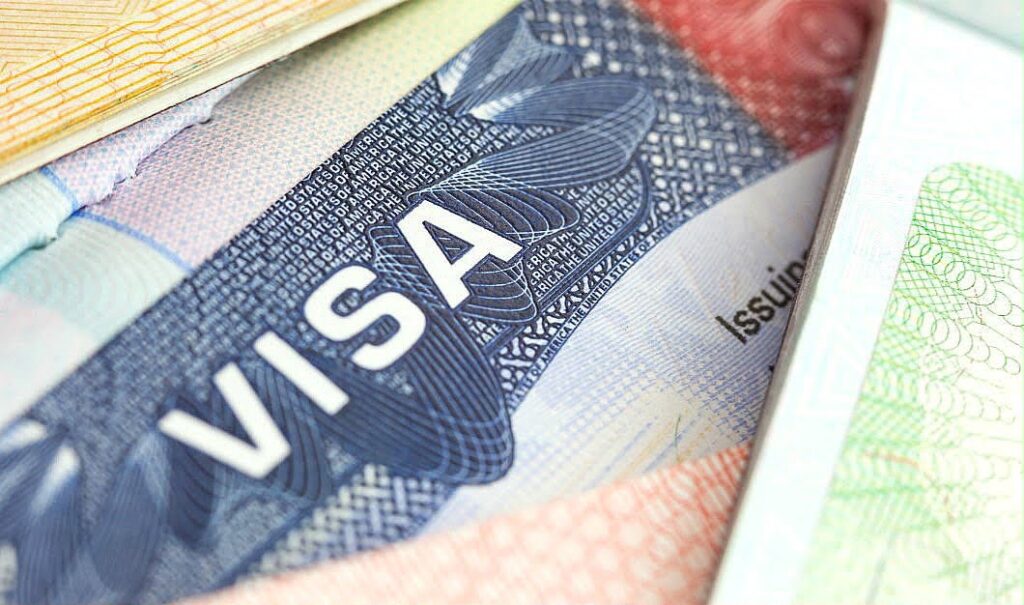
The United States has announced a major restructuring of its visa operations across Africa, ending routine visa services at its embassy in Abuja and 24 other diplomatic missions from August 1, 2026. The US Department of State said the move is part of a broader effort to strengthen national security, reduce government spending, and standardise visa screening, vetting and adjudication processes across its overseas missions. In a statement, the department said the realignment reflects the Trump administration’s commitment to prioritising the safety of Americans while ensuring US diplomatic resources are used more efficiently. “The Department of State is constantly evaluating its overseas operations in order to advance America’s priorities as efficiently and effectively as possible. This includes a visa process that maintains rigorous standards of security screening and vetting and aligns resources and operational capacity with America’s national interests,” the statement said. It added that protecting Americans remains the administration’s highest priority and assured that embassies and consulates worldwide would continue providing appropriate consular services. Besides Abuja, routine visa services will also be discontinued at US diplomatic missions in Asmara, Bamako, Banjul, Brazzaville, Bujumbura, Conakry, Cotonou, Durban, Freetown, Gaborone, Harare, Juba, Libreville, Lilongwe, Lusaka, Maputo, Maseru, Mbabane, N’Djamena, Niamey, Nouakchott, Ouagadougou and Windhoek. The State Department clarified that the operational status of the affected embassies and consulates remains unchanged and that they will continue carrying out their diplomatic and consular responsibilities. It also stressed that the policy does not affect visas that have already been issued. The realignment covers several immigrant visa categories, including immediate relative (IR), family preference (FP), employment-based (EB), fiancé(e) (K) visas, adoption cases, diversity visas and follow-to-join asylee and refugee (V92/V93) applications. According to the department, similar regional hub arrangements have already been successfully implemented in parts of Africa and Europe. Meanwhile, routine visa processing will continue at designated US embassies and consulates, including Lagos, Abidjan, Accra, Addis Ababa, Cape Town, Dakar, Dar es Salaam, Djibouti, Johannesburg, Kampala, Kigali, Kinshasa, Lomé, Luanda, Malabo, Monrovia, Nairobi, Port Louis, Praia and Yaoundé. These hub locations will handle all routine non-immigrant visas, including tourist, business and petition-based applications, as well as immigrant visa services. The State Department noted that existing visa restrictions imposed under Presidential Proclamation 10998, visa bond requirements and pauses on immigrant visas for certain nationalities remain in effect. Applicants from countries affected by the changes who intend to apply for US visas from August 1, 2026, have been advised to book appointments and pay the required visa fees at their designated visa processing hubs. The decision is expected to significantly affect Nigerian applicants, who will now need to process routine visa applications through the US Consulate in Lagos or other designated regional hubs, as Abuja will no longer offer routine visa services. Nigeria remains one of Africa’s largest sources of US visa applications, with Abuja and Lagos previously serving as the country’s two primary processing centres.

Governance

FG Breaches Borrowing Ceiling, Adds ₦12.62tn Debt

The Federal Government exceeded its 2024 borrowing target by N4.79 trillion after a larger-than-expected budget deficit forced it to seek additional financing, according to the Budget Office of the Federation. The Fourth Quarter and Consolidated Budget Implementation Report for 2024 showed that total new borrowings rose to N12.62 trillion, surpassing the approved borrowing target of N7.83 trillion by N4.79 trillion, representing an increase of 61.2 per cent. The increase followed a significant revenue shortfall that pushed the fiscal deficit to N13.51 trillion, well above the budgeted N9.18 trillion. According to the report, the Federal Government generated N20.98 trillion in revenue during the year, falling N4.90 trillion short of the projected N25.88 trillion. Meanwhile, total expenditure reached N34.49 trillion, just N561.29 billion below the approved spending estimate of N35.06 trillion, indicating that the wider deficit resulted primarily from weaker revenue rather than excessive spending. While domestic borrowing remained on target at N6.06 trillion, foreign borrowing climbed from the budgeted N1.77 trillion to N3.37 trillion, exceeding projections by N1.60 trillion. In addition, the Federal Government received N3.19 trillion in budget support, despite making no provision for it in the 2024 budget. Combined, domestic borrowing, foreign borrowing and budget support raised total new borrowings to N12.62 trillion. The report further revealed that new borrowings financed approximately 36 per cent of the 2024 budget, underlining the government’s continued reliance on debt to fund public expenditure. It also noted that expected privatisation proceeds of N298.49 billion were not realised during the fiscal year. Although total revenue increased by 68.11 per cent from N12.48 trillion in 2023 to N20.98 trillion in 2024, it still fell nearly 19 per cent below the annual target. Oil revenue remained the weakest performer, with gross earnings of N15.07 trillion, about N4.93 trillion below budget. The shortfall was attributed to lower-than-expected crude oil prices and production levels. Non-oil revenue, however, outperformed expectations. Gross non-oil revenue reached N16.09 trillion, exceeding the budget estimate by N5.29 trillion, driven by stronger collections from Company Income Tax, Value Added Tax, the Electronic Money Transfer Levy and Customs revenue. On expenditure, non-debt recurrent spending stood at N8.53 trillion, below budget, while debt servicing costs surged. Total debt expenditure rose to N12.36 trillion, exceeding the budgeted N8.27 trillion by 52.71 per cent, reflecting the growing cost of servicing Nigeria’s debt obligations. The report also showed that N5.81 trillion was released for capital projects during the year, but utilisation lagged behind. As of June 30, 2025, Ministries, Departments and Agencies had utilised N3.27 trillion, representing 81.91 per cent of the funds released and cash-backed. Nigeria’s debt burden also continued to rise. Total public debt increased to N144.67 trillion by the end of December 2024, pushing the debt-to-GDP ratio to 61.22 per cent well above Nigeria’s self-imposed threshold of 40 per cent and the international benchmark of 56 per cent for comparable economies. Despite the fiscal challenges, the Budget Office expressed confidence that ongoing reforms aimed at improving tax administration, boosting non-oil revenue, reducing leakages and strengthening remittances from government-owned enterprises would reduce the country’s dependence on borrowing over the medium term. Reacting to the report, Chief Executive Officer of CSA Advisory, Aliyu Ilias, warned that the sharp rise in borrowing could worsen inflation and increase the cost of living if not properly managed. He argued that while borrowing can support economic growth, the real concern is ensuring that borrowed funds are invested productively. Similarly, Chief Economist of the Nigerian Economic Summit Group, Dr Olusegun Omisakin, maintained that borrowing itself is not the problem but rather how the funds are utilised. He said Nigeria’s debt indicators remain manageable compared to many economies, provided borrowed funds are channelled into projects that deliver tangible economic returns. Chief Executive Officer of the Centre for the Promotion of Private Enterprise, Muda Yusuf, also urged the government to curb the growth of public debt through stronger revenue generation and greater fiscal discipline. He noted that ongoing tax reforms could help ease the country’s reliance on borrowing if effectively implemented. The issue has also sparked public debate. Former Central Bank Governor Muhammadu Sanusi II recently questioned the government’s continued borrowing despite the removal of fuel subsidy, warning that weak fiscal discipline could undermine the benefits of ongoing reforms. The Presidency defended the borrowing strategy, insisting it is intended to finance critical infrastructure, while Finance Minister Taiwo Oyedele argued that the focus should be on the purpose, cost and expected returns of borrowing rather than the size of the debt alone. He, however, acknowledged that Nigeria must ultimately build a more sustainable fiscal system that relies less on borrowing to fund development.

Entertainment

BBNaija Season 11 Kicks Off, Housemates Battle for ₦160m

The eleventh season of Big Brother Naija has officially commenced, with 24 contestants stepping into Biggie’s house to compete for the show’s record ₦160 million grand prize. The new season, themed “Show Ya Sef,” was unveiled on Sunday night by longtime host Ebuka Obi-Uchendu. The housemates introduced during the launch include Tram, Temi Nkem, Martins, Abi, Chimsom Chuka, Keivo, Mercedes, Kamsi, Sultex, Aikou, Flora, Bells, Gerard, Oyin, Sheba, Araga, Ricky, Nomy, Barry, Neche, Yusuf, Goddessa, Bluethopia and Cassi. Several contestants wasted no time outlining their goals, stressing that their focus is on winning the competition rather than pursuing romantic relationships. Twenty-four-year-old Lagos-based streamer Tram said he entered the house solely to compete for the prize, adding that romance would not distract him from his objective. Similarly, 21-year-old model Temi Nkem expressed confidence in her approach, saying she intends to play the game according to her own strategy. Martins, a visual storyteller and model from Kogi State, said he is eager to enjoy the experience while giving his best in the race for the grand prize. The reality show will run for 72 days, with the eventual winner walking away with a prize package valued at ₦160 million.

Business, Economy

Measures to combat illicit financial flows

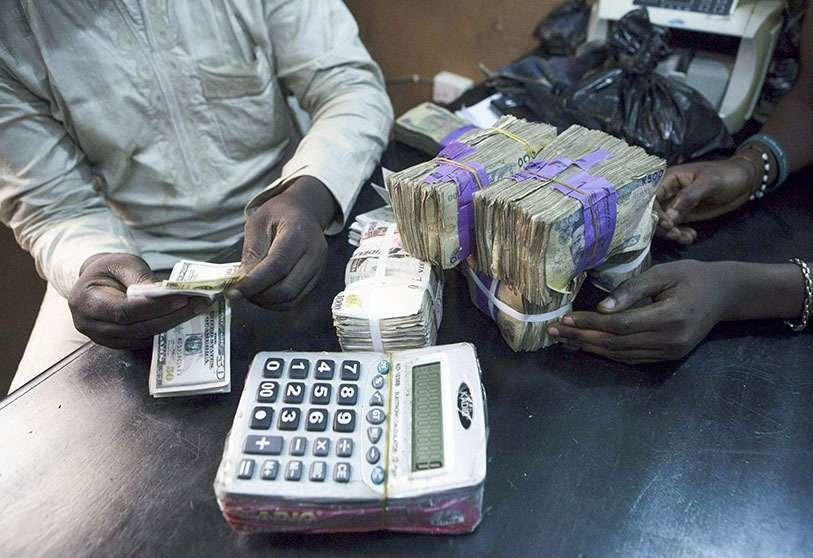
Nigeria continues to suffer significant economic losses from illicit financial flows (IFFs), with an estimated $17.8 billion leaving the country annually, according to recent findings presented at a capacity-building workshop organised by the Africa Network for Environment and Economic Justice (ANEEJ). The organisation revealed that Nigeria lost between $90 billion and $108 billion through illicit financial flows between 2020 and 2025. Data from the Federal Government, the African Union (AU), and the United Nations Economic Commission for Africa (UNECA) indicate that Africa loses about $88 billion each year to illicit financial flows, with Nigeria accounting for roughly 20 per cent of those losses. Major drivers of the illicit outflows include crude oil theft and illegal bunkering, trade mispricing through inflated import invoices and undervalued exports, tax evasion, profit shifting by multinational companies, corruption, money laundering, and illegal cross-border financial transfers. These practices deprive the country of much-needed revenue for critical sectors such as education, healthcare, and infrastructure while weakening public institutions and discouraging investment. The International Monetary Fund (IMF) has repeatedly expressed concern over the scale of illicit financial flows from Nigeria. IMF Managing Director Kristalina Georgieva urged Nigerian authorities to strengthen efforts to trace illicit funds and eliminate fiscal leakages, warning that the growing trend continues to worsen the country’s revenue challenges. Financial intelligence agencies have also identified Nigeria as a key transit point for illicit financial transactions. According to Interpol Vice President Garba Umar, hundreds of thousands of dollars are allegedly laundered out of Nigeria every hour through various illegal channels, posing a threat to national security and economic stability. Analysts say the proceeds from illicit financial flows often finance organised crime and other unlawful activities, making it essential for authorities to strengthen enforcement measures. Reports also indicate that Nigeria’s banking sector has played a significant role in facilitating illicit financial transactions over the years. Experts have therefore called on the Central Bank of Nigeria (CBN) to tighten regulatory oversight and close loopholes that enable illegal fund transfers, while urging the Economic and Financial Crimes Commission (EFCC) to intensify investigations and collaborate with international counterparts to track and recover stolen assets. In addition, experts have highlighted the role of offshore tax havens, shell companies, anonymous trusts, and other secret financial structures in facilitating illicit financial flows. Previous reports by Global Financial Integrity (GFI) and the Nigeria Extractive Industries Transparency Initiative (NEITI) have similarly raised concerns about capital flight and money laundering involving Nigerian institutions. Stakeholders say sustained enforcement, stronger financial regulations, international cooperation, and the prosecution of offenders remain critical to reducing illicit financial flows and protecting Nigeria’s economic resources.

Elections, Politics

Aigboboh Charges APC Coordinators on Edo Grassroots Mobilisatio

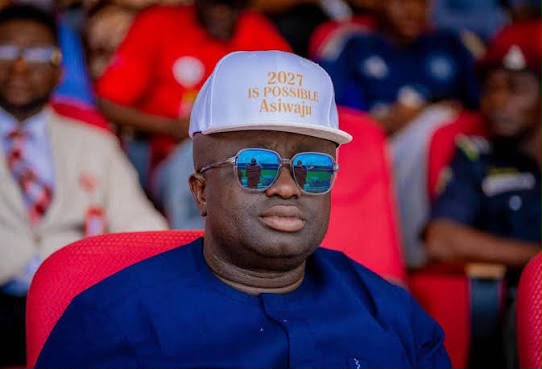
The Edo State Coordinator of the Renewed Hope Ambassadors and Deputy Chairman of the All Progressives Congress (APC) in the state, Hon. Sylvester Aigboboh, on Monday has called on Local Government Coordinators of the group to remain united, dedicated and focused in taking the Renewed Hope Agenda of President Bola Ahmed Tinubu to every community across the 192 wards of Edo State. Aigboboh, popularly known as “Party Is Supreme,” said the coordinators must intensify grassroots mobilisation to ensure that every street, community and household in the state is actively engaged in the Renewed Hope movement. He stressed that sustained engagement at the grassroots would enable more citizens to appreciate the vision of President Tinubu and the commitment of the APC-led administration to national development. “We have a responsibility to ensure that the achievements, policies and developmental programmes of President Bola Ahmed Tinubu reach every village, ward and polling unit in Edo State. “Every coordinator must remain committed to enlightening the people on the benefits of the Renewed Hope Agenda and the positive impact it is making across the country,” Aigboboh said. The APC chieftain also commended Edo State Governor, Senator Monday Okpebholo, describing him as the “Angel of Transformation” whose administration, according to him, has delivered visible development across the 18 local government areas of the state. He said the ongoing infrastructure renewal, improved governance and people-oriented policies reflect the strong partnership between the Federal Government and the Edo State Government. According to him, “The transformation taking place across Edo State is a clear demonstration of the success of the Renewed Hope Agenda and President Tinubu’s unwavering commitment to improving the lives of Nigerians through quality leadership and good governance.” He further further appealed to residents of Edo State, irrespective of age or background, to embrace the Renewed Hope movement and actively participate in the grassroots mobilisation effort, noting that the support and cooperation of citizens remain critical to sustaining the developmental gains already recorded in the state and across the country. He maintained that President Tinubu has shown courage, resilience and purposeful leadership in steering Nigeria through difficult times through reforms aimed at strengthening the economy, infrastructure, security and youth empowerment. He added that the Renewed Hope Ambassadors believe the President deserves the continued support of Nigerians and a second term in office to consolidate the achievements of his administration and complete the ongoing reforms.rewrite

Sports

2026 Commonwealth Games: Nigeria Wins Another Medal as Nyong Claims Weightlifting Silver

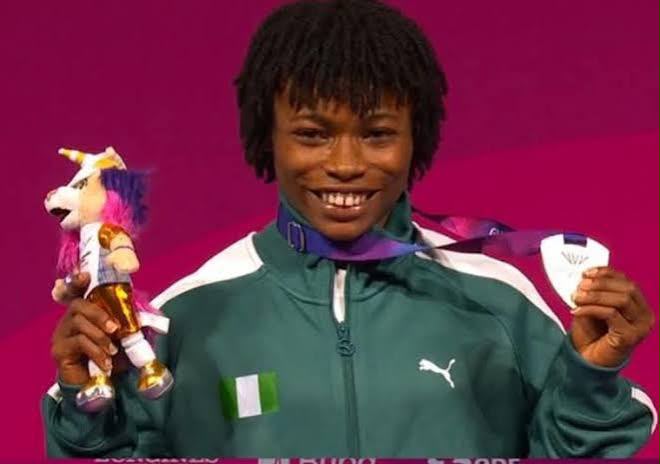
Nigeria increased its medal haul at the 2026 Commonwealth Games on Sunday as Ruth Asuquo Nyong claimed silver in the women’s 48kg weightlifting event with a combined lift of 168kg. Nyong began the competition with a 75kg snatch, placing third behind India’s Mirabai Chanu Saikhom, who lifted 85kg, and Malaysia’s Irene Jane Henry, who managed 77kg. She bounced back in the clean and jerk, lifting 93kg to finish with a total of 168kg, narrowly edging Henry by one kilogram to secure the silver medal. Saikhom won gold after setting a new Commonwealth Games record with a total lift of 190kg, while Henry claimed bronze with 167kg. Meanwhile, Nigeria’s men’s 3×3 basketball team suffered a 21-16 defeat to hosts Scotland in their fourth group-stage match. The loss leaves the team with a 1-3 record, with their only victory so far coming against Cape Verde in their opening game. With Nyong’s silver medal, Team Nigeria’s tally now stands at three gold and four silver medals as the Games continue in Glasgow, where more Nigerian athletes remain in medal contention.

Business

Glo, Samsung Strengthen Partnership with Galaxy Z Fold8 Launch

Digital solutions provider Globacom and global technology company Samsung have reinforced their long-standing partnership with the unveiling of the new Galaxy Z Fold8 Ultra and Galaxy Z Fold8 smartphones. The devices were introduced during an exclusive Masterclass held at Gloworld on Adeola Odeku Street, Victoria Island, Lagos, where both companies highlighted their continued collaboration in bringing innovative technology and exclusive benefits to Nigerian consumers. As part of the event, Samsung honoured Globacom with its Foldable Legacy Award in recognition of the telecom company’s role in supporting the growth and success of Samsung’s foldable smartphone lineup in Nigeria. Customers who purchase either the Galaxy Z Fold8 Ultra or Galaxy Z Fold8 from any Gloworld outlet nationwide will receive a range of exclusive benefits. These include 18GB of free Glo data, distributed as 3GB monthly for six months, a Glo eSIM with a Premium Number, and an additional 10GB monthly data bonus for six months. Buyers will also enjoy Samsung Care+ coverage, flexible payment options, and other benefits valued at up to ₦1 million. Speaking at the Masterclass, Samsung’s Product Manager for EIP and MNOs Business, Solomon Osibeluwo, described the relationship with Globacom as one built on years of trust and shared commitment to innovation. He thanked the telecom operator for helping make Samsung’s latest devices more accessible while creating opportunities for customers to experience the company’s newest technologies. According to Osibeluwo, the Galaxy Z Fold8 series is powered by the Snapdragon 8 Elite Gen 5 for Galaxy processor, offering faster performance, enhanced Galaxy AI features, and improved multitasking capabilities. He added that the new devices feature Samsung’s passport-inspired design, making them slimmer, lighter, and easier to carry. The smartphones also come with brighter displays equipped with Vision Booster and anti-reflective technology to improve visibility in bright outdoor conditions. Osibeluwo noted that the integrated Galaxy AI tools are designed to help users communicate more efficiently, create content effortlessly, and improve productivity in both personal and professional settings. Gloworld Director Mohamed Rabie also described the launch as another milestone in the partnership between Globacom and Samsung. He said the collaboration has consistently delivered cutting-edge devices, exclusive promotions, and quality customer experiences by combining Samsung’s AI-powered innovations with Globacom’s reliable network and customer-focused services. Rabie announced that customers can pre-order the Galaxy Z Fold8 Ultra and Galaxy Z Fold8 at all Gloworld outlets across Nigeria from July 22 to August 20. He said those who pre-order will enjoy early access to the devices along with exclusive offers from both brands worth up to ₦1 million. The event featured live demonstrations of the new foldable smartphones, allowing business partners, technology enthusiasts, and members of the media to explore the devices’ Galaxy AI features, productivity tools, and overall performance. The launch further underscored the shared commitment of Globacom and Samsung to delivering innovative technology and greater value to customers across Nigeria.

Crime

NDLEA Seizes ₦10bn Cocaine, Opioids, Loud in Lagos

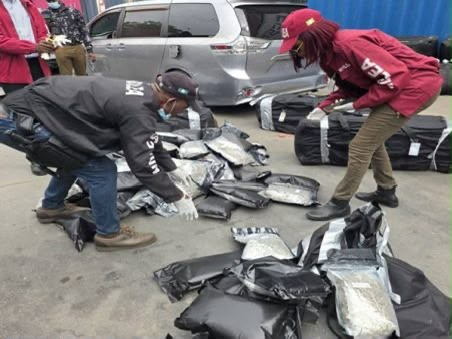
The National Drug Law Enforcement Agency (NDLEA) has arrested a 55-year-old Balogun Market trader, Onuigbo Ndubisi Chinedu, for allegedly attempting to smuggle 3.3 kilogrammes of cocaine concealed in cartons of food items destined for the United Kingdom. According to the agency, the suspect was arrested on July 23, a day after operatives intercepted the shipment at the export section of the Murtala Muhammed International Airport (MMIA), Lagos. Investigations initially led to the arrest of three cargo agents Nkwor Onyekachukwu Justina, Adeleke Abiola Taoheed and Ukanwa Grace Pilgrim who handled the consignment. Their interrogation subsequently led officers to Kenneth Okakpu, who allegedly delivered the shipment, before investigators traced the operation to Onuigbo, identified as the alleged leader of the trafficking syndicate. The NDLEA said Onuigbo was arrested while attempting to export another cocaine shipment. In a separate operation, operatives arrested 31-year-old entrepreneur Emmanuella Chukwu-Edo at her residence in Surulere, Lagos, after recovering 2.8 kilogrammes of “Loud,” a synthetic strain of cannabis, which had arrived from the United States on a United Airlines flight. At the Lagos airport, NDLEA officers also intercepted an Air Maroc cargo shipment from India containing 2.24 million Tapentadol 250mg pills valued at more than N2.2 billion during a joint cargo examination based on intelligence. The agency further intercepted a shipment of tramadol concealed inside containers of black soap and bound for the United Kingdom at a Lagos courier company. At the Apapa Seaport, operatives uncovered 4,777 sachets of Canadian Loud weighing 2,388.5 kilogrammes and valued at over N7.1 billion. The illicit drugs were hidden inside a container carrying vehicles. In Katsina State, NDLEA operatives arrested 30-year-old Mustapha Sani during a patrol in Safana Local Government Area after allegedly recovering 323 rounds of military-grade ammunition concealed on him. Similarly, another suspect, Abubakar Amadu, was arrested along the Abuja-Kaduna Expressway with 73 rounds of 7.62mm ammunition hidden inside containers of red palm oil. Both suspects have been handed over to the appropriate security agencies for further investigation. In Edo State, a raid on a warehouse in Ilushi community, Esan South-East Local Government Area, led to the seizure of 1,286 kilogrammes of cannabis and 86 kilogrammes of cannabis seeds. Two additional suspects, Ojore Onweze and George Agwumede, were also arrested in separate operations with quantities of skunk recovered from them. Beyond enforcement activities, the NDLEA said it has continued its War Against Drug Abuse (WADA) campaign through sensitisation programmes in schools, communities, workplaces and places of worship across the country. NDLEA Chairman and Chief Executive Officer, Brigadier General Mohamed Buba Marwa (retd.), commended officers involved in the operations and urged them to sustain the agency’s efforts in combating drug trafficking while strengthening drug abuse prevention initiatives.

Politics

Northeast Faces Tough Road to 2027 Amid Boko Haram, Insecurity

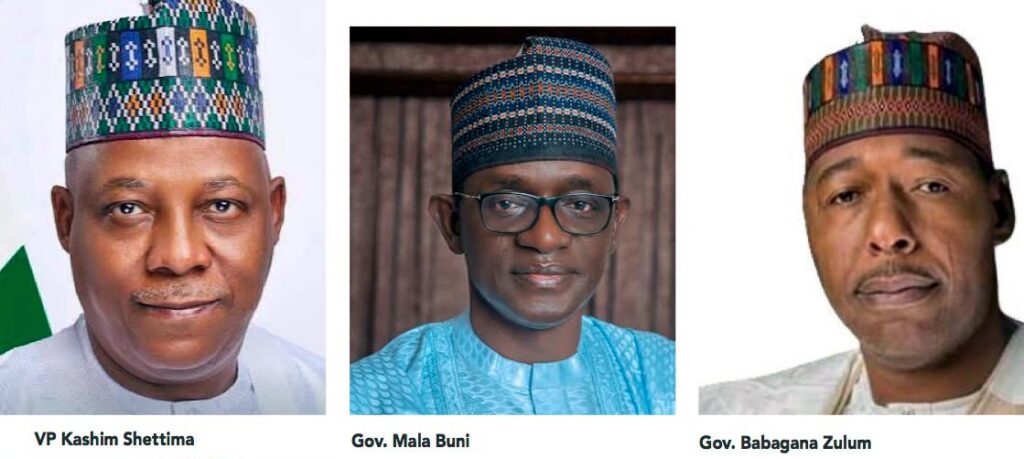
Persistent insecurity and shifting political alliances are expected to play a decisive role in the 2027 general elections across Nigeria’s North-East, with analysts warning that both security challenges and evolving party dynamics will significantly influence campaigns and voting in the region. Nearly two decades after the Boko Haram insurgency began, large parts of Borno State remain volatile, with communities in local government areas such as Guzamala, Marte, Abadam and Kala Balge continuing to face attacks from Boko Haram and the Islamic State West Africa Province (ISWAP). Renewed assaults on military bases and the continued abduction of civilians have further underscored the fragile security situation. The prolonged conflict has disrupted elections in several communities over the years, forcing many displaced residents to vote from safer locations while others remain unable to participate because of security threats. Poor access to liberated communities, often caused by landmines and improvised explosive devices, continues to complicate electoral preparations. Despite the insecurity, state governments have continued providing humanitarian assistance, including housing, healthcare, schools, water projects and relief materials for displaced persons. Political observers believe these interventions have strengthened public support for incumbent governors, particularly in states controlled by the All Progressives Congress (APC). Across the North-East, political developments have reshaped the electoral landscape ahead of 2027. The APC currently controls five of the region’s six states, while Bauchi remains the only state outside its control. The region is also expected to play a key role in the presidential election, with Vice President Kashim Shettima representing the APC and former Vice President Atiku Abubakar contesting under the African Democratic Congress (ADC). In Borno State, Governor Babagana Zulum’s preferred successor, Mustapha Gubio, emerged as the APC’s consensus governorship candidate after the party resolved earlier concerns over possible internal divisions. Analysts believe security will remain the dominant issue for voters in many parts of the state. Yobe is also expected to remain firmly under APC control, although security concerns continue to overshadow preparations for the election, particularly in vulnerable local government areas affected by recurring attacks. Adamawa has witnessed one of the region’s biggest political surprises following a contentious APC governorship primary that exposed divisions within the ruling party. The outcome has intensified competition ahead of the election, with opposition parties seeking to capitalise on the internal disagreements. In Gombe, the APC abandoned an earlier consensus arrangement after protests from party stakeholders, opting instead for direct primaries. The development has made what was initially considered a predictable contest more competitive. Taraba’s political landscape has also changed significantly following Governor Agbu Kefas’ defection from the Peoples Democratic Party (PDP) to the APC. The governor is expected to face a renewed challenge from the PDP, with the contest likely to centre on his performance in office rather than political endorsements. Bauchi is widely regarded as the most competitive state in the region after Governor Bala Mohammed left the PDP for the Allied Peoples’ Movement (APM). With the APC, PDP and other parties fielding strong candidates, analysts expect a closely fought governorship election. Analysts believe three key factors will determine the outcome of the 2027 elections across the North-East; the security situation, the influence of incumbent governors through governance and humanitarian support, and the growing wave of political defections and party realignments. While the APC enters the election cycle with significant political advantages across much of the region, observers say persistent insecurity and changing political alliances mean the outcome remains far from certain.

Elections, Politics

Osun Election: APC Picks Oyewumi for National Campaign Council

A former member of the National Youth Service Corps (NYSC) Governing Board and All Progressives Congress (APC) chieftain in Oyo State, Prince Oyekunle Oyewumi, has been appointed to the party’s National Campaign Council for the upcoming Osun State governorship election. The campaign council is chaired by the Governor of Imo State, Senator Hope Uzodimma, and comprises prominent APC leaders from across the country tasked with coordinating the party’s campaign ahead of the election. Several notable APC figures from Oyo State were also named to the council, including the Minister of Power, Chief Joseph Tegbe; Chairman of the National Revenue Service (NRS), Mr. Zacch Adedeji; former Minister of Youth Development and ex-Presidential Media Aide, Chief Sunday Dare; former Deputy Governor of Oyo State and APC state chairman, Chief Moses Adeyemo; the APC’s 2027 governorship candidate in Oyo State, Senator Sarafadeen Alli; Senator Yunus Akintunde; Mrs. Tolulope Akande-Sadipe; Hon. Wasiu Alli; and Barrister Ibrahim Lawal. Oyewumi, who previously served as Special Adviser to the Oyo State Governor on the Millennium Development Goals (MDGs) and was a member of the APC Presidential Campaign Council during the 2023 general elections, has held several leadership positions at both the national and state levels within the party. In his new role, he will serve on the Committee on Mobilisation of Special Interest (Persons with Disabilities), which is chaired by the Governor of Niger State, Umar Bago, with Aare Durotolu Bankole serving as secretary.