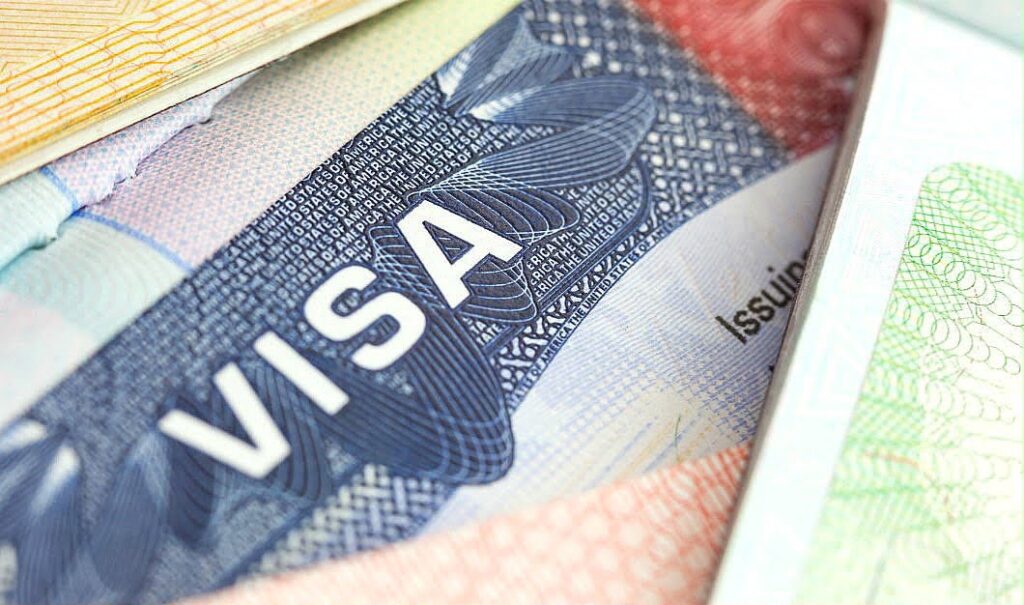
The United States has announced a major restructuring of its visa operations across Africa, ending routine visa services at its embassy in Abuja and 24 other diplomatic missions from August 1, 2026.
The US Department of State said the move is part of a broader effort to strengthen national security, reduce government spending, and standardise visa screening, vetting and adjudication processes across its overseas missions.
In a statement, the department said the realignment reflects the Trump administration’s commitment to prioritising the safety of Americans while ensuring US diplomatic resources are used more efficiently.
“The Department of State is constantly evaluating its overseas operations in order to advance America’s priorities as efficiently and effectively as possible. This includes a visa process that maintains rigorous standards of security screening and vetting and aligns resources and operational capacity with America’s national interests,” the statement said.
It added that protecting Americans remains the administration’s highest priority and assured that embassies and consulates worldwide would continue providing appropriate consular services.
Besides Abuja, routine visa services will also be discontinued at US diplomatic missions in Asmara, Bamako, Banjul, Brazzaville, Bujumbura, Conakry, Cotonou, Durban, Freetown, Gaborone, Harare, Juba, Libreville, Lilongwe, Lusaka, Maputo, Maseru, Mbabane, N’Djamena, Niamey, Nouakchott, Ouagadougou and Windhoek.
The State Department clarified that the operational status of the affected embassies and consulates remains unchanged and that they will continue carrying out their diplomatic and consular responsibilities. It also stressed that the policy does not affect visas that have already been issued.
The realignment covers several immigrant visa categories, including immediate relative (IR), family preference (FP), employment-based (EB), fiancé(e) (K) visas, adoption cases, diversity visas and follow-to-join asylee and refugee (V92/V93) applications.
According to the department, similar regional hub arrangements have already been successfully implemented in parts of Africa and Europe.
Meanwhile, routine visa processing will continue at designated US embassies and consulates, including Lagos, Abidjan, Accra, Addis Ababa, Cape Town, Dakar, Dar es Salaam, Djibouti, Johannesburg, Kampala, Kigali, Kinshasa, Lomé, Luanda, Malabo, Monrovia, Nairobi, Port Louis, Praia and Yaoundé.
These hub locations will handle all routine non-immigrant visas, including tourist, business and petition-based applications, as well as immigrant visa services.
The State Department noted that existing visa restrictions imposed under Presidential Proclamation 10998, visa bond requirements and pauses on immigrant visas for certain nationalities remain in effect.
Applicants from countries affected by the changes who intend to apply for US visas from August 1, 2026, have been advised to book appointments and pay the required visa fees at their designated visa processing hubs.
The decision is expected to significantly affect Nigerian applicants, who will now need to process routine visa applications through the US Consulate in Lagos or other designated regional hubs, as Abuja will no longer offer routine visa services. Nigeria remains one of Africa’s largest sources of US visa applications, with Abuja and Lagos previously serving as the country’s two primary processing centres.