The Click Report

Audio Brief

Listen to the latest top stories and editorial summary.

Business

Business

CIBN: Nigerians Must Feel the Impact of Economic Growth

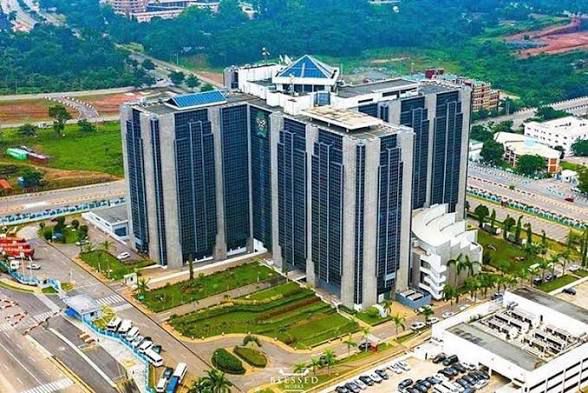
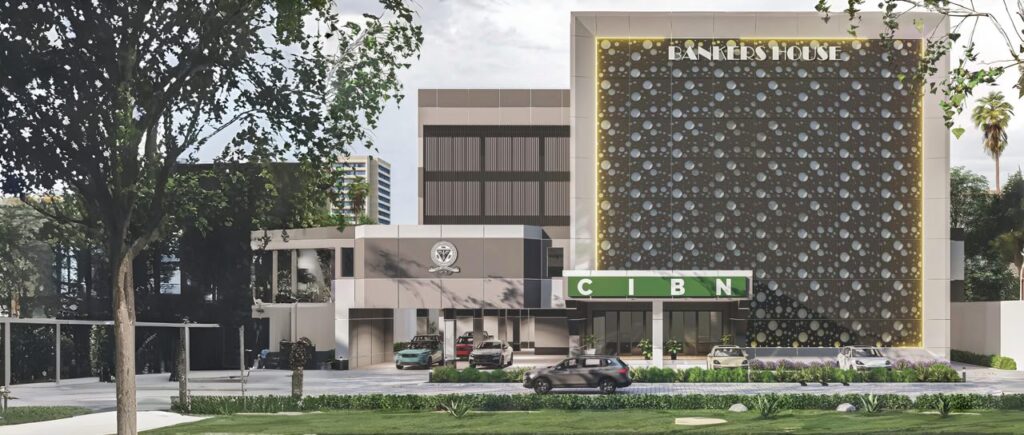
The Chartered Institute of Bankers of Nigeria, CIBN, says Nigeria’s improving economic indicators will mean little unless they translate into lower living costs, more jobs, higher incomes and better living standards for citizens. The President and Chairman of Council of the CIBN, Dr Dele Alabi, made this known at the opening of the institute’s 19th Annual Banking and Finance Conference in Abuja. Alabi says Nigeria’s economic reforms must move beyond improving macroeconomic figures and begin to produce tangible benefits for households and businesses. He says the next phase of the reforms should focus on ensuring that economic stability leads to increased investment, affordable credit, stronger businesses and reduced poverty. The CIBN president also highlights the need to support micro, small and medium enterprises, which continue to face high operating costs, poor infrastructure, limited market access, skills shortages and slow digital adoption. The World Bank’s Lead Private Sector Development Specialist in Nigeria, Bertine Kamphuis, also says credit to the private sector remains inadequate. She urges banks to increase financing for sectors with strong job-creation potential, particularly agriculture, manufacturing and MSMEs. Kamphuis says this is important as between three and four million young Nigerians enter the labour market every year. Meanwhile, President Bola Tinubu has urged Nigerian banks to rethink their approach to risk and play a stronger role in financing productive sectors of the economy. Tinubu, represented by the Minister of Finance and Coordinating Minister of the Economy, Taiwo Oyedele, says strong bank profits alone are no longer enough. He says banks must help businesses access affordable credit, support manufacturers to expand and bring more productive MSMEs into the formal financial system. The President says Nigeria’s economy is returning to stability and investor confidence is improving, but warns that macroeconomic stability should not be mistaken for prosperity. He says the next phase of the country’s reforms must convert stability into investment, investment into production, production into jobs and economic growth into improved living standards. On bank recapitalisation, the Central Bank of Nigeria Governor, Olayemi Cardoso, says the significant capital raised by banks demonstrates the depth of capital available locally. Cardoso, represented by CBN Deputy Governor Philip Ikeazor, urges banks to use the additional capital to finance the real sector and support faster economic growth. He also calls on state governments to work with the CBN and Federal Government to tackle inflation, expressing optimism that single-digit inflation is achievable through stronger collaboration.
Business

Dangote Refinery Unveils N2.15tn Share Offer for 10m Investors

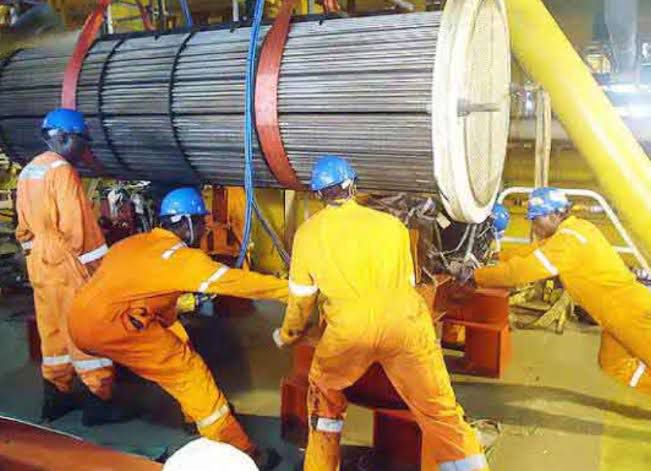
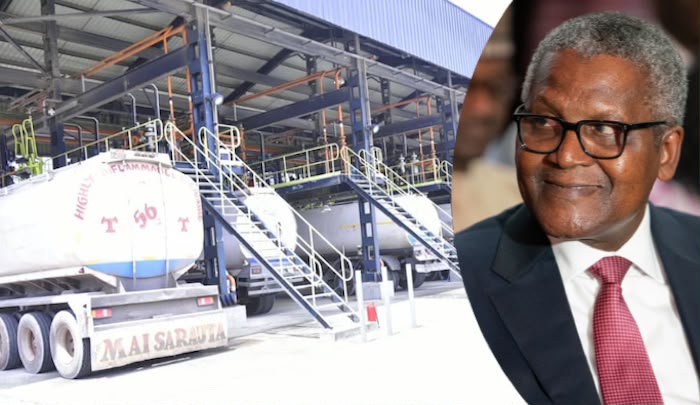
Dangote Petroleum Refinery and Petrochemicals has unveiled a N2.15 trillion Initial Public Offer, IPO, aimed at giving millions of Nigerians and other Africans an opportunity to own shares in the refinery. The offer comprises 4.1 billion ordinary shares priced at N525 each, with a minimum subscription of 10 shares, allowing investors to participate with as little as N5,250. The company is targeting about 10 million retail investors, a figure that would significantly surpass the Nigerian capital market’s previous record of about 181,000 retail participants in a single transaction. President and Chief Executive Officer of Dangote Group, Aliko Dangote, unveiled the offer in Lagos, describing it as an IPO designed to give ordinary people an opportunity to become shareholders. The offer, which has been approved by the Securities and Exchange Commission, SEC, is expected to open on September 14 and close on October 13, subject to applicable regulatory conditions. The shares are also expected to be listed on the Main Board of the Nigerian Exchange, NGX. The IPO is expected to support the refinery’s expansion programme, which will increase its refining capacity from 700,000 barrels per day to 1.4 million barrels per day by 2028. Dangote says the expansion will make the Lekki-based facility the world’s largest refinery. He says the project is central to the Dangote Group’s Vision 2030, which focuses on accelerating industrialisation across Africa, with energy security as a major priority. The Group Managing Director of Vetiva Capital Management, Chuka Eseka, says the IPO is structured to promote transparency, accountability and broad participation. He says retail investors will be able to subscribe electronically through bank applications, online platforms and stockbrokers, while institutional investors can participate electronically or through receiving agents. Managing Director of FirstCap, Ukandu Ukandu, says the company is targeting about 10 million retail investors, while Stanbic IBTC Capital CEO, Oladele Sotubo, says the offer will allow ordinary Nigerians to become shareholders in the refinery. Eligible retail investors may also receive up to two additional shares under an incentive arrangement, subject to the conditions contained in the offer documents. Meanwhile, Chief Executive Officer of Dangote Petroleum Refinery and Petrochemicals, David Bird, describes the facility as a pan-African energy platform serving Nigeria, West Africa and international markets. Bird says the refinery has become a major supplier of aviation fuel to Europe and has developed into a trading-led merchant refinery capable of processing different crude grades. He says preparations for the planned expansion are largely complete, with construction remaining the major outstanding phase. Bird says construction is expected to be completed by 2028, paving the way for the refinery to become the world’s largest integrated refining and petrochemical complex.

Business

Nigeria Loses N266bn in Foreign Investments in Three Years

Foreign investors have withdrawn a net N266.07 billion from Nigeria’s equities market in the first seven months of 2026, marking a sharp increase from the N22.68 billion recorded during the same period in 2023. Data from the Nigerian Exchange Limited shows that foreign investors brought in N513.36 billion between January and July 2026 but withdrew N779.43 billion, leaving a net outflow of N266.07 billion. Analysts say the trend is a concern because foreign investors provide significant liquidity to the market and contribute foreign exchange. They attribute the withdrawals to factors including profit-taking, portfolio rebalancing and concerns about Nigeria’s investment environment. However, analysts note that domestic investors have helped sustain activity on the Nigerian Exchange, while some foreign investors have shifted more of their funds into fixed-income securities because of attractive yields.

Business

Businesses Feel the Heat as FG’s Domestic Borrowing Jumps 90% to N24.7tn

The Federal Government’s domestic borrowing rises by 90.5 per cent year-on-year to N24.7 trillion between January and August 2026, compared with N12.98 trillion recorded during the same period in 2025. The increase is largely driven by higher issuance of FGN bonds and Treasury Bills, with experts warning that the borrowing could crowd out businesses and households from accessing credit. CBN data shows that credit to the government grows by 43 per cent to N33.92 trillion in July 2026, while credit to the private sector rises by only 9.6 per cent to N83.43 trillion. Experts say the increased borrowing provides attractive returns for investors but makes it more difficult and expensive for businesses to obtain loans. They also warn that rising debt-service costs could reduce funds available for infrastructure, healthcare and education. The Federal Government targets N29.2 trillion in domestic borrowing for 2026, meaning the N24.7 trillion already borrowed represents 84.7 per cent of the target. Experts project that total domestic borrowing could reach between N30 trillion and N34 trillion by the end of the year if government spending continues to exceed revenue.

Business

Nigeria’s GDP growth masks worsening industrial crisis — MAN

The Manufacturers Association of Nigeria, MAN, has warned that Nigeria’s 4.43 per cent economic growth in the second quarter of 2026 was masking serious challenges in the industrial sector. MAN said the services sector accounted for 56.62 per cent of the nation’s GDP, while the broader industrial sector contributed just 17.23 per cent. The association’s Director-General, Segun Ajayi-Kadir, said industrial growth nearly halved from 7.46 per cent in the second quarter of 2025 to 3.96 per cent in the same period of 2026. He attributed the decline to high production costs, exchange-rate pressures, expensive loans and rising electricity tariffs. MAN called for urgent measures to improve power supply, industrial financing, foreign exchange access and local procurement, warning that Nigeria must shift from consumption-led to production-led growth. Meanwhile, former Ogun State governor and senator representing Ogun East, Gbenga Daniel, said Nigerians’ living conditions should be used to measure economic progress rather than GDP figures alone. He argued that economic growth and security were inseparable, stressing that farmers, businesses and investors could not thrive without adequate security.

Business

DisCos miss N123.8bn power revenue target in June

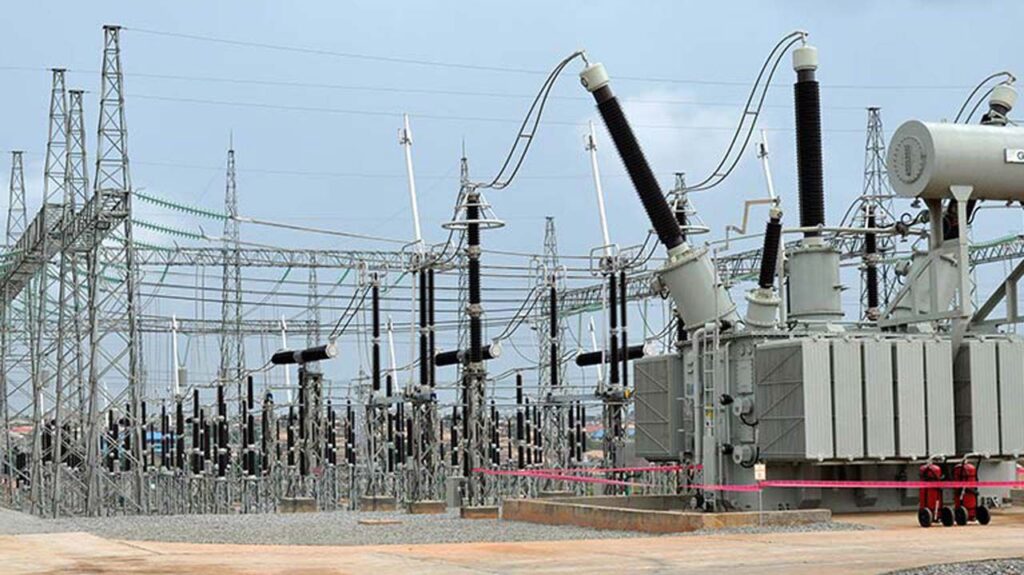
Distribution companies in Nigeria recorded a N123.87 billion gap between the value of electricity supplied to them and the revenue they collected from customers in June 2026. According to the latest commercial performance report released by the Nigerian Electricity Regulatory Commission, the DisCos received electricity worth N315.73 billion during the month but collected only N191.86 billion. The report showed that total revenue collection fell by 7.82 per cent compared with May, while the amount of electricity received declined by 4.02 per cent. Collection efficiency also dropped to 79.71 per cent, representing a 2.61 percentage-point decline from the previous month. On billing, the DisCos issued bills worth N240.71 billion to customers, with billing efficiency standing at 76.24 per cent. The report further showed that the average amount recovered per kilowatt-hour was N96.63, below the approved average tariff of N130.15, resulting in a recovery efficiency of 74.24 per cent. Benin Electricity Distribution Company recorded the highest collection rate at 94 per cent, while Eko and Port Harcourt DisCos recorded recovery efficiencies of 87.04 and 86.33 per cent respectively. However, Kaduna and Kano recorded much lower recovery efficiencies of 37.03 and 44.04 per cent, while Jos recorded 55.18 per cent. Ikeja DisCo’s recovery efficiency dropped by 14.54 percentage points to 80.08 per cent, while Abuja DisCo recorded a 10.87 percentage-point decline to 73.98 per cent. The figures indicated that poor revenue collection remained a major challenge for Nigeria’s electricity distribution sector, despite customers being billed for electricity consumed.

Banking, Business

GTB Customer Loses N4.6m in Unauthorised Transfer

A Lagos-based customer of Guaranty Trust Bank, Onifade Isaac, reported losing N4.6 million from his account through an unauthorised transfer. Isaac said the money was transferred from his savings account through the GTB mobile app to a Pocket App account belonging to a person identified as Zahara’u Iliyasu. He said the transaction occurred on August 22, 2026, but he did not discover the missing funds until later that evening when he attempted to withdraw money for a family need and was informed that his balance was insufficient. According to him, no SMS alert or notification was received for the transaction. He immediately contacted GTBank’s customer service and was instructed to have both his account and the recipient’s account blocked. However, Isaac said he was later informed that the money had already been withdrawn despite the reported account restrictions. He subsequently filed an affidavit and police report, demanding the immediate reversal and full recovery of the N4.6 million. GTBank had not publicly responded to the allegations as of the time of the report.

Business

Nigeria’s Economy Bleeds from Steel Imports

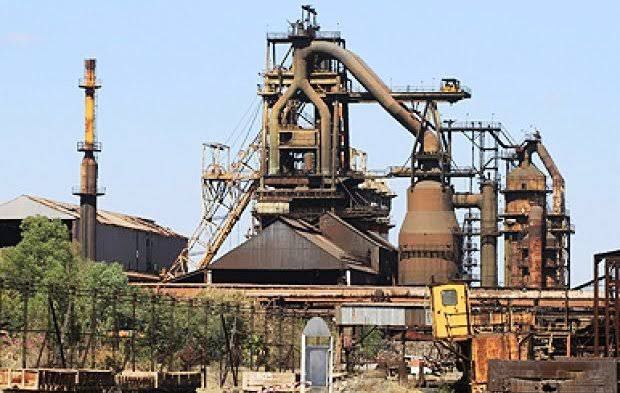
Nigeria spent more than N1 trillion on iron and steel imports in 2025, despite having the largely idle Ajaokuta Steel Complex in Kogi State, according to data from the National Bureau of Statistics. The figure was part of an average annual import bill of about N526 billion recorded over the past six years. The Minister of Steel Development, Prince Shuaibu Abubakar Audu, however, estimated that Nigeria spends about $4 billion, or N5.6 trillion, annually on iron and steel imports. Ajaokuta Steel Complex was designed to produce up to 5.2 million tonnes of steel annually and supply products for construction, manufacturing, transportation, infrastructure and other industries. The complex, which has remained largely inactive for more than four decades, was also expected to create hundreds of thousands of direct jobs, generate millions of indirect jobs and reduce Nigeria’s dependence on imported steel. The President of the National Association of Steel Workers, Oyabugbe Sunday, said Nigeria was losing out by exporting raw materials while importing finished steel products at higher costs. He said reviving Ajaokuta would reduce foreign exchange outflows, increase local value addition and strengthen Nigeria’s industrial base. Several attempts by successive administrations to revive or concession the plant have failed. Previous arrangements involving private investors collapsed amid allegations of non-performance, lack of transparency and legal disputes. In 2019, Russia offered to provide about $460 million in funding and technical support to complete Ajaokuta, while Afreximbank reportedly pledged an additional $1 billion. However, the agreement was not completed before the Buhari administration left office. The Federal Government also established the Ajaokuta Presidential Project Implementation Team in 2020 to accelerate the plant’s revival, but the initiative reportedly made little progress amid alleged conflicts of interest. The revival of Ajaokuta was also one of President Bola Tinubu’s campaign promises in 2023. While campaigning in Kogi State, Tinubu pledged to revive the steel complex and dredge the River Niger to support transportation and logistics. Three years into his administration, however, the steel complex remains largely idle, while Nigeria continues to spend billions of naira on imported steel products.

Business

Nigeria Records $947m Remittance Inflow in July

Nigeria’s formal remittance inflows rose to a record $947 million in July 2026, bringing the country closer to the Central Bank of Nigeria’s target of attracting at least $1 billion monthly through official channels. The July figure represented the highest monthly inflow recorded through International Money Transfer Operators and followed a series of reforms introduced by the CBN to strengthen formal remittance channels. Between January and July 2026, total inflows through IMTOs reached $3.8 billion, representing a 50.2 per cent increase compared with the same period in 2025. CBN Governor, Olayemi Cardoso, said the latest figure placed Nigeria about $53 million away from the $1 billion monthly target. Cardoso said the increase was linked to measures aimed at making formal remittance channels more competitive, transparent and accessible. The reforms included a more market-driven exchange rate, changes to regulations governing IMTOs and the introduction of the Non-Resident Bank Verification Number. The CBN also tightened requirements for remittance transactions to pass through designated settlement accounts with authorised dealer banks. The apex bank said the growth in formal remittances could improve foreign exchange liquidity and transparency while supporting household consumption, investment and Nigeria’s external financing position. Cardoso said the CBN’s goal was not only to reach the $1 billion monthly mark but to sustain inflows above that level. He added that the bank would continue working with diaspora communities, banks and money transfer operators to reduce transaction barriers and encourage more Nigerians abroad to use formal remittance channels.

Business

WhatsApp to Start Charging Businesses Per Message From October 1

Meta, the parent company of WhatsApp, announced that it would begin charging businesses for certain messages sent through the WhatsApp Business Platform from October 1, 2026. The company disclosed the pricing change in a WhatsApp Business Platform update issued in July, stating that charges for service messages would resume from October 1. The new fees would affect companies using the official WhatsApp Business Platform, formerly known as the WhatsApp Business API, to manage customer conversations on a large scale. Banks, fintech companies, e-commerce platforms, telecommunications operators, logistics firms and large retailers were among the businesses expected to be affected. However, the new charges would not affect ordinary WhatsApp users or most small businesses using the standard WhatsApp Business application on their phones. Under the existing system, when a customer sent a message to a business, a 24-hour customer service window was opened, allowing businesses to respond with free-form service and certain utility messages without paying Meta. From October 1, businesses would instead be charged on a per-message basis for service messages sent during the customer service window. Meta also stated that utility messages, including payment confirmations, order updates and delivery notifications, would attract charges when sent in response to users within an open 24-hour customer service window. The company warned businesses and Solution Providers to add a payment method before the new charges took effect. Businesses without a payment method on file by September 30 would have their service messages stopped once the charges became effective. For Nigerian businesses, a chargeable utility or service message was expected to cost about $0.0101, equivalent to roughly ₦14, based on an exchange rate of about ₦1,340 to the dollar. Marketing messages were considerably more expensive at about $0.062, or approximately ₦84. Meta’s charges would be separate from any additional fees imposed by third-party Business Solution Providers. The development meant that Nigerian companies that relied heavily on WhatsApp for customer support and transactional communication would have to factor the new per-message fees into their operating costs from October.