The Click Report

Audio Brief

Listen to the latest top stories and editorial summary.

Author name: clickreportteam

Politics

Fasehun’s OPC backs Tinubu for second term

The faction of the O’odua People’s Congress led by the late Dr Frederick Fasehun has endorsed President Bola Tinubu for a second term in the 2027 presidential election. The group announced its support for Tinubu in Lagos on Saturday during its 32nd Founders’ Day celebration and the inauguration of a new National Executive Council. Speaking at the event, the re-elected OPC President, Wasiu Afolabi, said the organisation would work for Tinubu’s re-election, just as it supported his presidential bid in 2023. Afolabi said the OPC considered any Yoruba person occupying the presidency as a collective project of the organisation, adding that the group would continue to support Tinubu if the right conditions were provided. He also urged other regions to back the President’s second-term bid, saying this would allow Tinubu to continue with the reforms initiated by his administration. The OPC president further recalled the group’s origins in 1994, saying it was established by Fasehun following the annulment of the June 12, 1993 presidential election won by the late MKO Abiola. The chairman of the occasion, Wale Oshun, also described the OPC as an important organisation in Nigeria’s democratic struggle. He said the group’s continued existence and growth, eight years after the death of its founder, demonstrated the strength of Fasehun’s vision.

Metro

Zamfara woman, 55, narrates ordeal with bandits

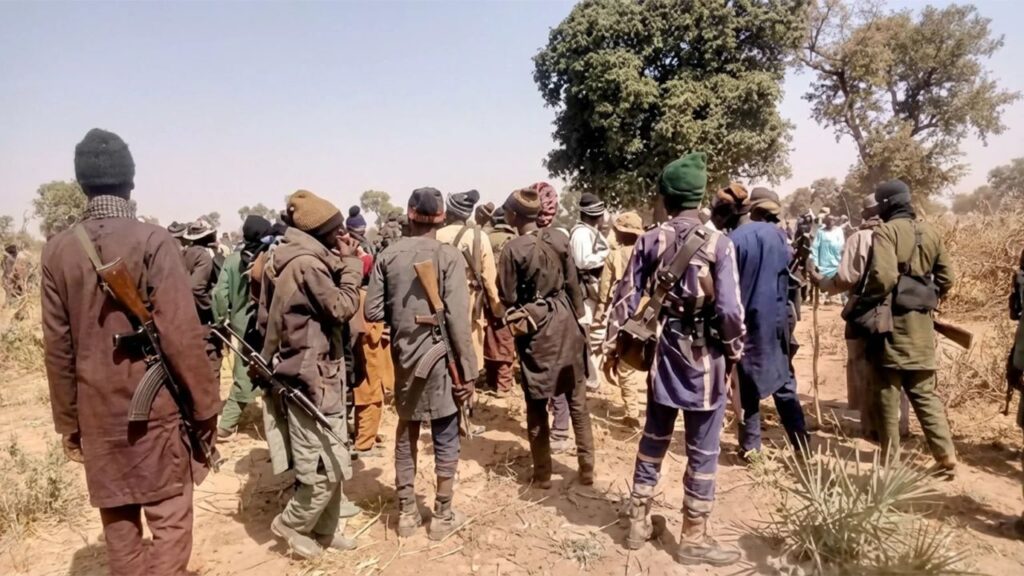
A 55-year-old woman in Zamfara State, Fatima, has recounted the devastating experience of bandit attacks that forced her and other residents to flee their communities. Speaking to the BBC Hausa service, Fatima said bandits attacked her village around 2 a.m., dividing themselves into three groups to surround the community and block escape routes. She said residents faced deadly choices, as those who hid indoors had their homes set on fire, while those who attempted to escape were shot. Fatima claimed that about 70 people, including children, were killed during an attack on Bia Buki village in June. She said her husband and six of her seven siblings were among those killed. According to her, the attackers sometimes arrived on as many as 100 motorcycles, with about three people riding on each motorcycle. Following the attack, Fatima and other residents fled into a nearby forest with their children before eventually making their way to Gusau, the Zamfara State capital. She now lives in a temporary camp with her seven children, aged between nine and 30, where she said food, shelter and other forms of assistance remained inadequate. Fatima also alleged that 22 displaced children who were sent to gather firewood for sale were abducted by bandits. She said security had improved slightly following patrols by soldiers and government-backed vigilantes, but residents remained afraid of returning home. Data cited by the BBC showed that bandit attacks in north-western Nigeria increased significantly in the first half of 2026. The Armed Conflict Location & Event Data project reported a 78 per cent rise in attacks compared with the same period in 2025. SBM Intelligence also estimated that 7,825 people were kidnapped across Nigeria between July 2025 and June 2026, while about N7.8 billion was reportedly paid as ransom. Security analyst Malik Samuel of Good Governance Africa said no part of northern Nigeria was currently completely free from large-scale kidnapping. Fatima said she had been told that bandits had established a camp close to her community, with one of their leaders allegedly acting as a de facto authority and settling disputes among residents. She said several neighbouring villages had been completely deserted, adding that returning home without adequate security would expose residents to further attacks and hardship. Despite her desire to return, Fatima said the continuing insecurity had left her and thousands of other displaced Nigerians uncertain about when they could safely return to their communities.

Foreign Affairs

Niger rocked by gunfire, explosions at airport, palace

Sustained gunfire and explosions were reported across several parts of Niamey, the capital of Niger Republic, early Saturday, with Diori Hamani International Airport emerging as a major target. The airport, located about 10 kilometres from the presidential palace, also houses a major air force base. The attack marked the third assault on the city this year, as tensions continued under the military government that came to power following the 2023 coup. A member of Niger’s Bureau of the Consultative Council and deputy in the Alliance of Sahel States Parliament, Bana Wagana Ibrahim, confirmed the incident, saying the attack on Base 101 had been brought under control. A security source said terrorists attacked the airport and attempted to breach the security perimeter around the presidential palace. The latest incident occurred barely two months after gunmen attacked the airport in June, killing 11 security personnel and two civilians. Twenty-two attackers were also killed during the incident. The Islamic State had previously claimed responsibility for an attack on the airport in January. General Abdourahamane Tchiani has remained in power since the July 2023 coup that ousted former President Mohamed Bazoum.

Politics

How Graft Weakens Nigeria’s Economy and Governance

Experts have warned that corruption remains a major obstacle to Nigeria’s development, affecting governance, healthcare, security, infrastructure and education. Speaking in a report by Saturday Vanguard, the experts said the diversion of public funds had contributed to the poor state of critical infrastructure and public services. They also linked corruption in the health sector to shortages of medicines and equipment, poor healthcare delivery and preventable deaths. The experts said corruption could not be completely eliminated but could be significantly reduced through stronger institutions, digital systems, transparent procurement and strict punishment for offenders. They also called for greater public participation and accountability to prevent corruption from becoming accepted as a normal part of society.

Foreign Affairs

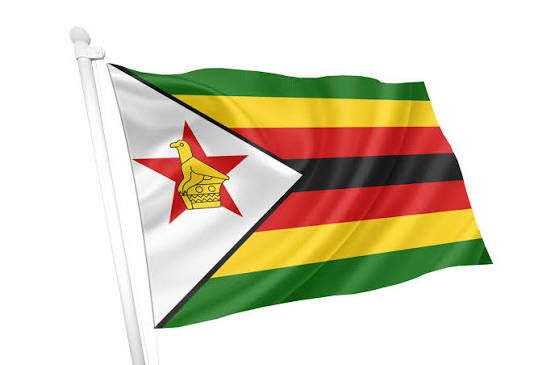
27 killed as overtaking truck crashes into church bus in Zimbabwe

At least 27 people were killed in Zimbabwe after a truck collided head-on with a minibus carrying church worshippers. The accident occurred on Friday evening near Chivhu, about 140 kilometres south of the capital, Harare. Police said the foreign-registered haulage truck was overtaking another vehicle when it crashed into the minibus, which was carrying worshippers to a church conference. Seven people were injured in the crash, while the total number of passengers in both vehicles remained unknown. The accident was described as the latest deadly road crash in Zimbabwe, where road accidents remain common.

Politics

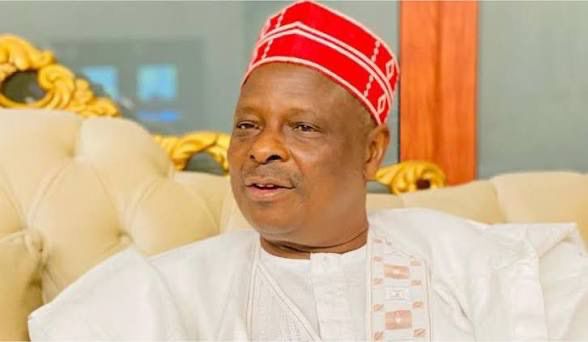
Jang, Kwankwaso clash over Plateau NDC governorship ticket

A fresh dispute has emerged within the Nigeria Democratic Congress, NDC, over its governorship ticket in Plateau State, with former governor Jonah Jang and the party’s vice-presidential candidate, Rabiu Kwankwaso, reportedly divided over a possible replacement candidate. The crisis came less than 24 hours before the Independent National Electoral Commission, INEC, was expected to publish the names of governorship and State Assembly candidates for the 2027 election. The party reportedly submitted the name of its state chairman, Yakubu Ndam, as a placeholder after the purported suspension of Da Jonathan Sunday Akuns, who had emerged unopposed from the party’s direct primary in the state. NDC North Central National Vice Chairman, Barnabas Ejisi, and Ndam were said to have been working to find a substantive replacement for Ndam. The search reportedly led party stakeholders to former Plateau governor Jonah Jang, with efforts made to move Garba Sunday Biggs, a preferred candidate of Jang’s faction of the Peoples Democratic Party, PDP, into the NDC. However, Jang reportedly rejected the proposal when Kwankwaso visited him at his Abuja residence to celebrate his 80th birthday. A close ally of Jang said the former governor recalled Kwankwaso’s alleged failure to support him during the 2015 contest for the chairmanship of the Nigeria Governors’ Forum, where Rotimi Amaechi defeated him by 18 votes to 15. The dispute was reportedly among issues being considered by the NDC’s Northern Zonal Reconciliation Sub-Committee, which was set up to address complaints and disagreements arising from the party’s primary elections and state structures. With INEC expected to release the final list of governorship candidates, it remained uncertain whether the NDC would field a candidate in Plateau State or leave incumbent governor Caleb Mutfwang of the All Progressives Congress, APC, with a less competitive re-election contest.

Politics

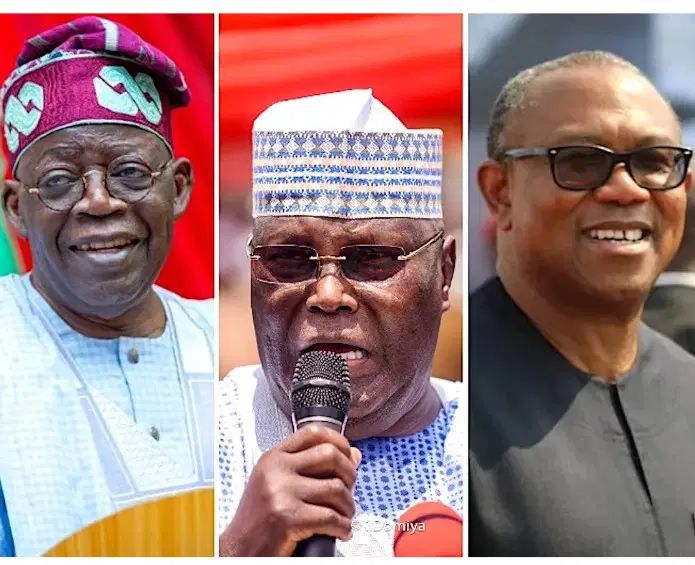
Tinubu: Omokri challenges Atiku over claim that president is 90

Ambassador-designate to Mexico, Honduras, Guatemala and Nicaragua, Reno Omokri, has challenged former Vice President Atiku Abubakar over his claim that President Bola Tinubu is 90 years old. Atiku, who is the presidential candidate of the African Democratic Congress (ADC) for the 2027 election, made the claim during a BBC interview published on Friday. He said he had evidence to support his assertion and promised to present it in court. Responding to the allegation, Omokri questioned its basis and referred to a photograph he said showed Tinubu with journalist and publisher Dele Momodu in London in 1996. Omokri argued that if Tinubu were 90 years old in 2026, he would have been 60 when the photograph was taken. He challenged Momodu to confirm the authenticity of the photograph and provide details about when and where it was taken, noting that the journalist was alive and could testify to its authenticity. Omokri also asked whether Tinubu appeared to be 60 years old in the photograph, urging Nigerians to examine the image and determine whether the person pictured appeared to be 60 or even 50 at the time. The ambassador-designate recalled Momodu’s previous accounts of Tinubu’s support for him during his years in exile under military rule. He said political differences should not prevent people from defending facts about individuals they had previously considered friends or benefactors. Omokri also criticised what he described as attempts to “age-shame” political opponents, arguing that the 2027 presidential campaign should focus on issues affecting Nigerians rather than disputed claims about candidates’ ages. He urged political actors to raise the standard of the election by focusing on solutions to the challenges facing the country. Tinubu’s publicly stated date of birth is March 29, 1952, which makes him 74 years old in 2026. Meanwhile, Atiku defended his decision to contest the 2027 presidential election, saying his age should not be used to question his ability to govern. The former vice president described himself as strong, healthy and agile, adding that contesting for the presidency was his constitutional right. Atiku also pointed to his experience and competence as reasons for seeking the presidency and promised to tackle insecurity within his first year in office if elected. He attributed Nigeria’s security challenges partly to inadequate manpower and equipment, which he said had weakened the country’s security architecture.

Politics

2027: Atiku will say anything to deceive gullible voters – Presidency

The Presidency has criticised former Vice President and African Democratic Congress (ADC) presidential candidate, Atiku Abubakar, over his promise to reopen Nigeria’s land borders if elected president in 2027. The Special Adviser to President Bola Tinubu on Media and Public Communication, Sunday Dare, said Atiku’s statement was misleading because most of Nigeria’s land borders had already been reopened by the Federal Government. Dare said the government announced the reopening of most land borders on March 14, 2024, adding that President Tinubu also reopened the Kamba border in Kebbi State in February 2026. He therefore questioned which borders Atiku intended to reopen, urging the former vice president to explain whether he meant relaxing existing border controls and, if so, identify the specific measures he would remove. According to the Presidency, Nigeria needed to maintain effective border controls to prevent terrorism, arms trafficking, smuggling, human trafficking and other forms of transnational organised crime while allowing legitimate trade and movement. Dare stressed that an open border did not mean an uncontrolled border, noting that modern border management involved immigration and customs operations, intelligence sharing, surveillance, technology and coordinated security efforts. The Presidency also cited the security situation across the Sahel and Lake Chad Basin, arguing that Nigeria’s borders remained particularly important in tackling terrorism and organised crime. It said border communities could be vulnerable to attacks because of difficult terrain, limited government presence and weak coordination, making effective border management an essential part of national security. The Presidency urged Atiku, as a former vice president, to provide Nigerians with a detailed alternative policy rather than campaign promises focused on reversing or renaming policies already being implemented. Dare said Nigerians deserved to know how any proposed administration would improve border surveillance, strengthen intelligence sharing, modernise customs and immigration services, deploy technology and enhance cooperation with neighbouring countries. The Presidency maintained that Nigeria’s borders should remain open to legitimate commerce and movement while being secured against terrorists and criminal networks. It added that the Tinubu administration remained open to scrutiny and should be judged based on measurable outcomes in areas including security, economic recovery, border management and citizens’ welfare.

Business

WhatsApp to Start Charging Businesses Per Message From October 1

Meta, the parent company of WhatsApp, announced that it would begin charging businesses for certain messages sent through the WhatsApp Business Platform from October 1, 2026. The company disclosed the pricing change in a WhatsApp Business Platform update issued in July, stating that charges for service messages would resume from October 1. The new fees would affect companies using the official WhatsApp Business Platform, formerly known as the WhatsApp Business API, to manage customer conversations on a large scale. Banks, fintech companies, e-commerce platforms, telecommunications operators, logistics firms and large retailers were among the businesses expected to be affected. However, the new charges would not affect ordinary WhatsApp users or most small businesses using the standard WhatsApp Business application on their phones. Under the existing system, when a customer sent a message to a business, a 24-hour customer service window was opened, allowing businesses to respond with free-form service and certain utility messages without paying Meta. From October 1, businesses would instead be charged on a per-message basis for service messages sent during the customer service window. Meta also stated that utility messages, including payment confirmations, order updates and delivery notifications, would attract charges when sent in response to users within an open 24-hour customer service window. The company warned businesses and Solution Providers to add a payment method before the new charges took effect. Businesses without a payment method on file by September 30 would have their service messages stopped once the charges became effective. For Nigerian businesses, a chargeable utility or service message was expected to cost about $0.0101, equivalent to roughly ₦14, based on an exchange rate of about ₦1,340 to the dollar. Marketing messages were considerably more expensive at about $0.062, or approximately ₦84. Meta’s charges would be separate from any additional fees imposed by third-party Business Solution Providers. The development meant that Nigerian companies that relied heavily on WhatsApp for customer support and transactional communication would have to factor the new per-message fees into their operating costs from October.

General News

DHQ Flags AI-Generated Video on CDS’ Political Involvement

The Defence Headquarters (DHQ) has warned Nigerians against a fabricated artificial intelligence-generated video falsely portraying the Chief of Defence Staff, General Olufemi Oluyede, as making partisan political statements. In a statement issued on Thursday, August 27, the Director of Defence Information, Major General Samaila Uba, said the video did not originate from the CDS and that the statements attributed to him were false. The DHQ described the video as a deliberate attempt to mislead the public, distort the position of the nation’s top military officer and create the impression that the Armed Forces of Nigeria had taken a political position. The military urged Nigerians to disregard the video and any statements attributed to General Oluyede in the fabricated material. It stressed that the Armed Forces remained a professional, apolitical and non-partisan institution committed to the Constitution and the defence of the nation. The DHQ also warned individuals responsible for creating the video, as well as those knowingly circulating or amplifying it, to stop doing so. It advised Nigerians to verify sensitive claims concerning military leadership through the Defence Headquarters’ official communication channels, including its verified social media platforms. The warning comes amid growing concerns over the use of AI to create convincing fake videos and audio recordings of public figures. The DHQ said such misinformation could undermine public confidence in the military and damage its reputation, particularly when it falsely suggests that military leadership has taken a partisan political position.