The Click Report

Audio Brief

Listen to the latest top stories and editorial summary.

Politics

Governance, Politics

Jonathan: How China Inspired Nigeria’s Local Content Policy, NCDMB Milestones

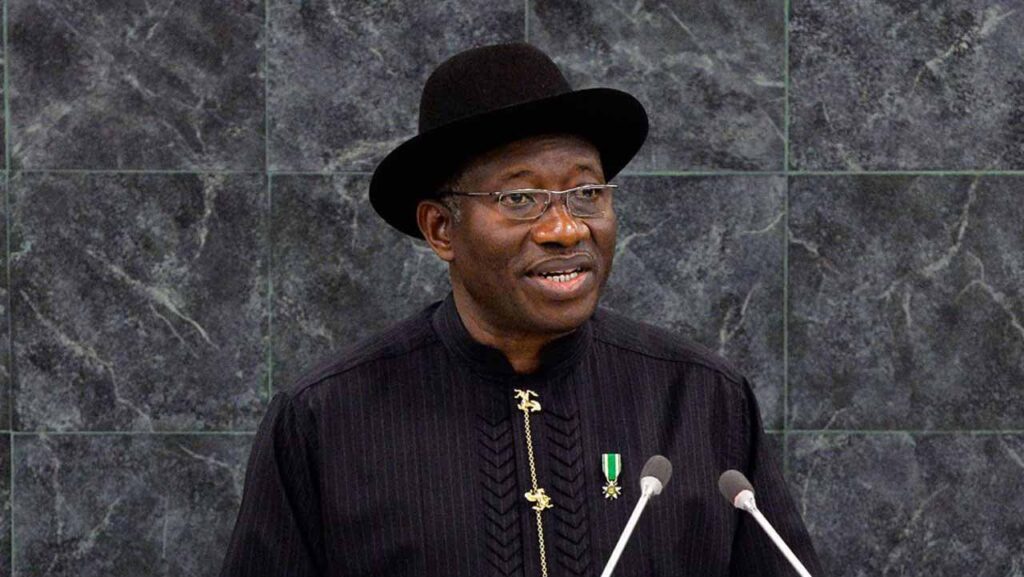
Former President Goodluck Jonathan has revealed that Nigeria’s local content policy in the oil and gas sector was inspired by China’s success in developing its domestic petroleum industry. Jonathan made the disclosure at the SweetCrude Dialogue 2026 held at the Nigerian Content Tower in Yenagoa, Bayelsa State, where he reflected on the enactment of the Nigerian Oil and Gas Industry Content Development (NOGICD) Act, 2010, and the progress made by the Nigerian Content Development and Monitoring Board (NCDMB). According to the former president, the idea for the local content law took shape after a visit to China during his time as Deputy Governor of Bayelsa State, where he observed that virtually every aspect of the country’s oil industry relied on locally manufactured equipment, expertise and technology. He said the experience made him question why Nigeria, despite discovering crude oil around the same period as China, remained heavily dependent on foreign technology and services in its petroleum sector. Jonathan recalled signing the NOGICD Bill into law in April 2010, describing it as one of the most significant decisions of his administration because of its long-term impact on Nigeria’s economy and indigenous participation in the oil and gas industry. He commended the NCDMB for driving local content development over the years and praised the organisers of the SweetCrude Dialogue for creating a platform to discuss the future of Nigeria’s oil and gas industry. Speaking at the event, the Executive Secretary of the NCDMB, Felix Omatsola Ogbe, represented by the Board’s Director of Monitoring and Evaluation, Esueme Dan Kikile, said local content participation in Nigeria’s oil and gas industry had risen from less than five per cent in 2010 to 61 per cent in 2026. He attributed the growth to the Board’s enforcement of local content policies, human capacity development programmes and investments in strategic infrastructure aimed at strengthening indigenous participation across the sector. Among the projects highlighted were the 17-storey Nigerian Content Tower in Yenagoa, the Oloibiri Museum and Research Centre, the Nigerian Oil and Gas Parks Scheme in Bayelsa and Cross River states, gas processing infrastructure in Bayelsa, the Brass Shipyard project and the NCDMB’s Back-to-the-Creek Initiative. Ogbe said the initiatives were helping to transform oil-producing communities into centres of industrial development, technology and economic growth. Also speaking, Bayelsa State Governor Douye Diri, represented by Deputy Governor Lawrence Ewhrudjakpo, said Bayelsa was a fitting venue for discussions marking 70 years of oil and gas production in Nigeria because the state’s Oloibiri community is where crude oil was first discovered. Delta State Governor Sheriff Oborevwori, represented by his Chief of Staff, Johnson Erijo, urged stakeholders to remain committed to improving the welfare of host communities, while the Niger Delta Development Commission (NDDC) called for continued efforts to ensure oil-producing communities benefit from the region’s natural resources. Delivering the keynote address, Professor Ibibia Lucky Worika of Rivers State University said the oil and gas industry has shaped Nigeria’s economy, politics and development over the past seven decades but noted that the Niger Delta has also borne the environmental and social costs of oil exploration. He stressed the need for environmental justice, describing it as essential to sustainable development and the future of the region. Earlier, the convener of De Mangrove Conversations, Biobele Da-Wariboko, said the dialogue was created to preserve the history and contributions of the Niger Delta to Nigeria’s development while encouraging conversations on the future of the country’s energy sector.
Politics

Prof. Peter Olapegba Beats Seven Rivals to Become UI’s 14th Vice-Chancellor

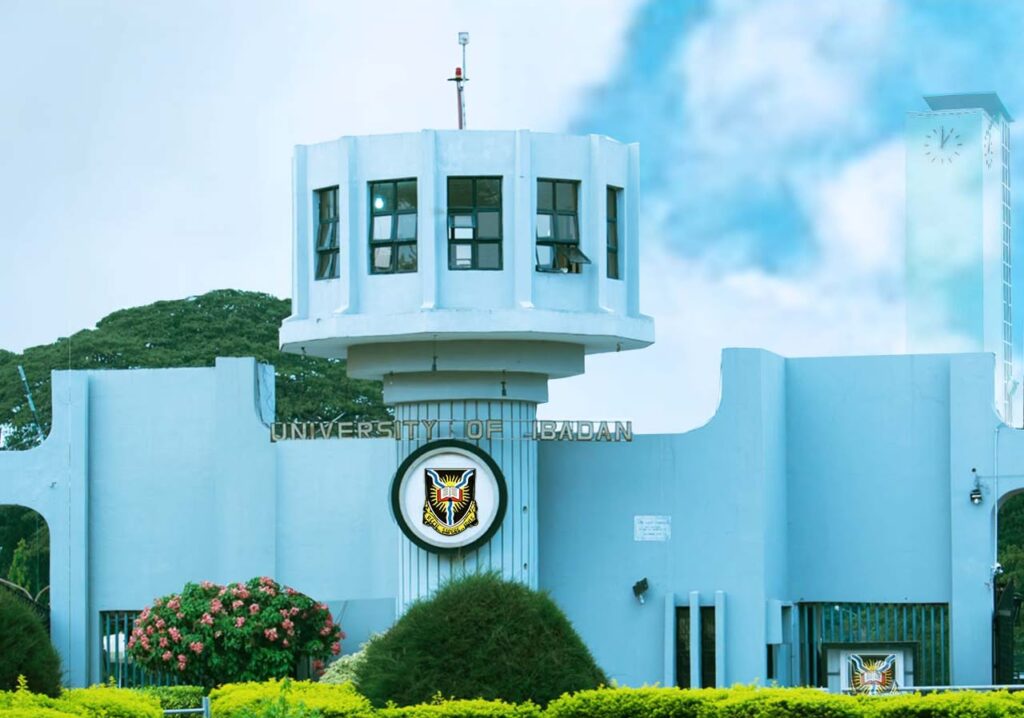
The Governing Council of the University of Ibadan (UI) has appointed Professor Peter Olamakinde Olapegba as the institution’s 14th Vice-Chancellor following a competitive selection process involving eight professors. The appointment was announced by the Pro-Chancellor and Chairman of the Governing Council, Chief Adebisi Akande, after the Council approved the recommendation of the Joint Council-Senate Selection Board. Akande said the process began in accordance with the University Act ahead of the expiration of the tenure of the incumbent Vice-Chancellor on November 1, 2026. According to him, advertisements inviting applications for the position were published in April 2026 across three national newspapers, attracting six applicants. To ensure a wider pool of qualified candidates, the Governing Council constituted a Search Team, which identified two additional eligible professors who subsequently applied, bringing the total number of candidates to eight. Akande disclosed that the Council met with all eight candidates on Tuesday, July 21, during an assessment exercise in which members independently evaluated and scored each applicant using approved guidelines. The exercise produced five finalists who were shortlisted in order of merit for the final stage of the selection process. He explained that the Governing Council nominated two of its members to the Joint Council-Senate Selection Board, while the University Senate also elected two representatives to participate in the exercise. The Selection Board interviewed the five shortlisted candidates before recommending Professor Olapegba as the most qualified applicant for the position. Describing the process as transparent, rigorous and highly competitive, Akande said the Governing Council unanimously endorsed the recommendation of the Selection Board. “It is my pleasure to present the 14th Vice-Chancellor of this great University, the University of Ibadan, Professor Peter Olamakinde Olapegba. We wish him a successful tenure,” he said. Professor Olapegba, who currently serves as the University’s Deputy Vice-Chancellor (Administration), is a professor in the Department of Psychology. He will officially assume office as the University’s 14th Vice-Chancellor upon the expiration of the incumbent Vice-Chancellor’s tenure on November 1, 2026.

Public Affairs

Witches and Wizards Convene in Nigeria, Offer Solutions to National Challenges

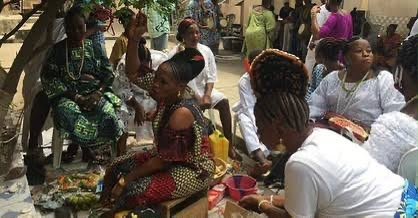
The Progressive Witches and Wizards Association has held its first anniversary gathering in Osogbo, Osun State, with members calling for peace, responsible use of spiritual gifts and an end to the wave of killings across Nigeria. The event took place at Araba Castle, the residence of renowned Ifa priest, Chief Ifayemi Elebuibon, and brought together members of the association, who were dressed in traditional white attire for prayers and other ceremonial activities. Addressing the gathering, Elebuibon urged members to deepen their understanding of their spiritual abilities and use them for personal development and the benefit of society. He encouraged them to channel their gifts toward improving their lives and contributing positively to the country’s progress. The Ifa priest also expressed concern over the persistent insecurity in Nigeria, condemning the killing of innocent citizens across different parts of the country. According to him, the continued bloodshed has attracted divine displeasure, warning that those responsible would face severe consequences. Elebuibon called on political leaders and security agencies to intensify efforts to tackle banditry, cult-related violence, ritual killings and other forms of criminality, warning that failure to act could have grave consequences for the nation. He also cautioned traditional worshippers against engaging in human sacrifice, stressing that such practices have no place in genuine traditional religion and would attract punishment. Speaking at the event, the association’s coordinator, Oyelola Elebuibon, sought to challenge public perceptions of witchcraft, describing members of the group as responsible individuals committed to the wellbeing of their families and communities. He said the association was established to foster unity among traditional practitioners and promote a more positive understanding of African spirituality, which he argued is often misunderstood and unfairly portrayed. The gathering concluded with prayers for peace, security and national development, as participants called for greater efforts to address the country’s security challenges.

Elections, Politics

Don Warns Time Is Running Out to Rebuild Trust Before 2027 Elections

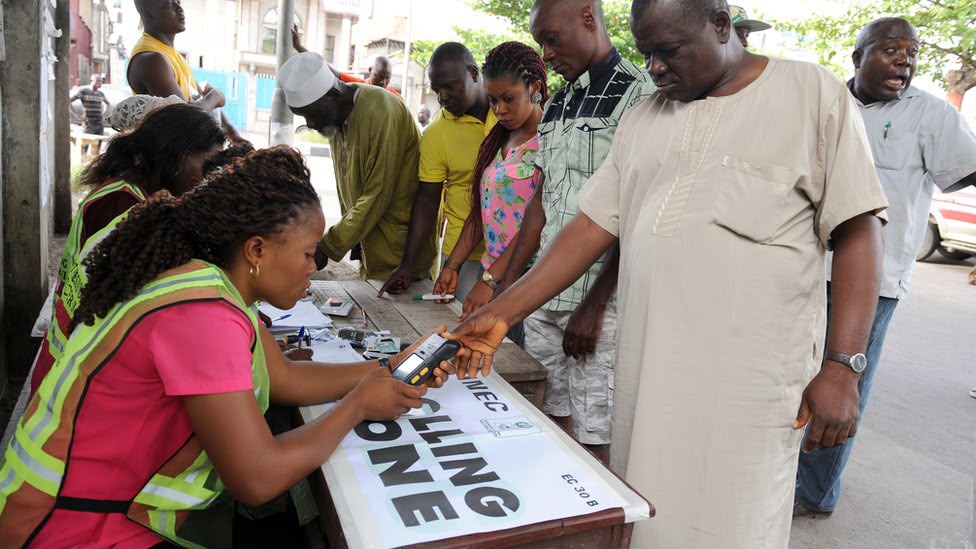
Professor of Political Science, Sylvester Odion Akhaine, has urged the media, the Independent National Electoral Commission (INEC) and Nigerian voters to rebuild public confidence in the country’s democratic process ahead of the 2027 general elections. Akhaine made the call while delivering the keynote address at the 4th Annual Lateef Jakande Memorial Lecture organised by the Nigerian Guild of Editors (NGE) in Lagos. The lecture was themed “The Media, INEC, Voters and the Path to Credible Elections.” Describing the 2027 elections as a critical test for Nigeria’s democracy, the Lagos State University (LASU) professor said the credibility of the polls would largely depend on the conduct of the media, INEC and the electorate. Reflecting on the legacy of the late former Lagos State Governor, Lateef Jakande, Akhaine said the Second Republic remains a benchmark for democratic governance in Nigeria and reinforces the belief that “another Nigeria is possible.” However, he warned that poor governance, weakened institutions and what political scholars describe as “state capture” continue to threaten the country’s democratic development. According to him, the executive arm has increasingly overshadowed other institutions of government, while insecurity and the growing influence of non-state actors have weakened the authority of the Nigerian state. Akhaine also lamented what he described as a declining political culture, arguing that leadership recruitment has become driven by money rather than merit, leaving many citizens disengaged from the democratic process. Speaking on the role of the media, he noted that Nigeria’s press has historically served as a watchdog since the colonial era and remains constitutionally empowered to hold government accountable through accurate, balanced and responsible reporting. He traced the evolution of Nigeria’s electoral management bodies from the Electoral Commission of Nigeria (ECN) to the present-day INEC, stressing that independent and credible electoral institutions are essential to democratic stability. The political scientist described voters as the foundation of democracy, saying elections derive legitimacy from the freely expressed will of the people. He noted that while credible elections require a sound legal framework, responsible political actors and an independent electoral commission, the media also plays a vital role in shaping public confidence in the process. Reviewing Nigeria’s electoral history, Akhaine said the country has struggled to conduct elections widely accepted as free and fair since the return to civilian rule in 1999. He cited vote-buying, intimidation, ballot manipulation and misinformation as persistent challenges undermining electoral credibility. He also warned that the rise of social media has intensified the spread of fake news, disinformation and online manipulation, making it increasingly difficult for citizens to distinguish fact from falsehood. Despite these challenges, Akhaine expressed optimism that Nigeria’s democracy can still be strengthened if key institutions fulfil their constitutional responsibilities. He called on the media to uphold professionalism and factual reporting, urged INEC to continue implementing electoral reforms while strengthening its independence, and encouraged greater civic education to help voters resist financial inducement and make informed electoral choices. Also speaking at the event, President of the Nigerian Guild of Editors, Eze Anaba, said the 2027 elections would be a defining moment for Nigeria’s democracy. He explained that the annual memorial lecture was established to honour the late Lateef Jakande for his outstanding contributions to journalism, governance and public service. Anaba said the theme of this year’s lecture reflects the urgent need to strengthen public trust in Nigeria’s electoral system, stressing that the legitimacy of any democratic government depends on the credibility of the elections that produce it. He urged journalists to remain professional, impartial and accurate in their election coverage, while calling on INEC to continue carrying out its constitutional responsibilities with transparency, competence and fairness. According to him, when both the media and the electoral commission perform their roles effectively, voters are better informed and democracy is strengthened.

Politics

Prof. Olorode Recalls Why Lateef Jakande Refused Foreign Trips While Governor

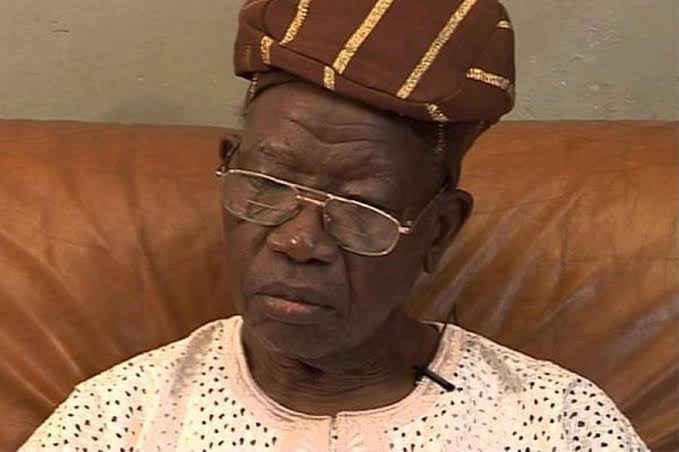
Professor Lai Olorode, chairman of the 4th Lateef Jakande Memorial Lecture, has said the late former Lagos State governor foresaw the challenges many Nigerians now face abroad and believed the solution lay in building a better Nigeria. Speaking at the annual lecture in Lagos on Thursday, Olorode recalled a personal conversation with Jakande, saying the former governor deliberately chose not to travel abroad during his time in office because he was committed to improving Nigeria. According to him, Jakande once explained that rather than seeking opportunities or medical treatment outside the country, his focus was on developing Lagos into a place where people from other nations would come for opportunities and services. Olorode said Jakande’s philosophy reflected a deep sense of patriotism and selfless public service, adding that his legacy remains relevant as many Nigerians continue to face discrimination and xenophobic attacks in countries such as South Africa. He described Jakande as a leader who dedicated himself to serving the people with integrity, noting that his commitment to governance extended beyond politics to nation-building. The professor also paid tribute to Jakande’s widow, Alhaja Jakande, praising her for maintaining a clear distinction between public office and family life during her husband’s administration. According to Olorode, she never interfered in government affairs because she believed only her husband had been elected to govern, a stance he said contributed to the former governor’s enduring legacy. The remarks were delivered during the 4th Lateef Jakande Memorial Lecture, themed “The Media, INEC, Voters and the Path to Credible Elections.” The event brought together journalists, civil society groups, and other stakeholders to discuss strengthening Nigeria’s democratic process. Olorode urged Nigerians to reflect on the kind of contribution they want to make to the country’s development, stressing that lasting national progress depends on responsible leadership, active citizenship, and strong institutions. The Lateef Jakande Memorial Lecture is held annually to celebrate the life and ideals of the late journalist and former Lagos governor while promoting conversations on governance, media responsibility, and civic engagement.

Public Affairs

2027: PFN Rejects Muslim-Muslim Ticket, Raises Alarm Over Preaching Laws

The Pentecostal Fellowship of Nigeria (PFN) has opposed the idea of a Muslim-Muslim presidential ticket for the 2027 general elections, insisting that Nigeria’s leadership should reflect the country’s religious and ethnic diversity. In a communiqué issued after its National Executive Council (NEC) meeting, the Christian body said inclusive governance is essential for promoting national unity, fairness and public trust. The statement follows the All Progressives Congress’ adoption of President Bola Tinubu and Vice President Kashim Shettima as its presidential ticket for the 2027 election. The PFN also expressed concern over proposals that could restrict public preaching, arguing that such measures would violate the constitutional rights to freedom of religion and expression. While acknowledging the need for lawful regulations to maintain public order, the fellowship stressed that such laws must not be used to suppress religious activities or limit freedom of worship. The organisation urged governments at all levels to uphold the provisions of the Constitution and called on Christians to remain peaceful, law-abiding and committed to constructive dialogue in the interest of national unity and cohesion.

Public Affairs

Lagos Bridge Crash: One Dead, Heavy Traffic After Multiple Trucks Collide

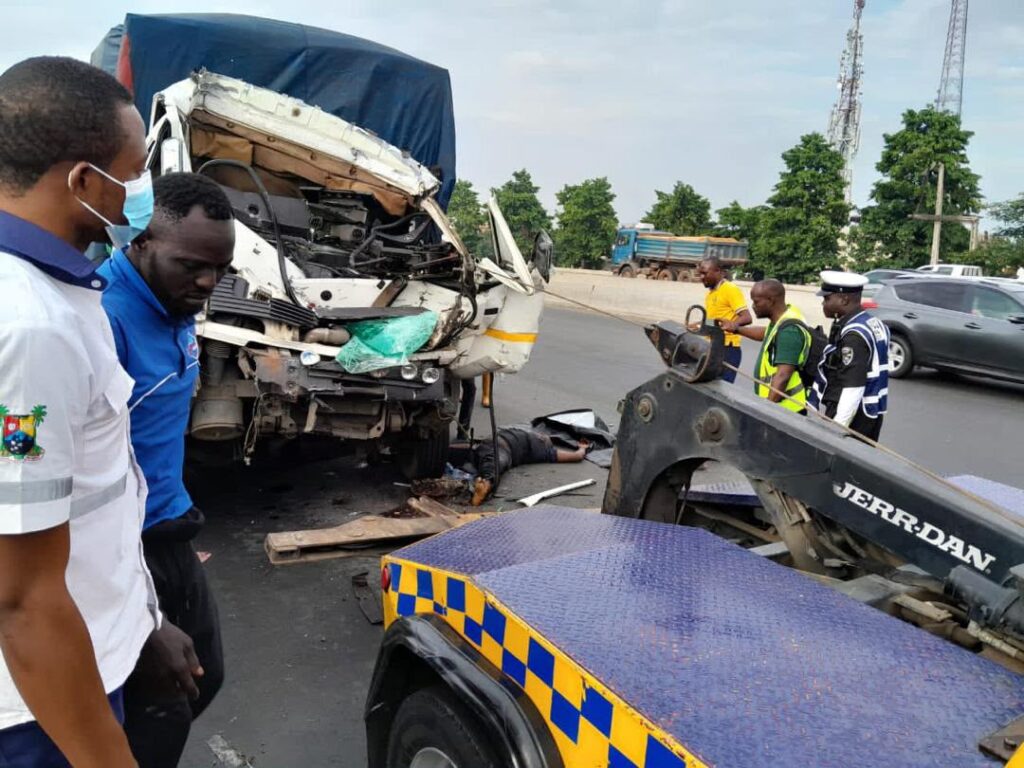
Traffic was brought to a standstill on the Lagos-Ibadan Expressway on Friday after a multi-vehicle crash on Kara Bridge left one person dead and triggered a massive gridlock. According to the Lagos State Traffic Management Authority (LASTMA), the accident involved three articulated trucks, two Canter trucks, a Sienna vehicle, and a trailer transporting chemicals that overturned on the bridge. The crash blocked a significant section of the expressway, causing heavy traffic that stretched from Kara through Berger to Otedola Bridge. Emergency responders from LASTMA, the Lagos State Emergency Management Agency (LASEMA), the Federal Road Safety Corps (FRSC), and the Nigeria Police Force arrived at the scene to manage the situation and begin rescue and clearance operations. A motor boy who was trapped in the wreckage was confirmed dead at the scene. His body was later recovered by emergency officials. Reacting to the incident, LASTMA General Manager, Olalekan Bakare-Oki, urged truck operators to ensure their vehicles are roadworthy and to avoid reckless driving to prevent similar accidents. He also advised motorists to use alternative routes through Isheri-Olowora and Ogunnusi while efforts to clear the affected section of the expressway continue.

Governance, Politics

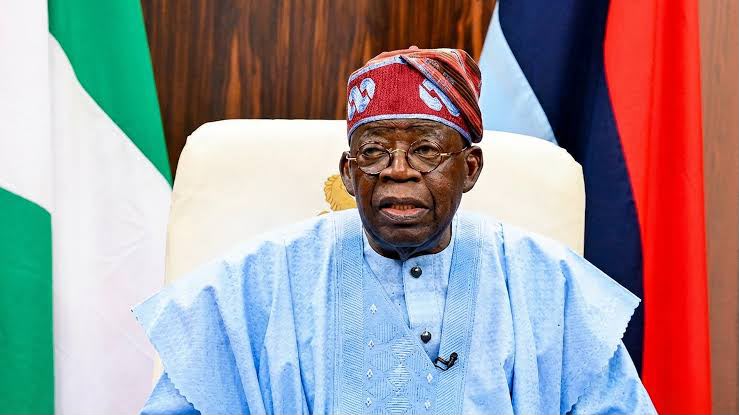
Tinubu Appoints Fayose, Bindawa, 24 Others to Federal Boards

Federal Government (F) agencies and commissions have taken immediate effect following President Bola Tinubu’s approval of twenty-six new appointments, including the appointment of former Ekiti State Governor Ayo Fayose as chairman of the Rural Electrification Agency (REA) and Major General Junaid Bindawa as chairman of the National Salary and Wages Commission (NSWC). reports that Fayose will head the board of the REA alongside Alhaji Ahmadu Abubakar and Engineer Ilyasu Ibrahim Makinta, who were appointed as members and non-executive directors. The board also includes the agency’s Director General, Abba Abubakar Aliyu, and three executive directors previously appointed. The President also approved eight other appointments to the NSWC. Former member of the House of Representatives, Olajumoke Okoya Thomas, was appointed secretary of the commission. Dr Ogbole Ene Lilian, Oladele Olatubosun and Yakubu Umar Barde were appointed commissioners representing Benue, Oyo and Kaduna respectively. Dr Mai Adamu Yau from Borno, Ginika Florence Tor from Enugu, Engineer Lawrence Okoh from Edo and Bello Morenike Iyabode from Kogi were appointed as members of the commission. Tosin Johnson Adeyanju, previously appointed Executive Secretary of the National Lottery Trust Fund (NLTF), was redeployed as Secretary of the Revenue Mobilisation and Fiscal Commission (RMFC). President Tinubu also appointed Dr Abuh Mohammed as Director General of the National Population Commission (NPC), Dr Akinola Odeyemi as Managing Director of the Nigerian Bulk Electricity Trading (NBET) and Dr Anthony Inalegwu Godwin as Chairman and Chief Executive Officer of the Nigeria Atomic Energy Commission (NAEC). Engineer Julius Oloro was appointed Chief Executive Officer of the National Centre for Agricultural Mechanisation (NCAM) in Kwara, replacing Dr A.R. Kamal, who died in January. The President also constituted the board of the Fiscal Responsibility Commission (FRC) with Dr Abdullahi Maikano Saidu as chairman. Other board members are Mohammed Asmau, Mohammed Aliyu Makama, Dr Suleiman Gidado, Louis O. Ndukwe, Amaechi Ugwele and Olaniyi Idowu Onikola. Shuni Muhammad Dahiru was appointed Executive Secretary of the National Commission for Mass Literacy, Adult and Non-Formal Education (NCMLANFE), replacing Professor Shu’aibu Shehu Aliyu, who was reassigned to the Petroleum Trust Development Fund (PTDF) in April. President Tinubu also appointed Gisaor Vincent Iorja as Executive Director, Finance of the Federal Housing Authority (FFHA), replacing Mathias Byuan, who resigned to contest the Benue governorship election. Iorja currently serves as Secretary of the Benue State Independent Electoral Commission (BSIEC). All the appointments take immediate effect, according to a press statement signed by Bayo Onanuga, Special Adviser to the President on Information and Strategy, dated July 20, 2026.

Public Affairs

ANLCA MMAC Crisis Worsens as Chapter Alleges Court Order Misrepresentation

The leadership of the ANLCA Murtala Muhammed Airport Command (MMAC) Chapter has dismissed the recent court order sought by the Association’s Board of Trustees (BOT), insisting that the ruling was obtained through misrepresentation and would not withstand legal scrutiny.In a statement issued on behalf of the chapter, the MMAC leadership maintained that the dispute over control of the chapter’s secretariat is not new, noting that the BOT had, over the past four years, repeatedly approached the courts in an effort to gain control of the facility without lasting success.According to the statement, the latest court order tailed to disclose that the secretariat had beensealed by the Nigeria Police Force as a crime scene following an ongoing investigation. The chapter argued that the court would not have granted the order if it had been informed of the true status ofthe property.The chapter also alleged that the counsel representing the BOT in the matter had earlier secured bail for BOT members facing a criminal case instituted by the Inspector-General of Police and had undertaken before the court that his clients would not interfere with evidence or witnesses during the bail period. It further claimed that the court was led to believe the dispute was a fresh disagreement between the Police and the BOT, describing the development as an abuse of court process that would be corrected once all relevant facts were presented.Recounting the history of the leadership crisis, the MMAC chapter said previous attempts by the BOT and the National Executive Committee (NECOM) toinaugurate a new executive without conducting an election were resisted in court.The statement recalled that a competent court eventually declared Hon. Bola Ashiru-Balogun as the duly elected Chairman of ANLCA MMAC, adding that although the BOT appealed the judgment, it later withdrew the appeal, effectively affirming his mandate.Following the judgment, the chapter said the Police reopened the secretariat to enable Ashiru-Balogun assume office before the facility was later sealed again after an alleged break-in, which is now under police investigation.The chapter accused the BOT of acting outside the provisions of the ANLCA Constitution, insisting that neither the BOT nor NECOM possesses the constitutional authority to remove a duly elected executive committee and replace it without an election. It maintained that political offices within the association can only be occupied through democratic elections and warned against what itdescribed as attempts to undermine members’ electoral mandate.The MMAC leadership disclosed that all parties involved in the dispute had been invited to appear before the Inspector-General of Police in Abuja on July 30, expressing confidence that the issues would be addressed through due process.The statement urged members of the association to remain calm and allow the ongoing legal and police processes to take their course.

Elections, Politics

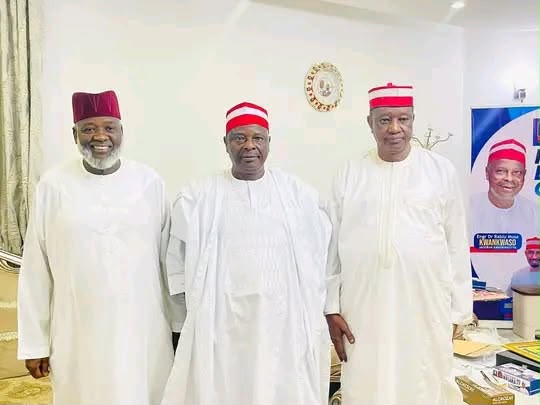
2027: Kwankwasiyya-Shekarau Alliance Endorses Gov Yusuf for Re-election

The Kwankwasiyya-Shekarau Unity Forum has declared its support for Kano State Governor Abba Kabir Yusuf and announced a change of name to Abba Gida-Gida–Shekarau Unity Forum. The declaration was made during a visit by members of the group to the Kano State Commissioner for Information and Internal Affairs, Ibrahim Abdullahi Waiya. Speaking during the visit, the forum’s chairman, Alhaji Ahmed Saminu (DOC), said the group was established following the merger of members from the All Progressives Congress (APC) and the Peoples Democratic Party (PDP) in 2023 to work for the success of the Kwankwasiyya movement. According to him, although their political leader, Malam Ibrahim Shekarau, later left the movement, many members remained loyal but were not initially recognised for their contributions. He credited the Commissioner for Information with bringing the group closer to the state government and giving its members a sense of belonging. “That is why we are here today to declare our total support for Governor Abba Kabir Yusuf and to rename our organisation as the Abba Gida-Gida–Shekarau Unity Forum,” Saminu said. He added that the forum believes Governor Yusuf deserves continued support because of what it described as his achievements since assuming office. Saminu praised the administration’s performance in education, healthcare, security, youth and women empowerment, road construction and infrastructure development, saying these accomplishments influenced the group’s decision to publicly back the governor. In his response, Commissioner Ibrahim Abdullahi Waiya thanked the members for their support and described them as committed politicians who have chosen to prioritise the development of Kano State. He said their endorsement of Governor Yusuf for a second term reflected confidence in the administration’s performance and commitment to delivering the dividends of democracy. Waiya also dismissed criticism of the governor, insisting that it would not distract the administration from its development agenda. He assured the forum that the state government would continue to work closely with the group as part of efforts to secure victory in the 2027 general elections.