The Click Report

Audio Brief

Listen to the latest top stories and editorial summary.

2026

Politics

Tinubu: Omokri challenges Atiku over claim that president is 90

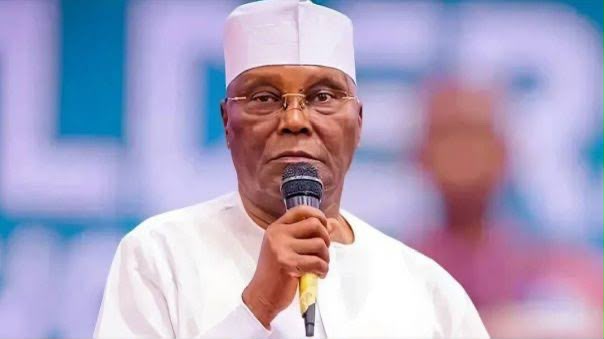
Ambassador-designate to Mexico, Honduras, Guatemala and Nicaragua, Reno Omokri, has challenged former Vice President Atiku Abubakar over his claim that President Bola Tinubu is 90 years old. Atiku, who is the presidential candidate of the African Democratic Congress (ADC) for the 2027 election, made the claim during a BBC interview published on Friday. He said he had evidence to support his assertion and promised to present it in court. Responding to the allegation, Omokri questioned its basis and referred to a photograph he said showed Tinubu with journalist and publisher Dele Momodu in London in 1996. Omokri argued that if Tinubu were 90 years old in 2026, he would have been 60 when the photograph was taken. He challenged Momodu to confirm the authenticity of the photograph and provide details about when and where it was taken, noting that the journalist was alive and could testify to its authenticity. Omokri also asked whether Tinubu appeared to be 60 years old in the photograph, urging Nigerians to examine the image and determine whether the person pictured appeared to be 60 or even 50 at the time. The ambassador-designate recalled Momodu’s previous accounts of Tinubu’s support for him during his years in exile under military rule. He said political differences should not prevent people from defending facts about individuals they had previously considered friends or benefactors. Omokri also criticised what he described as attempts to “age-shame” political opponents, arguing that the 2027 presidential campaign should focus on issues affecting Nigerians rather than disputed claims about candidates’ ages. He urged political actors to raise the standard of the election by focusing on solutions to the challenges facing the country. Tinubu’s publicly stated date of birth is March 29, 1952, which makes him 74 years old in 2026. Meanwhile, Atiku defended his decision to contest the 2027 presidential election, saying his age should not be used to question his ability to govern. The former vice president described himself as strong, healthy and agile, adding that contesting for the presidency was his constitutional right. Atiku also pointed to his experience and competence as reasons for seeking the presidency and promised to tackle insecurity within his first year in office if elected. He attributed Nigeria’s security challenges partly to inadequate manpower and equipment, which he said had weakened the country’s security architecture.

Politics

2027: Atiku will say anything to deceive gullible voters – Presidency

The Presidency has criticised former Vice President and African Democratic Congress (ADC) presidential candidate, Atiku Abubakar, over his promise to reopen Nigeria’s land borders if elected president in 2027. The Special Adviser to President Bola Tinubu on Media and Public Communication, Sunday Dare, said Atiku’s statement was misleading because most of Nigeria’s land borders had already been reopened by the Federal Government. Dare said the government announced the reopening of most land borders on March 14, 2024, adding that President Tinubu also reopened the Kamba border in Kebbi State in February 2026. He therefore questioned which borders Atiku intended to reopen, urging the former vice president to explain whether he meant relaxing existing border controls and, if so, identify the specific measures he would remove. According to the Presidency, Nigeria needed to maintain effective border controls to prevent terrorism, arms trafficking, smuggling, human trafficking and other forms of transnational organised crime while allowing legitimate trade and movement. Dare stressed that an open border did not mean an uncontrolled border, noting that modern border management involved immigration and customs operations, intelligence sharing, surveillance, technology and coordinated security efforts. The Presidency also cited the security situation across the Sahel and Lake Chad Basin, arguing that Nigeria’s borders remained particularly important in tackling terrorism and organised crime. It said border communities could be vulnerable to attacks because of difficult terrain, limited government presence and weak coordination, making effective border management an essential part of national security. The Presidency urged Atiku, as a former vice president, to provide Nigerians with a detailed alternative policy rather than campaign promises focused on reversing or renaming policies already being implemented. Dare said Nigerians deserved to know how any proposed administration would improve border surveillance, strengthen intelligence sharing, modernise customs and immigration services, deploy technology and enhance cooperation with neighbouring countries. The Presidency maintained that Nigeria’s borders should remain open to legitimate commerce and movement while being secured against terrorists and criminal networks. It added that the Tinubu administration remained open to scrutiny and should be judged based on measurable outcomes in areas including security, economic recovery, border management and citizens’ welfare.

Business

WhatsApp to Start Charging Businesses Per Message From October 1

Meta, the parent company of WhatsApp, announced that it would begin charging businesses for certain messages sent through the WhatsApp Business Platform from October 1, 2026. The company disclosed the pricing change in a WhatsApp Business Platform update issued in July, stating that charges for service messages would resume from October 1. The new fees would affect companies using the official WhatsApp Business Platform, formerly known as the WhatsApp Business API, to manage customer conversations on a large scale. Banks, fintech companies, e-commerce platforms, telecommunications operators, logistics firms and large retailers were among the businesses expected to be affected. However, the new charges would not affect ordinary WhatsApp users or most small businesses using the standard WhatsApp Business application on their phones. Under the existing system, when a customer sent a message to a business, a 24-hour customer service window was opened, allowing businesses to respond with free-form service and certain utility messages without paying Meta. From October 1, businesses would instead be charged on a per-message basis for service messages sent during the customer service window. Meta also stated that utility messages, including payment confirmations, order updates and delivery notifications, would attract charges when sent in response to users within an open 24-hour customer service window. The company warned businesses and Solution Providers to add a payment method before the new charges took effect. Businesses without a payment method on file by September 30 would have their service messages stopped once the charges became effective. For Nigerian businesses, a chargeable utility or service message was expected to cost about $0.0101, equivalent to roughly ₦14, based on an exchange rate of about ₦1,340 to the dollar. Marketing messages were considerably more expensive at about $0.062, or approximately ₦84. Meta’s charges would be separate from any additional fees imposed by third-party Business Solution Providers. The development meant that Nigerian companies that relied heavily on WhatsApp for customer support and transactional communication would have to factor the new per-message fees into their operating costs from October.

General News

DHQ Flags AI-Generated Video on CDS’ Political Involvement

The Defence Headquarters (DHQ) has warned Nigerians against a fabricated artificial intelligence-generated video falsely portraying the Chief of Defence Staff, General Olufemi Oluyede, as making partisan political statements. In a statement issued on Thursday, August 27, the Director of Defence Information, Major General Samaila Uba, said the video did not originate from the CDS and that the statements attributed to him were false. The DHQ described the video as a deliberate attempt to mislead the public, distort the position of the nation’s top military officer and create the impression that the Armed Forces of Nigeria had taken a political position. The military urged Nigerians to disregard the video and any statements attributed to General Oluyede in the fabricated material. It stressed that the Armed Forces remained a professional, apolitical and non-partisan institution committed to the Constitution and the defence of the nation. The DHQ also warned individuals responsible for creating the video, as well as those knowingly circulating or amplifying it, to stop doing so. It advised Nigerians to verify sensitive claims concerning military leadership through the Defence Headquarters’ official communication channels, including its verified social media platforms. The warning comes amid growing concerns over the use of AI to create convincing fake videos and audio recordings of public figures. The DHQ said such misinformation could undermine public confidence in the military and damage its reputation, particularly when it falsely suggests that military leadership has taken a partisan political position.

Politics

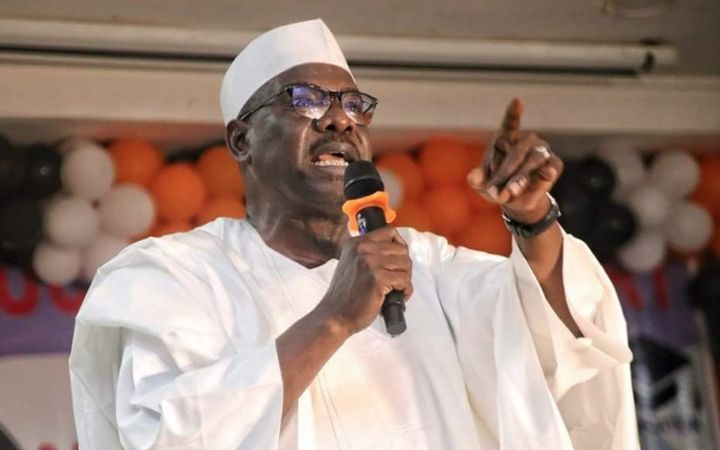
Ndume: Tinubu’s Government Now Controlled by ‘Kakistocrats’

Former Senate Leader and All Progressives Congress (APC) chieftain, Ali Ndume, has criticised the administration of President Bola Tinubu, accusing some officials of being “kakistrocrats” who dominate the presidency. Ndume made the remark on Wednesday during an interview on Arise Television’s Prime Time, where he urged President Tinubu to remove officials he considered incompetent before they caused further damage to his administration. He described the recent controversy involving an alleged fake government agency operating from the premises of the Secretary to the Government of the Federation’s office as evidence of poor oversight within the administration. According to Ndume, capable officials would have prevented such incidents from occurring. He, however, commended Tinubu for ordering the arrest of Nwabueze George, who was allegedly involved in operating the fake agency. Ndume maintained that the president needed to take stronger action against officials responsible for what he described as embarrassing lapses in the government.

Sports

NFF Resignations: Sports Commission Split Over Committee Chair

The National Sports Commission has reportedly become divided over the choice of chairman for a proposed Normalisation Committee following the resignation of Nigeria Football Federation President Ibrahim Gusau and other board members. The NFF leadership stepped down amid growing pressure over the management of Nigerian football, including concerns surrounding the use of funds and the poor performances of the country’s national teams. NFF General Secretary, Mohammed Sanusi, also confirmed his resignation on Thursday, saying reports of his exit alongside Gusau were true. The leadership crisis has created the need for a Normalisation Committee to oversee the affairs of the federation and organise fresh elections. However, NSC Chairman Shehu Dikko and Director-General Bukola Olopade were reportedly divided over who should lead the committee. Sources said Dikko was backing former NFF technical committee chairman Musa Ahmadu, while Olopade preferred former NFF president Amaju Pinnick. The disagreement was said to have stalled decisions and raised concerns among football stakeholders, with fears that prolonged administrative disputes could affect players, sponsors and Nigeria’s relationship with FIFA. The proposed Normalisation Committee is expected to oversee the NFF for about three months, with its major responsibility being to conduct fresh elections for a new executive board. The development could affect the NFF election earlier scheduled for September 27 in Lafia, Nasarawa State. The crisis also followed investigations into the NFF’s management of the N17bn Federal Government intervention fund released to the federation for players’ wages and bonuses.

General News

Charge me to court, VeryDarkMan dares police over checkpoint kidnapping claims

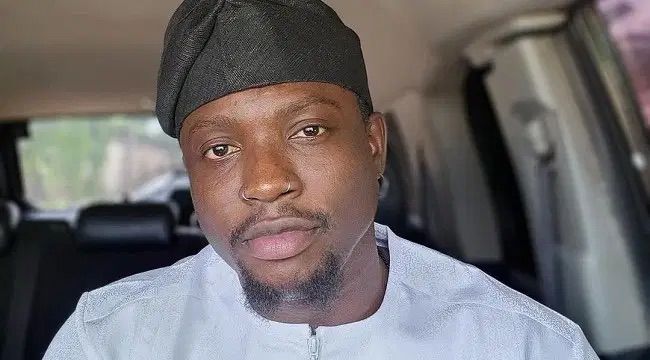
Social media activist Martins Otse, popularly known as VeryDarkMan, has challenged the Nigeria Police Force to charge him to court if it believes he committed an offence over his allegations that security personnel aid kidnapping and banditry in Nigeria. Otse, reacting to the police invitation on Thursday, said he was willing to honour the invitation but would not submit his evidence to the police, insisting that he would present it in court instead. The police had invited the activist to provide evidence supporting his allegation that officers at checkpoints identify wealthy travellers and pass information about them to kidnappers. The Force described the allegation as serious, unsubstantiated and damaging, while assuring that any evidence provided would be investigated. However, Otse maintained his position and said his lawyers were ready to defend him if the police decided to prosecute him. He also alleged that the police, military, immigration and customs were aware of the insecurity affecting the country. He questioned why kidnapping, terrorism and banditry remained widespread despite government spending on security. Otse also criticised the welfare of police officers, saying improved working conditions were necessary to strengthen the country’s security system. His latest comments followed an earlier dispute with the police over allegations against the Assistant Inspector-General of Police in charge of Zone 2 Command, Moshood Jimoh. The police had invited Otse to substantiate those claims and said the related criminal matter was already before a court. Despite the police invitation, Otse said he remained ready to face the authorities in court and insisted that he stood by his allegations. “Let’s meet in court. The evidence will be tendered there,” he said.

General News

FG Accelerates Police Reforms to Curb Community Self-Help Initiatives

The Federal Government has intensified efforts to reform Nigeria’s policing system amid growing insecurity and concerns over communities resorting to self-help. The development followed the appointment of Professor Emmanuel Olukemi Rotimi of Obafemi Awolowo University (OAU), Ile-Ife, to the Policy Advisory Committee of the Presidential Working Group on the National Policing Bill. The proposed bill is expected to provide a legal framework for a dual policing structure comprising Federal and State Police Services. It will also address funding, accountability, oversight, training, firearms control and information sharing. Meanwhile, President Bola Tinubu ordered the Armed Forces, Nigeria Police Force, Department of State Services and other security agencies to intensify efforts to rescue victims abducted from a mosque in Niger State. The attackers reportedly stormed Kpenya Mosque in Borgu Local Government Area after attacking nearby communities, with at least 60 people reportedly abducted. Speaking at the Nigerian Bar Association’s 66th Annual General Conference in Port Harcourt, National Human Rights Commission Executive Secretary Anthony Ojukwu also called for the urgent establishment of State Police. Ojukwu said decentralised policing would improve response times because officers would be more familiar with local communities and terrain. However, he stressed that strong oversight and accountability mechanisms would be necessary to prevent political abuse and human rights violations. Social media activist Martins Vincent Otse, popularly known as VeryDarkMan, also called for greater measures to enable citizens to protect themselves, including easier access to firearms. He alleged that some security agencies were aware of the identities and locations of criminals responsible for kidnappings and attacks. The proposed National Policing Bill is expected to form part of broader efforts by the Federal Government to strengthen security and address weaknesses in Nigeria’s existing policing structure.

Politics

2027: Atiku Drops Aide, Insists on Fuel Subsidy Return

Presidential candidate of the African Democratic Congress (ADC), Atiku Abubakar, has reaffirmed his commitment to restoring petrol subsidy if elected president in 2027. Atiku made the clarification on Tuesday in Abuja while receiving the Osun State leadership of the ADC. He said comments by his media aide, Paul Ibe, suggesting that the proposed subsidy would eventually be phased out did not reflect his position. The former vice-president said he remained committed to restoring subsidy, arguing that Nigeria had enough resources to improve the welfare and purchasing power of its citizens. According to Atiku, his proposed policy would focus on easing the impact of rising fuel, transportation and food costs rather than returning to the previous system of subsidising imported petrol. He said the intervention would support domestic refining, reduce energy and transportation costs and improve Nigerians’ purchasing power. He also stated that the proposed subsidy would be targeted and designed to prevent abuse. Atiku’s Senior Special Assistant on Public Communication, Phrank Shaibu, said the intervention would be capped, transparently budgeted and independently audited. He added that it would be gradually withdrawn as domestic refining capacity increased, fuel supply stabilised and competition improved. The debate over petrol subsidy has intensified ahead of the 2027 elections following its removal by President Bola Tinubu in May 2023, which led to a significant increase in fuel prices and living costs.

Politics

2027: ACF, PANDEF, MBF Demand Checks on Presidential Candidates

Ahead of the 2027 general elections, the Arewa Consultative Forum, Pan Niger Delta Forum and Middle Belt Forum have called for greater scrutiny of the backgrounds and records of politicians seeking elective positions. The groups said Nigerians had the right to know the educational history, integrity and track records of candidates before entrusting them with political power. The ACF said presidential aspirants should be prepared to account for their past and provide more than just certificates to prove their qualifications. The ACF Publicity Secretary, Prof. Tukur Baba, said candidates seeking the presidency should expect questions about their history, stressing that leadership required transparency and accountability. He added that Nigerians were ultimately more concerned about the impact of governance on areas such as healthcare, education, housing and household welfare.PANDEF National Chairman, Ambassador Godknows Igali, supported the call, saying aspirants should make their life journeys and records available to the people they intended to serve. He compared political leadership to a job application, where candidates were expected to present their experience and qualifications. Similarly, MBF President, Dr Bitrus Pogu, said candidates should be judged by their achievements and track records rather than campaign promises. He urged all aspirants to subject themselves to proper scrutiny so voters could make informed decisions. However, Afenifere General Secretary, Chief Ademola Folarin, cautioned that while examining candidates’ backgrounds was useful, moral judgments could be subjective. He maintained that legal requirements remained the ultimate standard for determining eligibility for public office.