The Click Report

Audio Brief

Listen to the latest top stories and editorial summary.

Politics

Elections, Politics

Osun Decides 2026

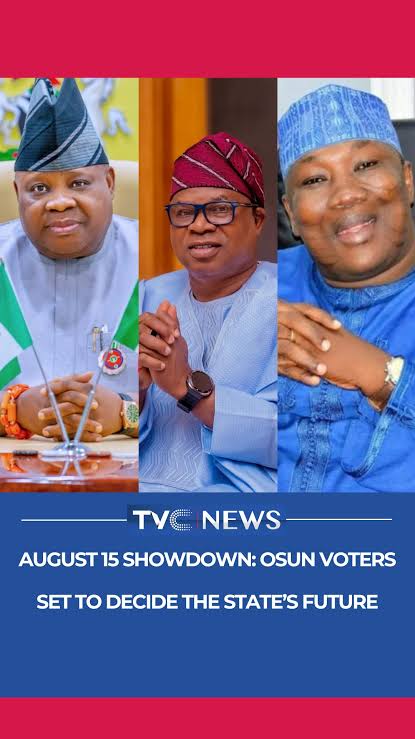
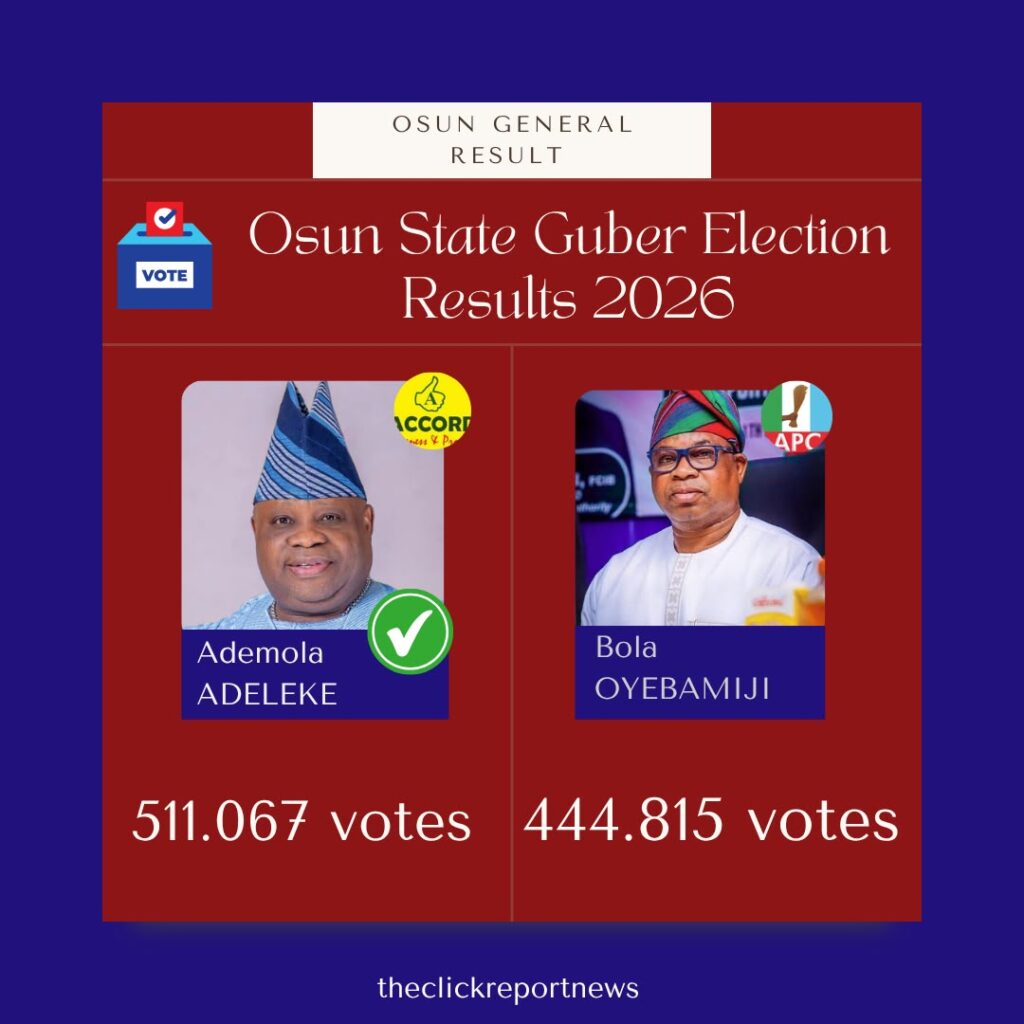
Osun State voters are heading to the polls today to elect a governor who will lead the state for the next four years, with 15 political parties fielding candidates in the governorship election. The candidates were confirmed in the final list released by the Independent National Electoral Commission, following the addition of the Social Democratic Party to the ballot. The candidates include Accord’s Ademola Adeleke, Action Alliance’s Farinloye Olarenwaju, African Action Congress’ Esan Olajide, African Democratic Congress’ Najeem Salaam, African Democratic Party’s Adeagbo Opawoye, All Progressives Congress’ Bola Oyebamiji, APGA’s Adesina Adeyemi-Doro, Allied Peoples Movement’s Adewale Adebayo, Action Peoples Party’s Clement Adesuyi and Boot Party’s Masilo Adeleke. Others are Taofeek Adeleke of the New Nigeria Peoples Party, Saliu Oyelami of the Peoples Redemption Party, Francis Olugbenga of the Social Democratic Party, Ogunsakin Olalekan of the Young Progressives Party and Adefemi Adesuyi of the Zenith Labour Party. The APM and PDP candidates, Adebayo Adewale and Adedamola Adebayo, respectively, withdrew from the contest and endorsed incumbent Governor Ademola Adeleke. Although 15 candidates are on the ballot, the election is largely regarded as a three-way contest involving Adeleke of Accord, Oyebamiji of the APC and Salaam of the ADC. The Peoples Democratic Party and Labour Party are not participating in the election, despite the PDP winning the 2022 governorship poll with Adeleke as its candidate. Adeleke is now seeking re-election under the Accord platform following political realignments within the PDP. Ahead of the poll, the opposition APC and ADC expressed confidence in their chances, while Adeleke and his campaign team largely avoided commenting on their expectations. The ADC called on voters to remain peaceful and urged security agencies to maintain neutrality. Its campaign council spokesperson, Nurain Adebisi, also appealed to INEC to ensure transparency, proper logistics and strict adherence to electoral regulations. Similarly, the APC expressed confidence in its candidate, Bola Oyebamiji, citing his extensive campaign across the state. The party also called on security agencies to take firm action against political thugs and urged INEC to comply fully with the Electoral Act. Security concerns Security remains one of the major concerns surrounding the election following reports of political violence during the campaign period. Several areas, including Ede, Ilesa, Osogbo, Iwo and Ikirun, have witnessed clashes, attacks on campaign materials and disruptions of political activities. Security agencies, including the police, Department of State Services, Nigeria Security and Civil Defence Corps and military, have pledged to deploy personnel across the state’s 30 local government areas, 332 wards and 3,763 polling units. The Economic and Financial Crimes Commission is also expected to monitor the election and tackle vote-buying. Ede North and Ede South are regarded as key areas because of their significance to Adeleke’s political base. Ilesa East and Ilesa West are also being closely watched because of previous clashes and concerns over possible vote-buying. In Osogbo and Olorunda, where the three leading parties have strong grassroots structures, security agencies are expected to focus on polling centres and collation locations. Iwo and Ikirun are also considered potential flashpoints because of previous disputes involving supporters of rival parties. INEC’s preparedness and technology The election will also serve as a major test for INEC, particularly regarding the deployment of electoral technology. Officials are expected to ensure the timely arrival of election materials and personnel at polling units, while maintaining neutrality throughout the voting and collation processes. The Bimodal Voter Accreditation System and INEC Result Viewing portal will also come under scrutiny as voters and observers monitor the accreditation and transmission of results. Any significant delays, technical problems or unexplained interruptions could fuel suspicion among political parties and voters. Vote-buying concerns Another major issue is vote-buying, with concerns that economic hardship could make vulnerable voters susceptible to financial inducement. Reports of cash payments and distribution of food and household items by political agents have heightened concerns about the integrity of the process. Authorities will therefore face the challenge of preventing vote-buying while ensuring that enforcement is impartial and does not favour any political party. Neutrality of security agencies The credibility of the election will depend heavily on the neutrality of security personnel and the electoral commission. Security agencies are expected to protect voters, election officials, party agents and observers without favouring any candidate or political party. They are also expected to prevent intimidation, electoral violence and attempts to disrupt voting. INEC, on its part, must ensure transparent procedures, efficient logistics, credible accreditation and prompt transmission of results. Ultimately, the Osun election will test whether electoral institutions can guarantee a peaceful and credible process despite the intense political competition. The outcome will also provide an important indication of public confidence in Nigeria’s electoral system ahead of the 2027 general elections.
Elections, Politics

Kogi PDP rejects N150m presidential campaign billboard fee

The Kogi State chapter of the Peoples Democratic Party has rejected campaign signage and promotional-material fees recently introduced by the state government ahead of the October 2026 local government elections and the 2027 general elections. The party described the charges as excessive, disproportionate and undemocratic, arguing that they could create a financial barrier to political participation. In a statement issued on Thursday by the state PDP chairman, Mohammed Gambo, the party acknowledged the government’s responsibility to regulate outdoor advertising and maintain order in public spaces. However, it said such regulations should remain reasonable, affordable and consistent with the constitutional rights of political parties, candidates and citizens. The state government reportedly approved a N150m fee for presidential candidates, N50m for senatorial candidates, N30m for House of Representatives candidates, N5m for State Assembly candidates, N2m for chairmanship candidates and N300,000 for councillorship candidates. The PDP argued that the fees were excessive, particularly when compared with the spending limits established under the Electoral Act 2026. The party pointed to Section 92(4) of the Act, which places a N500m limit on the total election expenses of a senatorial candidate. It argued that the N50m signage fee alone would amount to 10 per cent of the candidate’s statutory spending limit, before expenses on rallies, media, transportation, campaign offices and other activities. According to the PDP, legitimate regulatory charges should be fair and proportionate and should not undermine electoral spending limits or make it difficult for opposition parties and candidates to participate meaningfully in elections. The party also urged the government to distinguish between commercial outdoor advertising and political expression by citizens and political parties. It called on the Kogi State Government to immediately review the fees and organise an inclusive meeting involving registered political parties, civil society organisations, the Kogi State Signage and Advertisement Agency and other relevant stakeholders. The PDP said such a meeting would help establish a transparent, reasonable and equitable framework for regulating campaign signage ahead of the upcoming elections.

Politics

Tinubu assures Nigerians refineries will soon bounce back

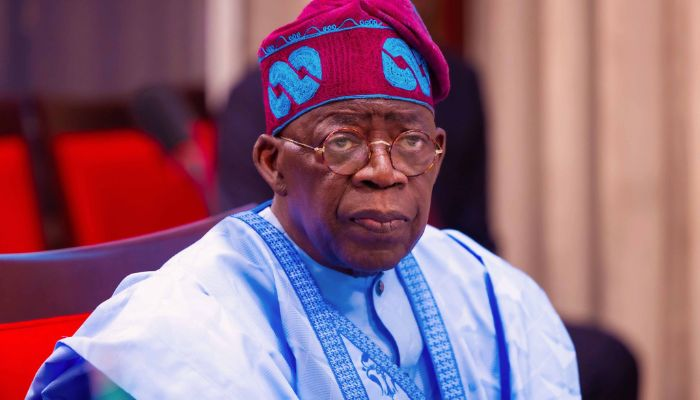
President Bola Tinubu has assured Nigerians that the country’s refineries will soon resume operations, saying his administration is working to restructure the economics and operations of the facilities. The President also expressed concern that the benefits of the Federal Government’s Compressed Natural Gas initiative were not reaching commuters as quickly as expected, saying much of the benefit appeared to be going to truck owners. Tinubu spoke on Thursday when he received the leadership of the Nigeria Union of Petroleum and Natural Gas Workers at the Presidential Villa in Abuja. The President described NUPENG as an important partner in the government’s efforts to reform the economy and recalled his commitment to removing the petrol subsidy despite threats of industrial action by oil and gas workers. He said the savings from subsidy removal were being used to fund salaries and major infrastructure projects across the country, including the Lagos-Ibadan, Abuja-Kaduna and Abuja-Kano highways, as well as the planned Sokoto-Badagry road. On CNG, Tinubu urged stakeholders to ensure that the savings from the cheaper fuel option were passed on to commuters. He said, “Whatever benefit is coming from CNG is going into the pockets of truck owners. It’s not spreading as fast as I would like, but it should spread.” Addressing concerns over the country’s refineries, the President said the facilities would return to operation but stressed that simply producing smoke and flames would not mean a refinery was functioning effectively. According to him, the focus was on ensuring that the facilities became commercially viable and delivered the value for which they were established. Tinubu said he had accepted responsibility for fixing the challenges inherited from previous administrations and would continue working towards improving the country’s economy. Earlier, NUPENG President, Salimon Akanni Oladiti, appealed to the President to tackle the growing practice of casualisation of workers in the oil and gas industry, particularly in the upstream sector. Oladiti said the union had raised the issue with several affected companies without achieving meaningful results and urged the President to intervene. He also commended the administration for rehabilitating and expanding federal highways, noting that improved roads would make transportation safer for petroleum tanker drivers. The NUPENG president further called for the revival of Nigerian Pipelines and Storage Company depots across the country to complement efforts to restore the nation’s refineries. He recommended that the depots be handed over to private investors for management through an equity arrangement, arguing that this would help restore their operations and improve petroleum distribution nationwide.

Politics

Nigeria Fails U.S. Fiscal Transparency Assessment for 2nd Consecutive Year

Nigeria has failed the United States’ minimum fiscal transparency requirements for the second consecutive year, with the US Department of State saying the country made no significant progress in improving financial management and public access to fiscal information in 2025. The finding was contained in the 2026 Fiscal Transparency Report released by the US State Department on Tuesday. The report assessed 139 governments and the Palestinian Authority, with 73 meeting the minimum requirements. Of the 67 that failed, 14 recorded significant progress, while 53 countries, including Nigeria, were classified as making no progress. The assessment was based on information gathered by the US Embassy in Abuja, federal agencies, international organisations and civil society groups between January 1 and December 31, 2025. The report criticised Nigeria’s budget process, saying the country’s budget documents did not provide a sufficiently complete picture of government revenues and expenditures. It also said actual revenue and spending did not reasonably correspond with figures contained in the enacted budget. The US further faulted the government for failing to publish its executive budget proposal within a reasonable period before the start of the fiscal year, limiting opportunities for public scrutiny and debate. Nigeria’s Office of the Auditor-General of the Federation also came under criticism. According to the report, the supreme audit institution did not meet international standards for independence and failed to publish substantive audit reports within the required period. The report also raised concerns about public procurement, saying accessible information on government contracts was not sufficiently available. It noted that although Nigeria had laws governing the award of natural-resource contracts and licences, key details about concessions, including the geographic area, duration and companies awarded contracts, were not made public after decisions were taken. Despite the criticisms, the US acknowledged some areas of progress. Nigeria was credited with making its enacted budget and end-of-year report publicly accessible, while information on government debt obligations, including major debts owed by state-owned enterprises, was also available. The country’s sovereign wealth fund was similarly recognised for having a sound legal framework and disclosing its funding sources and general withdrawal policy. The State Department recommended several measures to improve Nigeria’s fiscal transparency. These include publishing the executive budget proposal on time, providing detailed revenue and expenditure breakdowns, ensuring actual spending corresponds with approved budgets, strengthening the independence of the Auditor-General’s office, publishing audit reports and making public procurement contract information easily accessible. Reacting to the report, the Presidency said fiscal transparency, accountability and effective public financial management remained priorities of the Federal Government. Special Adviser to the President on Media and Public Communication, Sunday Dare, said the findings should be viewed as an external benchmark rather than a comprehensive assessment of all fiscal reforms underway in Nigeria. He said the government was continuing reforms through initiatives such as Open Treasury, public budget documentation, debt disclosures and digital procurement systems, with the aim of improving the accessibility, reliability and timeliness of financial information. BudgIT, however, agreed with several of the report’s findings. Its Country Director, Vahyala Kwaga, said while Nigeria’s revenue and expenditure composition was generally clear, budget implementation reports had remained inadequate. Kwaga also criticised the lack of independence of the Auditor-General’s office and raised concerns about the absence of publicly accessible procurement information and recent debt sustainability analyses. The US report comes amid growing concerns over Nigeria’s budget implementation and the simultaneous operation of the 2024, 2025 and 2026 budgets. It also follows criticism of several 2026 budget allocations, including constituency projects, religious infrastructure and large lump-sum provisions described as special presidential interventions and miscellaneous expenditure. Globally, the US report found that major economies including China, Egypt, Saudi Arabia, Pakistan and Ukraine also failed to meet the minimum fiscal transparency standards. Countries that made significant progress included Cameroon, Chad, Liberia, Niger, Senegal, Bangladesh and Ethiopia. As Nigeria prepares for its 2027 budget cycle, the latest report is expected to increase pressure on the Federal Government to improve public access to financial information, strengthen oversight institutions and ensure greater accountability in the management of public resources.

Politics

Awujale: Ruling House Supports Leaders, Dismisses Removal Claim

The Grand Council of the Fusengbuwa Ruling House in Ijebu-Ode, Ogun State, has passed a vote of confidence in its leadership and rejected the purported removal of its chairman, Abdulateef Owoyemi, his deputy, Oladokun Ajidagba, and vice chairman, Prof. Fassy Yusuf. The three leaders were reportedly removed over allegations of financial inducement, document manipulation and other irregularities linked to the selection of a new Awujale of Ijebuland. However, the ruling house dismissed the allegations as baseless and described the committee responsible for announcing their removal as an unauthorised “kangaroo committee.” Speaking at a press briefing in Ijebu-Ode, Owoyemi said the family had previously been divided into three factions but had reconciled following the intervention of the Ogun State Government. He said he was subsequently elected chairman, with Ajidagba and Yusuf appointed as deputy chairman and vice chairman respectively. Owoyemi said the ruling house had concluded plans to take legal action against members of the opposing group over alleged defamation and other misconduct. He also urged the Ogun State Government to lift the embargo on the Awujale selection process, which has been suspended since January 2026. Prof. Yusuf also appealed to the government to allow the kingmakers to resume their constitutional role in selecting the new monarch. He argued that the government lacked the authority to halt the process and said the family could consider other options if its appeals were unsuccessful. However, the secretary of the fact-finding committee, Ridwan Oduneye, rejected the ruling house’s claims that the committee members were impostors. He said their actions were aimed at restoring due process, unity and integrity to the ruling house. Oduneye maintained that a general meeting attended by 115 family members had resolved to remove the three leaders and appoint Prince Adeleke Adeyemi as interim secretary and authorised signatory. The dispute follows the death of the former Awujale, Oba Sikiru Adetona, in July 2025 after 65 years on the throne. The Ogun State Government suspended the selection process in January 2026 following petitions from security agencies and stakeholders. A total of 95 aspirants had emerged from the ruling house’s nomination process before the suspension.

Elections, Politics

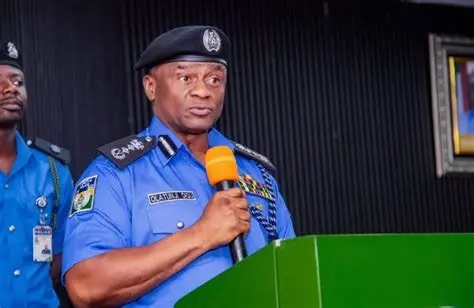
Police deploy DIG to Osun ahead of Saturday’s election

The Inspector General of Police, Olatunji Disu, has deployed a Deputy Inspector General of Police, Ishyaku Mohammed, to Osun State to oversee security operations during the state’s governorship election scheduled for Saturday, August 15, 2026. The deployment is part of measures by the Nigeria Police Force to ensure a peaceful, secure and credible election. According to the Force Public Relations Officer, CSP Ani Iniedu, DIG Mohammed will coordinate the police’s election security operations and work with other security agencies under the Inter-Agency Consultative Committee on Election Security. He will be supported by Assistant Inspectors-General of Police and Commissioners of Police deployed across Osun State’s three senatorial districts. Their responsibilities include strengthening intelligence-led policing, supervising operations and responding promptly to emerging security threats. The police said adequate measures had also been put in place to protect voters, INEC officials, election materials, polling units, collation centres, accredited observers and journalists before, during and after the election. Disu warned politicians, their supporters and others against attempting to disrupt the election, stressing that electoral offences would attract immediate arrest and prosecution. The Inspector General specifically warned against ballot snatching, voter intimidation, political thuggery and other forms of electoral malpractice. The police also reiterated that armed escorts, security aides and other unauthorised persons accompanying politicians or VIPs would not be allowed at polling units or collation centres on election day. Similarly, state-established security outfits, quasi-security groups and private security organisations are prohibited from taking part in election security operations. The Force urged residents, voters and visitors in Osun State to remain calm and assured them of adequate security throughout the electoral process. It also encouraged eligible voters to exercise their rights peacefully and without fear, while reaffirming its commitment to professionalism, neutrality, respect for human rights and protection of the electoral process.

Politics

2027 election: NHRC, CAN, PFN, Kwankwaso fault Sheikh Jingir

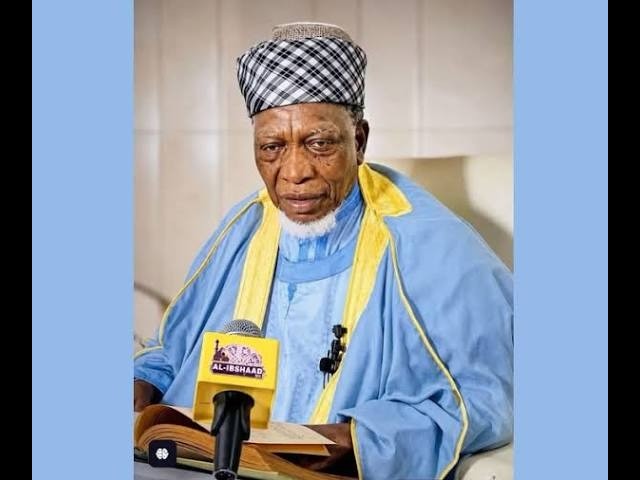
The National Human Rights Commission, Christian Association of Nigeria, Pentecostal Fellowship of Nigeria and several political figures have condemned comments attributed to Islamic cleric Sheikh Yahaya Jingir over the 2027 general elections. The groups also called on the government to investigate and, where appropriate, prosecute the cleric over remarks they described as inflammatory and capable of deepening religious tensions. Jingir had reportedly spoken at an event in Kano last weekend, where he defended the Muslim-Muslim ticket of the All Progressives Congress and argued that Muslims should dominate Christians because they constitute a larger population. The NHRC, through its Executive Secretary, Tony Ojukwu, described the remarks as hate speech and incitement to religious hatred. The commission urged the Inspector-General of Police, the Department of State Services and other relevant authorities to take action. It warned that inflammatory statements ahead of the 2027 elections could fuel division and potentially lead to violence. CAN also criticised the remarks, saying Nigerians had the right to support any political party or candidate but should not turn political choices into religious contests. The association urged Nigerians to judge candidates based on leadership, character, competence and performance rather than religious affiliation. It also called on religious leaders to use their influence to promote peace and tolerance. Similarly, PFN President, Bishop Wale Oke, urged politicians to avoid religious and ethnic considerations when choosing leaders. He said Nigeria’s status as a multi-religious country required balance and equal treatment of citizens. Oke also condemned violence committed in the name of religion, describing acts such as kidnapping, killings and attacks on schools as criminal regardless of the perpetrators’ faith. He called on the government to take decisive action against religious extremists. Former Kano State governor and Vice Presidential Candidate of the Nigeria Democratic Congress, Rabiu Kwankwaso, also condemned Jingir’s comments. He said the people of Kano did not support the remarks and urged political and religious leaders to promote unity and reconciliation. Former Aviation Minister, Femi Fani-Kayode, equally criticised the cleric’s comments and urged him to apologise to Christians. He warned that divisive religious rhetoric could have political consequences for the APC ahead of the 2027 presidential election. Fani-Kayode also called on the DSS to invite and caution Jingir, arguing that inflammatory statements should not be allowed to worsen religious tensions. Meanwhile, Minister of Information and National Orientation, Mohammed Idris, called on Nigerians to put aside religious, ethnic and political differences and work together to address insecurity and other challenges facing the country. Idris said Nigeria’s diversity should be a source of cooperation rather than division, warning that allowing religious differences to interfere with efforts to tackle insecurity could further worsen the situation. The reactions come amid growing political activities ahead of the 2027 general elections and renewed concerns over the use of religious rhetoric in political mobilisation.

Politics

Kebbi clash: 17 bandits killed, 10 cops, two civilians dead

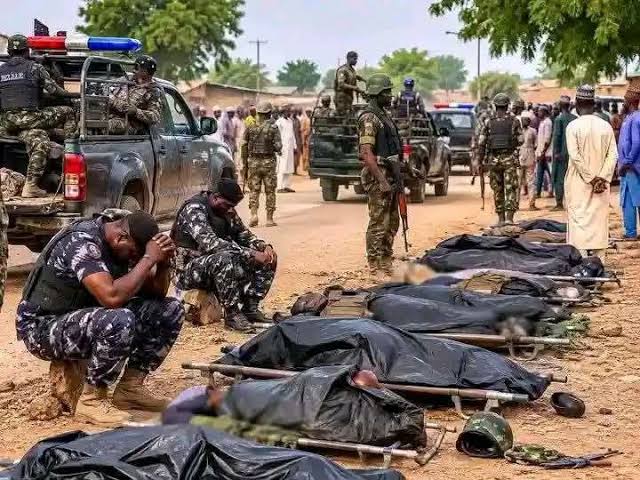
Ten police officers and two civilians were killed during a gun battle between security forces and suspected bandits in Sakaba Local Government Area of Kebbi State. The incident occurred around 9:25am on Monday along the Rafin Makuku axis, where security personnel intercepted the armed group reportedly moving between Zamfara and Kebbi states. The Kebbi State Police Command said at least 17 suspected bandits were neutralised during the encounter, while four motorcycles belonging to the attackers were also destroyed. The command’s spokesperson, Bashir Usman, said the casualty figure among the bandits was still being verified. He said the security forces suffered significant losses, with 10 police personnel killed and two others injured and receiving medical attention. Usman described the deceased officers as brave personnel who made the ultimate sacrifice in the line of duty, adding that their contributions would not be forgotten. Two civilians were also killed during the confrontation, according to the police. The command said its immediate priorities were to support the families of the deceased officers, care for the injured and continue operations to track fleeing members of the bandit group. The Nigeria Police Force also confirmed the deaths of the 10 officers. Its Force Public Relations Officer, Ani Iniedu, said Inspector-General of Police Olatunji Disu described the incident as a painful loss to the Force and the country. The remains of the deceased officers were taken to Birnin Kebbi, while additional security personnel were deployed to the area to strengthen ongoing operations and pursue the fleeing suspects. The police said further details would be released as the situation continued to be assessed.

Elections, Politics

OSUN POLL: Candidates unveil plans, intensify campaign

Candidates in Saturday’s Osun State governorship election have expressed confidence in their chances of winning while outlining their plans for the state. Speaking at the Arise Townhall Meeting in Osogbo, the major candidates, Governor Ademola Adeleke of Accord, APC candidate Munirudeen Bola Oyebamiji, ADC candidate Najeem Salaam and AAC candidate Olajide Esan said they were confident of victory if the election was free and fair. Adeleke, who spoke first, said he was not intimidated by the Federal Government or governors supporting Oyebamiji. Describing himself as a “bulldozer,” he said he was prepared to face what he called federal might. The governor highlighted his administration’s achievements in infrastructure, healthcare and agriculture, including the construction of about 350 kilometres of roads and the rehabilitation of about 200 health centres. He also said his government had purchased 31 tractors and provided agricultural inputs to farmers. Adeleke also said more than 1,500 personnel had been recruited and trained for the Amotekun security outfit. He urged voters to remain peaceful, protect their votes and ensure their ballots were counted. Oyebamiji, however, dismissed claims that the Federal Government would use its influence to secure his victory. He said his priorities would include security, welfare, agriculture, education and healthcare, with the aim of reducing hunger and poverty across the state. The APC candidate also accused Adeleke’s administration of failing to account for the resources it had received, including about N650 billion in federal allocations. He said the immediate past administration of Governor Gboyega Oyetola left about N15 billion for its successor, disputing claims that Adeleke inherited an empty treasury. Meanwhile, ADC candidate Najeem Salaam said he would build on the achievements of previous administrations while addressing gaps in governance. He promised a people-centred government and pledged to tackle political violence and thuggery in the state. AAC candidate Olajide Esan said his priority would be to return governance to the people. He proposed an Osun Residents Database to improve government planning and a financial dashboard that would allow residents to monitor public spending and demand accountability. With the election approaching, the candidates have continued to campaign on different visions for Osun, while urging voters to support their respective programmes.