The Click Report

Audio Brief

Listen to the latest top stories and editorial summary.

Elections

Elections, Politics

Osun Poll: Adeleke Says He’s Not Feeling Pressure

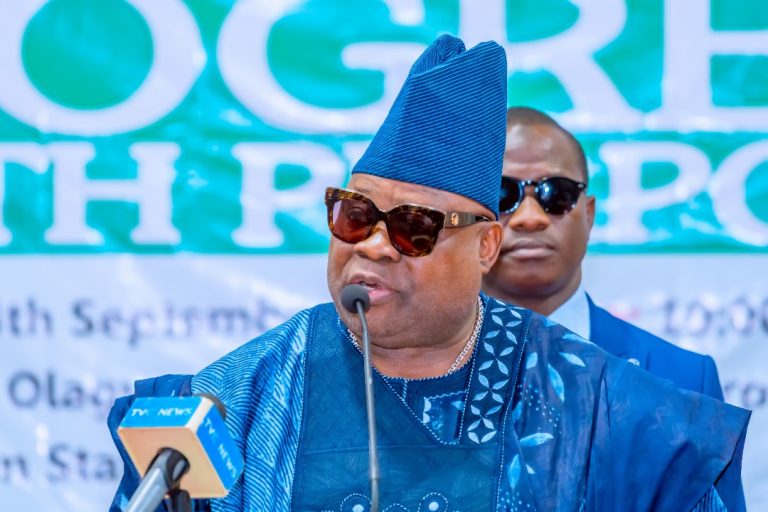
Osun State Governor, Ademola Adeleke, has urged residents to come out in large numbers and vote in the August 15 governorship election, assuring them that their votes would count despite alleged intimidation. The governor made the appeal on Monday in Osogbo, the state capital, shortly after an interactive session with civil servants and pensioners at a programme titled A Day with Mr. Governor, organised by the Office of the Head of Service in collaboration with labour unions and pensioners. Adeleke said he was confident of victory and insisted he was not under pressure as the election approaches, attributing his confidence to the support of the people and his faith in God. He, however, expressed concerns about the neutrality of the police during the election but noted that members of the National Peace Committee had assured him they would engage with the security agency’s leadership following the signing of the Peace Accord by governorship candidates. “I am not under pressure because I have God on my side and the people of Osun are with me. We are fully prepared, and I urge everyone not to be afraid despite any intimidation. This is a democracy, and people should come out on August 15, perform their civic duty and vote because their votes will count,” he said. Adeleke added that although he was not confident in the police’s neutrality, he was hopeful that the intervention of the National Peace Committee would help ensure a peaceful and credible election. Also speaking at the event, the Osun State Chairman of the Nigeria Labour Congress, Christopher Arapasopo, commended the Adeleke administration for introducing policies aimed at improving workers’ welfare and increasing pension payments. Addressing the gathering in Yoruba, Arapasopo urged residents not to be intimidated ahead of the election, saying the state should not return to what he described as the “dark days” under the All Progressives Congress. He noted that pension payments had improved significantly under the current administration, explaining that pensioners who previously received as little as ₦300, ₦1,500 and ₦3,000 now receive higher monthly payments, including ₦10,000 and ₦25,000. Arapasopo also called on workers and residents to support Adeleke’s re-election bid, expressing confidence that the governor would overcome political opposition. Osun voters are expected to head to the polls on Saturday, August 15, to elect the state’s next governor. Fourteen candidates will contest the election, including the incumbent governor, who is seeking another term on the platform of the Accord Party.
Elections, Politics

Aigboboh Charges APC Coordinators on Edo Grassroots Mobilisatio

The Edo State Coordinator of the Renewed Hope Ambassadors and Deputy Chairman of the All Progressives Congress (APC) in the state, Hon. Sylvester Aigboboh, on Monday has called on Local Government Coordinators of the group to remain united, dedicated and focused in taking the Renewed Hope Agenda of President Bola Ahmed Tinubu to every community across the 192 wards of Edo State. Aigboboh, popularly known as “Party Is Supreme,” said the coordinators must intensify grassroots mobilisation to ensure that every street, community and household in the state is actively engaged in the Renewed Hope movement. He stressed that sustained engagement at the grassroots would enable more citizens to appreciate the vision of President Tinubu and the commitment of the APC-led administration to national development. “We have a responsibility to ensure that the achievements, policies and developmental programmes of President Bola Ahmed Tinubu reach every village, ward and polling unit in Edo State. “Every coordinator must remain committed to enlightening the people on the benefits of the Renewed Hope Agenda and the positive impact it is making across the country,” Aigboboh said. The APC chieftain also commended Edo State Governor, Senator Monday Okpebholo, describing him as the “Angel of Transformation” whose administration, according to him, has delivered visible development across the 18 local government areas of the state. He said the ongoing infrastructure renewal, improved governance and people-oriented policies reflect the strong partnership between the Federal Government and the Edo State Government. According to him, “The transformation taking place across Edo State is a clear demonstration of the success of the Renewed Hope Agenda and President Tinubu’s unwavering commitment to improving the lives of Nigerians through quality leadership and good governance.” He further further appealed to residents of Edo State, irrespective of age or background, to embrace the Renewed Hope movement and actively participate in the grassroots mobilisation effort, noting that the support and cooperation of citizens remain critical to sustaining the developmental gains already recorded in the state and across the country. He maintained that President Tinubu has shown courage, resilience and purposeful leadership in steering Nigeria through difficult times through reforms aimed at strengthening the economy, infrastructure, security and youth empowerment. He added that the Renewed Hope Ambassadors believe the President deserves the continued support of Nigerians and a second term in office to consolidate the achievements of his administration and complete the ongoing reforms.rewrite

Elections, Politics

Osun Election: APC Picks Oyewumi for National Campaign Council

A former member of the National Youth Service Corps (NYSC) Governing Board and All Progressives Congress (APC) chieftain in Oyo State, Prince Oyekunle Oyewumi, has been appointed to the party’s National Campaign Council for the upcoming Osun State governorship election. The campaign council is chaired by the Governor of Imo State, Senator Hope Uzodimma, and comprises prominent APC leaders from across the country tasked with coordinating the party’s campaign ahead of the election. Several notable APC figures from Oyo State were also named to the council, including the Minister of Power, Chief Joseph Tegbe; Chairman of the National Revenue Service (NRS), Mr. Zacch Adedeji; former Minister of Youth Development and ex-Presidential Media Aide, Chief Sunday Dare; former Deputy Governor of Oyo State and APC state chairman, Chief Moses Adeyemo; the APC’s 2027 governorship candidate in Oyo State, Senator Sarafadeen Alli; Senator Yunus Akintunde; Mrs. Tolulope Akande-Sadipe; Hon. Wasiu Alli; and Barrister Ibrahim Lawal. Oyewumi, who previously served as Special Adviser to the Oyo State Governor on the Millennium Development Goals (MDGs) and was a member of the APC Presidential Campaign Council during the 2023 general elections, has held several leadership positions at both the national and state levels within the party. In his new role, he will serve on the Committee on Mobilisation of Special Interest (Persons with Disabilities), which is chaired by the Governor of Niger State, Umar Bago, with Aare Durotolu Bankole serving as secretary.

Elections, Governance, Politics

Atiku’s Lobbyists Take Tinubu’s 1990s Forfeiture Case to Trump, US Congress

A United States lobbying firm retained by former Vice President Atiku Abubakar says it has submitted documents relating to President Bola Tinubu’s 1990s civil asset forfeiture case to officials in the administration of President Donald Trump and members of the U.S. Congress. The firm, Von Batten-Montague-York, disclosed the development in a post on its official X account, stating that it is acting under a 12-month lobbying contract valued at $1.2 million with Atiku. According to the firm, it has begun distributing more than 60 pages of U.S. Department of Justice documents following engagements with officials in the Trump administration, members of Congress and senior congressional staff. The documents relate to a U.S. Drug Enforcement Administration (DEA) and Department of Justice investigation conducted in the late 1980s and early 1990s. The matter involved allegations linking Tinubu to a heroin trafficking network and a 1993 civil asset forfeiture case in Chicago. In its statement, the firm said, “Many within the U.S. government were previously unaware of the DOJ’s allegations concerning Bola Tinubu. We are changing that.” It added that the decision to brief U.S. officials was influenced by the impact of drug trafficking in the United States, describing it as a problem that has claimed thousands of lives and affected countless families. For now, the firm said it has released only a chronology summarising the Department of Justice’s allegations, including the timeline of the investigation, court filings and the forfeiture judgment. It added that it intends to ensure the complete court filings, supporting affidavit and related federal court decisions are brought to President Trump’s attention. The 1993 case involved the forfeiture of $460,000 from bank accounts linked to Tinubu while he was a private citizen in the United States. Tinubu was not criminally charged, and his representatives have consistently maintained that the matter was resolved through a civil settlement without any admission of wrongdoing. The submission marks a renewed effort to draw international attention to decades-old U.S. court records as political activities ahead of Nigeria’s 2027 general election gather momentum. There was no immediate response from the Presidency or the White House at the time of the firm’s announcement. However, President Tinubu’s media team has previously dismissed renewed references to the case as politically motivated. The lobbying firm said it would continue pushing for wider circulation of the documents within the U.S. government, a move that could revive discussions around historical legal records and their implications for Nigeria-U.S. relations.

Elections, Politics

Don Warns Time Is Running Out to Rebuild Trust Before 2027 Elections

Professor of Political Science, Sylvester Odion Akhaine, has urged the media, the Independent National Electoral Commission (INEC) and Nigerian voters to rebuild public confidence in the country’s democratic process ahead of the 2027 general elections. Akhaine made the call while delivering the keynote address at the 4th Annual Lateef Jakande Memorial Lecture organised by the Nigerian Guild of Editors (NGE) in Lagos. The lecture was themed “The Media, INEC, Voters and the Path to Credible Elections.” Describing the 2027 elections as a critical test for Nigeria’s democracy, the Lagos State University (LASU) professor said the credibility of the polls would largely depend on the conduct of the media, INEC and the electorate. Reflecting on the legacy of the late former Lagos State Governor, Lateef Jakande, Akhaine said the Second Republic remains a benchmark for democratic governance in Nigeria and reinforces the belief that “another Nigeria is possible.” However, he warned that poor governance, weakened institutions and what political scholars describe as “state capture” continue to threaten the country’s democratic development. According to him, the executive arm has increasingly overshadowed other institutions of government, while insecurity and the growing influence of non-state actors have weakened the authority of the Nigerian state. Akhaine also lamented what he described as a declining political culture, arguing that leadership recruitment has become driven by money rather than merit, leaving many citizens disengaged from the democratic process. Speaking on the role of the media, he noted that Nigeria’s press has historically served as a watchdog since the colonial era and remains constitutionally empowered to hold government accountable through accurate, balanced and responsible reporting. He traced the evolution of Nigeria’s electoral management bodies from the Electoral Commission of Nigeria (ECN) to the present-day INEC, stressing that independent and credible electoral institutions are essential to democratic stability. The political scientist described voters as the foundation of democracy, saying elections derive legitimacy from the freely expressed will of the people. He noted that while credible elections require a sound legal framework, responsible political actors and an independent electoral commission, the media also plays a vital role in shaping public confidence in the process. Reviewing Nigeria’s electoral history, Akhaine said the country has struggled to conduct elections widely accepted as free and fair since the return to civilian rule in 1999. He cited vote-buying, intimidation, ballot manipulation and misinformation as persistent challenges undermining electoral credibility. He also warned that the rise of social media has intensified the spread of fake news, disinformation and online manipulation, making it increasingly difficult for citizens to distinguish fact from falsehood. Despite these challenges, Akhaine expressed optimism that Nigeria’s democracy can still be strengthened if key institutions fulfil their constitutional responsibilities. He called on the media to uphold professionalism and factual reporting, urged INEC to continue implementing electoral reforms while strengthening its independence, and encouraged greater civic education to help voters resist financial inducement and make informed electoral choices. Also speaking at the event, President of the Nigerian Guild of Editors, Eze Anaba, said the 2027 elections would be a defining moment for Nigeria’s democracy. He explained that the annual memorial lecture was established to honour the late Lateef Jakande for his outstanding contributions to journalism, governance and public service. Anaba said the theme of this year’s lecture reflects the urgent need to strengthen public trust in Nigeria’s electoral system, stressing that the legitimacy of any democratic government depends on the credibility of the elections that produce it. He urged journalists to remain professional, impartial and accurate in their election coverage, while calling on INEC to continue carrying out its constitutional responsibilities with transparency, competence and fairness. According to him, when both the media and the electoral commission perform their roles effectively, voters are better informed and democracy is strengthened.

Elections, Politics

2027: Kwankwasiyya-Shekarau Alliance Endorses Gov Yusuf for Re-election

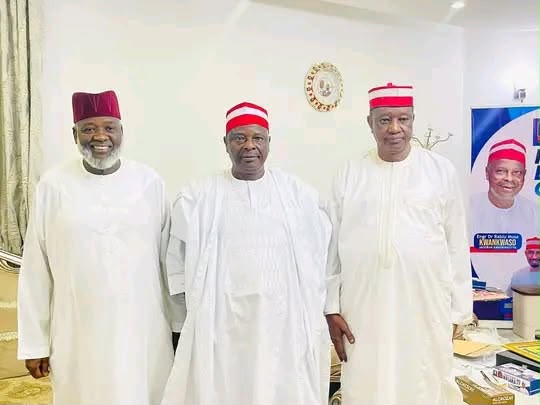
The Kwankwasiyya-Shekarau Unity Forum has declared its support for Kano State Governor Abba Kabir Yusuf and announced a change of name to Abba Gida-Gida–Shekarau Unity Forum. The declaration was made during a visit by members of the group to the Kano State Commissioner for Information and Internal Affairs, Ibrahim Abdullahi Waiya. Speaking during the visit, the forum’s chairman, Alhaji Ahmed Saminu (DOC), said the group was established following the merger of members from the All Progressives Congress (APC) and the Peoples Democratic Party (PDP) in 2023 to work for the success of the Kwankwasiyya movement. According to him, although their political leader, Malam Ibrahim Shekarau, later left the movement, many members remained loyal but were not initially recognised for their contributions. He credited the Commissioner for Information with bringing the group closer to the state government and giving its members a sense of belonging. “That is why we are here today to declare our total support for Governor Abba Kabir Yusuf and to rename our organisation as the Abba Gida-Gida–Shekarau Unity Forum,” Saminu said. He added that the forum believes Governor Yusuf deserves continued support because of what it described as his achievements since assuming office. Saminu praised the administration’s performance in education, healthcare, security, youth and women empowerment, road construction and infrastructure development, saying these accomplishments influenced the group’s decision to publicly back the governor. In his response, Commissioner Ibrahim Abdullahi Waiya thanked the members for their support and described them as committed politicians who have chosen to prioritise the development of Kano State. He said their endorsement of Governor Yusuf for a second term reflected confidence in the administration’s performance and commitment to delivering the dividends of democracy. Waiya also dismissed criticism of the governor, insisting that it would not distract the administration from its development agenda. He assured the forum that the state government would continue to work closely with the group as part of efforts to secure victory in the 2027 general elections.

Elections

Court of Appeal Affirms INEC’s Power to Set 2027 Election Guidelines

The Court of Appeal in Abuja has overturned a Federal High Court judgment that invalidated parts of the Independent National Electoral Commission’s (INEC) electoral guidelines for the 2027 general election, reaffirming the commission’s constitutional authority to regulate electoral processes. In a unanimous decision delivered by a three-member panel led by Justice Adebukola Banjoko, the appellate court held that INEC is empowered under the 1999 Constitution and the Electoral Act to issue election guidelines, timetables and other regulations necessary for the conduct of elections. The court set aside the earlier ruling of Justice James Omotosho of the Federal High Court in Abuja, which had nullified portions of the electoral guidelines following a suit filed by the Social Democratic Party (SDP). Justice Banjoko ruled that the lower court was bound by the Court of Appeal’s recent decision in INEC v. Youth Party of Nigeria, which affirmed the commission’s statutory powers to administer elections. The appeal stemmed from Justice Omotosho’s judgment, which granted some of the SDP’s requests while ruling in INEC’s favour on other issues. Dissatisfied with the aspects of the ruling that limited its powers over election management, INEC challenged the decision at the appellate court. Presenting INEC’s case, the commission’s lead counsel, Dr. Alex Izinyon (SAN), argued that the Constitution clearly empowers INEC to organise, conduct and supervise elections, including the issuance of electoral guidelines and election timetables. He maintained that the Federal High Court failed to properly interpret the relevant constitutional provisions and judicial precedents that recognise INEC’s authority. “The Constitution specifically empowers INEC to organise, supervise and undertake elections and other political activities. The timetable provided is in consonance with the powers donated by the 1999 Constitution and the Electoral Act,” Izinyon argued. He further submitted that both the Supreme Court and the Court of Appeal have consistently upheld INEC’s power to regulate electoral processes, including activities leading up to elections. “The trial court erred in law because it failed to interpret, using Supreme Court authorities and Court of Appeal decisions, the powers already donated by the Constitution to INEC to arrange elections, including pre-election matters,” he added. The appellate court’s ruling confirms INEC’s authority to issue electoral guidelines and set timelines for political activities ahead of the 2027 general election, reinforcing its constitutional mandate as Nigeria’s electoral management body.

Elections, Politics

Conflicting Appeal Court Judgments Raise Questions Over INEC’s Powers

An evidently disturbing development played up yesterday in the judiciary after two Appeal Courts handed down conflicting judgments on the powers and guidelines of the Independent National Electoral Commission (INEC). The first Court of Appeal, Abuja, upturned the judgment of a Federal High Court, which nullified part of the election guidelines of INEC for the conduct of the 2027 general election. A three-member panel of the appellate court in a unanimous judgement held that the trial court was wrong in nullifying the guidelines, which did not in any way violate the 1991 Constitution nor the Electoral Act. Yet, another three-member panel of another appellate court also sitting in Abuja struck down Sections 77(5), (6) and (7), as well as 84(2) of the Electoral Act 2026, for being inconsistent with the 1999 Constitution. The affected sections regulate membership registers of political parties and the procedure for the nomination of candidates for the 2027 general election. Justice Mohammed Umar had in a judgement delivered on May 20, voided the Revised Timetable and Schedule of Activities of INEC, for the 2027 general election by a Federal High Court in Abuja, on the grounds among others that the timeframe “imposed” by INEC on political parties to submit their membership register, conduct primaries, and same names of candidates for the 2027 general elections, “is inconsistent with the provisions of the Electoral Act, 2026”. Umar voided the time-table while delivering judgement in the suit marked: FHC/ABJ/CS/517/2016, and filed by the Youth Party. The plaintiff in the suit dated and filed on March 11, by its counsel, J. O. Olotu sought for several reliefs, including a declaration that upon a proper consideration and interpretation of the provisions of Sections 29, 82 and 84(1) of the Electoral Act, 2026, the powers of the INEC to receive notice of party primaries and the personal particulars of candidates, and its duty to attend, observe and monitor such primaries, does not extend to fixing or prescribing the timetable within which political parties may conduct their primary elections for the purpose of nominating candidates for the 2027 general elections. Dissatisfied, the electoral umpire approached the appellate court to set aside the verdict of the trial court. However, delivering judgement on Monday, Justice Adebukola Banjoko, who delivered the lead judgement read by Justice Okon Abang, faulted the trial court for invalidating the administrative discretion of INEC. “The law gives INEC powers to conduct elections in the country. There was no deposition or threat that the respondent was prevented from conducting its primaries,” he said, adding that the respondent could only invoke the powers of the court where there are heavy threats to its participation in the election. Justice Abang explained that where INEC acted within its power, the courts could not get involved. “The declarative reliefs granted by the trial court were wrongly granted and they are hereby set aside”, Abang declared. INEC in its appeal dated May 25, 2026, and filed by its counsel, Alex Izinyon, prayed the court to set aside the judgement, claiming that the trial court erred in law when it failed to pronounce on the jurisdictional issue of the suit being hypothetic and academic, and a denial of fair hearing to the appellant. The lawyer specifically stated that the lower court erred in law when it held: “It is clear from the wording of Sections 29(1), 82, and 84 of the Electoral Act, 2026, the following can be understood. Section 29(1) of the Electoral Act, 2026 mandated political parties to submit the names of candidates first in the prescribed forms of the candidates who emerged from its valid primaries, which such political party intended to sponsor at the elections, not later than 120 days before the date of the General election.