The Click Report

Audio Brief

Listen to the latest top stories and editorial summary.

Energy

Business, Energy

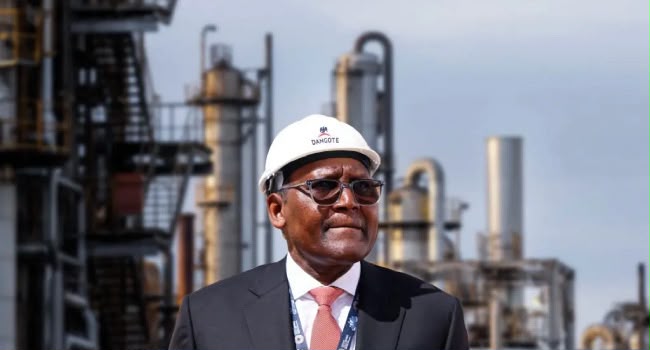
Fuel Loading Halted at Dangote Over Dollar Sale Dispute, FG Steps In

Petroleum marketers have slowed fuel purchases amid uncertainty over the Dangote Petroleum Refinery’s decision to adopt a dollar-based pricing model for petrol, raising concerns about possible disruptions in supply and higher pump prices. Industry operators said they were taking a cautious approach as they awaited clarity on the refinery’s new pricing template and the cost of imported petroleum products before committing to large-scale purchases. The National Publicity Secretary of the Independent Petroleum Marketers Association of Nigeria (IPMAN), Chinedu Ukadike, said marketers were reluctant to buy large volumes because they could not predict whether petrol prices would rise or fall after making purchases. According to him, existing fuel stocks were purchased at prices between N1,250 and N1,300 per litre, while uncertainty over new crude supplies and imported products had made it difficult for marketers to determine future pricing. In the South-West, IPMAN said the situation had forced some marketers to suspend fresh purchases, while a number of filling stations temporarily closed after exhausting their stock. The association, however, maintained that there was no fuel scarcity and urged motorists not to engage in panic buying. Despite the concerns, a spokesperson for the Dangote Group dismissed reports that the refinery had suspended fuel loading, insisting that petroleum products were still being loaded at the Lekki facility and describing claims to the contrary as “fake news.” Meanwhile, discussions between the Federal Government and the Dangote Petroleum Refinery over the new pricing model are ongoing. According to a senior government official, the dispute centres on the continued issuance of fuel import licences and the volume of crude oil supplied to the refinery in naira. The Federal Competition and Consumer Protection Commission (FCCPC) reiterated that the naira remains the only legal tender for domestic commercial transactions and expressed concern that recent declines in global crude oil prices have yet to translate into lower pump prices for Nigerian consumers.

Business, Energy

Sahara Group Hosts Asharami Square 3.0 to Advance Africa’s Energy Future

Sahara Group will convene policymakers, investors, industry leaders, and energy experts for the third edition of Asharami Square, its thought leadership platform focused on advancing discussions on Africa’s energy future. According to a statement by the company, the event, themed “Energising Africa’s Future: Legacy, Impact, and Transformation,” will feature a panel comprising Professor Abigail Ogwezzy-Ndisika, Director of the Institute of Continuing Education, University of Lagos; Temitope George, Chief Executive Officer of the Lagos State Electricity Regulatory Commission (LASERC); Adebiyi Olusolape, Associate Editor, Africa, Argus Media; and Kemi Awodein, Managing Director, Investment Banking, Chapel Hill Denham. The event will explore how collaboration among governments, industry, financial institutions, academia, and the media can help unlock investment, strengthen energy infrastructure, and expand access to electricity while supporting Africa’s energy transition. A major highlight of the event will be the unveiling of the judging panel for the newly launched Asharami Square Energy Reporting Fellowship, an initiative designed to promote credible and solutions-focused journalism on Africa’s energy sector. Speaking ahead of the event, Sahara Group’s Head of Corporate Communications, Bethel Obioma, said the platform was created to encourage conversations that translate into practical outcomes. “Africa’s energy future will be shaped by the strength of our partnerships and our ability to turn dialogue into action,” Obioma said. She added that the company remains committed to investing in ideas, partnerships, and platforms that will contribute to a sustainable energy future for the continent. Also speaking, Sahara Group’s Director of Governance and Sustainability, Ejiro Gray, said Africa’s energy transition should be driven by solutions tailored to the continent’s realities. “Africa’s energy transition must be defined by solutions that reflect our unique realities,” Gray said, adding that Asharami Square helps bridge technical expertise and public understanding by promoting evidence-based discussions on energy, sustainability, and development. The programme will open with a keynote address by Sadiq Wanka, Special Adviser to the President on Power Infrastructure, who is expected to outline the Federal Government’s policy direction and infrastructure priorities for expanding energy access. A panel discussion will follow, focusing on financing gaps, regulatory reforms, data-driven decision-making, and the role of the media in improving public understanding of Africa’s energy transition. Since its launch in 2024, Asharami Square has served as a platform for dialogue on energy transition and sustainability across Africa. Sahara Group said the introduction of the Energy Reporting Fellowship is intended to support the development of journalists with specialised knowledge of the energy sector.

Business, Energy

FG Seeks Investors’ Backing for N729bn Power Bond to Clear Gencos’ Debt

The Federal Government is preparing to issue a second bond valued at about N729 billion under the Presidential Power Sector Debt Reduction Programme (PPSDRP) as part of efforts to settle verified legacy debts owed to electricity Generation Companies (Gencos) and improve liquidity in the Nigerian Electricity Supply Industry (NESI). Ahead of the bond issuance, the government will host an investors’ forum on Tuesday, July 21, to engage prospective investors and provide details of the transaction. The planned issuance follows the successful launch of a N501 billion bond in January 2026. Combined, the two bonds will raise approximately N1.23 trillion, completing the first phase of the N4 trillion debt reduction programme approved by President Bola Tinubu to address long-standing financial obligations in the power sector. In a statement issued in Abuja, the Nigerian Bulk Electricity Trading Plc (NBET) disclosed that the first coupon payment and principal repayment on the January bond, which matured on July 14, were settled in full and on schedule. According to NBET, the timely repayment reflects the Federal Government’s commitment to honouring its financial obligations while reinforcing investor confidence in the programme. The agency explained that the N1.23 trillion to be raised through the first two bond issuances represents Series 1 and Series 2 of the Capital Market Multi-Instrument Issuance Programme, which forms the opening phase of the broader N4 trillion initiative. NBET noted that the January bond demonstrated the government’s market-driven and fiscally responsible approach to clearing verified debts owed to Gencos, improving liquidity and supporting the long-term sustainability of the electricity market. Speaking on the planned issuance, NBET Managing Director and Chief Executive Officer, Johnson Akinnawo, described the second bond as another significant milestone in the government’s efforts to restore financial stability and investor confidence in the power sector. He said the issuance underscores the government’s commitment to resolving verified legacy obligations through a transparent, structured and market-based financing mechanism. Akinnawo added that strengthening liquidity across the electricity value chain would improve the financial health of industry participants, encourage fresh investments and support sustainable power generation. He recalled that the Federal Executive Council (FEC) approved the establishment of the N4 trillion Presidential Power Sector Debt Reduction Programme in 2025, with NBET designated as the sponsoring institution responsible for settling verified legacy debts. According to him, the programme will be implemented through multiple debt issuances by NBET Finance Company Plc, a special purpose vehicle established for the initiative. He further explained that the debt instruments are backed by the full faith and credit of the Federal Government and supported by a comprehensive risk mitigation framework to ensure successful execution. Akinnawo said the proposed N729 billion bond represents another key step towards resolving long-standing liabilities in the electricity sector and creating a more stable, bankable and investment-friendly electricity market. He maintained that improving liquidity across the power value chain would strengthen market participants, attract new investment and promote sustainable electricity generation for the benefit of Nigerians.

Business, Energy

Lagos Energy Reforms to Reshape Facility Management, Spur Sustainable Growth

The International Facility Management Association (IFMA), Nigeria Chapter, has announced a range of strategic initiatives aimed at boosting professional capacity, driving industry research and preparing facility managers for Nigeria’s changing energy landscape. The plans were unveiled at the IFMA Corporate Membership event, themed “Evaluating the Impact of New Energy Regulations on Facility Management, The Lagos State Example.” The association also reaffirmed its commitment to strengthening collaboration with government and private sector stakeholders to build a more resilient and future-ready facility management industry. Among the key initiatives are the establishment of an IFMA Learning and Innovation Centre, the creation of a Research and Development Platform, the launch of an industry Talent Bank, and expanded partnerships to address the country’s facility management skills gap through Technical and Vocational Education and Training (TVET). Speaking at the event, IFMA Nigeria President, Sheriff Daramola, said the association is focused on building an ecosystem that equips professionals with the knowledge, technology and practical skills needed to meet the evolving demands of the industry. According to him, the proposed Learning and Innovation Centre will serve as a hub for training, certification, innovation and corporate collaboration. He added that the Talent Bank will connect employers with verified professionals to improve recruitment and tackle industry-wide skills shortages, while the Research and Development Platform will promote practical, data-driven solutions in areas such as energy efficiency, workplace experience, asset performance, facility management technology and financing. Delivering the keynote address, Lagos State Commissioner for Energy and Mineral Resources, Biodun Ogunleye, said the state’s ongoing electricity sector reforms present significant opportunities for facility managers to play a more strategic role in developing sustainable, efficient and resilient infrastructure. He noted that the Lagos State Electricity Law, alongside the establishment of key institutions including the Lagos State Electricity Regulatory Commission (LASERC), the Lagos Independent System Operator (LAISO) and the Lagos State Electrification Agency (LSEA), has created the foundation for a competitive electricity market that promotes investment, innovation and a more reliable power supply.

Business, Energy, Politics

NUPRC Rebuilds Investor Confidence in Nigeria’s Oil Industry

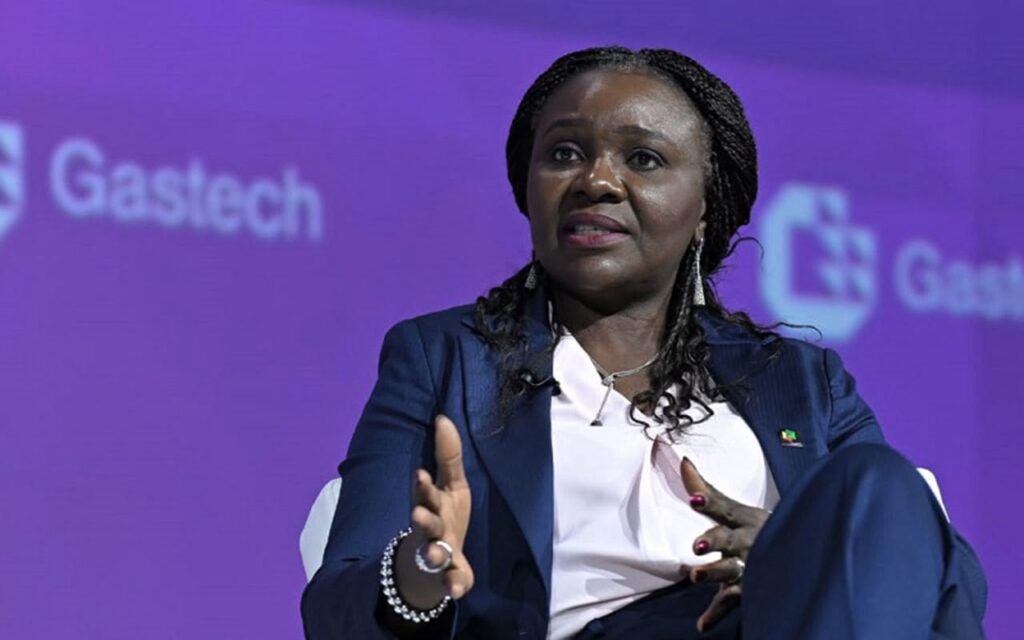
Six months into her tenure as Chief Executive of the Nigerian Upstream Petroleum Regulatory Commission (NUPRC), Mrs. Oritsemeyiwa Eyesan is driving reforms aimed at strengthening regulatory certainty, improving operational efficiency, accelerating decision-making, and enhancing transparency. The early results are becoming increasingly visible, with higher oil production, renewed investor confidence, and stronger interest in Nigeria’s licensing regime. The 2025 licensing round recorded encouraging participation, attracting not only indigenous oil companies but also major international oil companies (IOCs) and, for the first time, significant interest from international independent operators. The development is seen as a sign of growing confidence in Nigeria’s upstream sector. Speaking on the outcome, Eyesan said the level of participation reflects renewed faith in the industry. “The level of participation tells me people have faith in the industry. Not just Nigerian companies, but IOCs and international independents. That is a signal. The question now is whether we build on it, and that depends entirely on whether the regulatory environment continues to move in the direction we have set,” she said. Nigeria’s upstream performance has also improved significantly. In June 2026, combined crude oil and condensate production reached 1.735 million barrels per day (bpd), exceeding the Organisation of Petroleum Exporting Countries (OPEC) production quota of 1.5 million bpd by four per cent. It also marked the country’s highest crude output since April 2020. Production has risen steadily throughout the year, climbing from 1.62 million bpd in January to 1.48 million in February, 1.54 million in March, 1.66 million in April, 1.7 million in May, and 1.735 million bpd in June. According to the commission, the increase was driven by improved operational stability, completed maintenance activities, and the absence of major infrastructure disruptions. Gas production also recorded gains, reaching 7.93 billion cubic feet (bcf) per day, up from 7.88 bcf/d in May 2025. Non-associated gas production slightly exceeded associated gas for the first time, reflecting increased investment in dedicated gas projects. Domestic gas supply rose to a record 2.18 bcf per day, while gas flaring declined to 0.57 bcf/d, representing 6.9 per cent of total production, in line with Nigeria’s target of ending routine gas flaring by 2030. Eyesan said the increase in domestic gas supply demonstrates that the sector is delivering greater value to Nigerians. “This is not only a production story. It is a story about an industry beginning to serve the country, it sits inside more gas reaching Nigerian homes, Nigerian industry and Nigerian power. The numbers matter. What they represent matters more,” she said. Before joining the commission, Eyesan spent three decades at the Nigerian National Petroleum Company (NNPC), where she held several senior positions, including Executive Vice President, Upstream, and Chief Strategy and Sustainability Officer. She also led efforts that doubled NNPC subsidiary production from 150,000 to 300,000 barrels per day and played a key role in resolving the long-running Production Sharing Contract (PSC) dispute. Upon assuming office, she identified three key priorities for the commission: increasing production and revenue, improving regulatory efficiency and predictability, and promoting safe, transparent and sustainable operations. To strengthen engagement with industry players, the commission established the Chief Executive Operators Leadership Forum, bringing together the NNPC, Oil Producers Trade Section (OPTS), Independent Petroleum Producers Group (IPPG) and other stakeholders every month to address production challenges, approval timelines and infrastructure integrity. The commission has also accelerated the digitisation of its operations, covering correspondence, permits, reporting systems and financial processes, while introducing a 90-day programme to fast-track field development plans, well interventions and rig mobilisation. In March, NUPRC signed the PEL5 agreement with SeaSeis Geophysical Limited and TGS to conduct broadband 3D seismic acquisition across 11,700 square kilometres offshore the Eastern Niger Delta. The project is expected to improve exploration decisions by providing higher-quality geological data. According to Eyesan, improved data quality is essential to attracting new investment. “Exploration is fundamentally driven by confidence in data and processes. PEL5 is about ensuring that the subsurface case for Nigeria’s offshore acreage is made as compellingly as it can be and that investors have the data quality they need to make decisions with confidence,” she said. The commission is also working to reduce regulatory bottlenecks by collaborating with the Nigerian Nuclear Regulatory Authority to create a single-window reporting system, eliminating duplicate compliance requirements for operators. “When you have multiple laws, you will likely have higher costs because each law comes with its own fees and charges. The only way to safeguard investments is to reduce the cost of operating here,” Eyesan noted. The National Bureau of Statistics (NBS) recently commended the commission for improving transparency in oil and gas data, with Statistician-General Adeyemi Adeniran highlighting the importance of NUPRC’s data in compiling Nigeria’s Gross Domestic Product (GDP). Looking ahead, the commission remains focused on achieving the Federal Government’s target of producing two million barrels per day by 2027 and three million barrels daily by 2030. Eyesan described the goal as an engineering and investment challenge that requires international expertise alongside local capacity. “We are rushing against time. If we are serious about ramping up production, we cannot rely solely on in-country resources. We need to bring in people who have done this at scale internationally and be honest about whether our processes are designed to attract them,” she said. The commission plans to expand international independent participation in future licensing rounds, particularly for deepwater projects that require significant technical expertise and investment. As part of its climate commitments, NUPRC has directed upstream operators to adopt measurement-based methane and greenhouse gas reporting by January 2027, replacing estimation-based reporting with verified emissions data in line with Nigeria’s net-zero target by 2060 and methane reduction goals. The commission is also finalising service-level agreements that will establish publicly available timelines for regulatory approvals, strengthening accountability and investor confidence. Eyesan believes developing skilled manpower remains critical to sustaining long-term growth in the industry. She noted that investment declines following the Petroleum Industry Act slowed talent development across the sector, stressing that rebuilding technical capacity will be essential to achieving