The Click Report

Audio Brief

Listen to the latest top stories and editorial summary.

2026

Sports

Joshua vs Fury: Now or Never — White

Zuffa Boxing boss Dana White has expressed doubts over the proposed Anthony Joshua versus Tyson Fury heavyweight clash, saying the fight should have taken place years ago and questioning whether both boxers are still committed to making it happen. Joshua and Fury signed agreements earlier this year to face each other, but a date and venue for the highly anticipated bout have yet to be officially confirmed. Reports indicated that Netflix, which is expected to broadcast the fight, favoured staging it at Madison Square Garden in New York on November 20. However, Joshua and his promoter, Eddie Hearn, reportedly want the contest to take place in the United Kingdom, in line with their agreement. White said his involvement in the negotiations had mainly covered the television and venue arrangements, with the location now emerging as the major obstacle. Joshua has a professional record of 30 wins and four defeats, including 27 victories by knockout, while Fury has recorded 36 wins, two losses and one draw, with 25 knockouts. Fury’s promoter, Frank Warren, warned that the disagreement over the venue could ultimately prevent the fight from happening. He said Fury’s agreement contained different terms from Joshua’s contract. Warren revealed that Fury signed for the fight in January, with the bout initially expected to take place in September. However, plans were delayed following a tragic accident involving Joshua in which he lost two close friends. The fight is now expected to be held in November, although the venue remains unresolved. White expressed frustration over the prolonged negotiations, saying both fighters must genuinely want the fight for it to happen. He noted that the Joshua-Fury bout had been discussed for years and argued that it should have taken place about a decade ago. White said the ongoing dispute would ultimately determine whether the long-awaited heavyweight clash would finally go ahead.

Education

King’s College Concession: Parents Mobilize for Protest

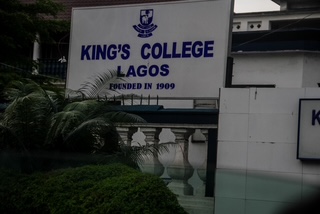
Parents and other stakeholders of King’s College, Lagos, have mobilised for a mass protest against the Federal Government’s decision to concession the 116-year-old institution to the King’s College Old Boys’ Association, KCOBA. The Chairman of the Parent-Teacher Association, Peter Oluwaseye, said the protest was necessary because parents, some senior civil servants and members of the community were opposed to the concession. Oluwaseye argued that King’s College remained public property and should not be taken over by its old students. He maintained that KCOBA should support the school through donations rather than seek control of its management. The controversy followed an announcement by KCOBA President, Kashim Ibrahim-Imam, that the Federal Government had approved the concession of the college to the association. The old boys subsequently launched a N100 billion endowment fund aimed at improving infrastructure and repositioning the institution. Among the early contributors were First Lady Oluremi Tinubu, who donated N10 million, and Ibrahim-Imam, who pledged N1 billion. Former Board of Trustees Chairman, Philip Asiodu, and the association’s new Board Chairman, Femi Okunnu, each donated N100 million. According to KCOBA, the concession would support infrastructure development, teacher training, digital technology, scholarships, research, innovation and students’ welfare. Ibrahim-Imam said the arrangement was not a privatisation of the school, stressing that ownership would remain with the government. He described it instead as a new governance framework that would allow KCOBA to work with the government to modernise and sustain the institution. However, the parents maintained their opposition, insisting that the college should remain under public control and warning that they would resist any attempt to concession the institution.

religion

Security Agencies Urged to Act Against Provocative Religious Remarks – Enenche

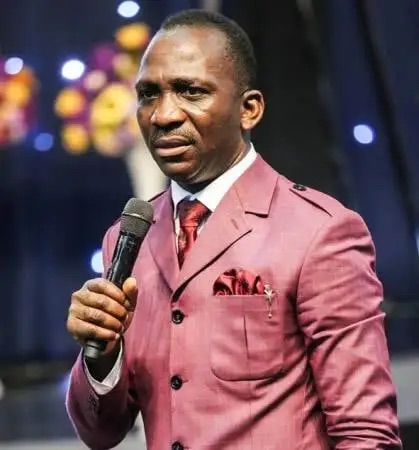
The Senior Pastor of Dunamis International Gospel Centre, Paul Enenche, has criticised security agencies for failing to question Islamic cleric, Sheikh Muhammad Jingir, over his recent comments supporting a Muslim-Muslim presidential ticket. Enenche, who spoke during a sermon on Sunday, said authorities should take statements capable of provoking religious tension seriously to prevent possible violence. The pastor rejected suggestions that Christianity should be regarded as inferior to any other religion in Nigeria, stressing that Christians make up a significant portion of the country’s population. He also questioned why security agencies had not invited Jingir for questioning, arguing that allowing potentially provocative remarks to go unchecked could threaten national peace. Enenche urged the authorities to determine whether Jingir’s comments could incite violence and take appropriate action where necessary. He further warned against taking the Christian community for granted, saying Christians had remained peaceful despite what he described as provocative statements. The pastor’s comments followed controversy over Jingir’s recent advocacy for the continued adoption of a Muslim-Muslim presidential ticket. Jingir had urged Muslims to vote in a way that would demonstrate their numerical strength. Jingir later told the BBC that he had no regrets about his position, stating that he had supported Muslim-Muslim presidential tickets long before President Bola Tinubu’s administration. The comments have continued to generate reactions from several Nigerians, including Obidient Movement Worldwide National Coordinator Yunusa Tanko and Nigeria’s Ambassador-designate to South Africa, Femi Fani-Kayode.

Politics

2027: Opposition seeks to replicate Adeleke’s strategy to unseat Tinubu

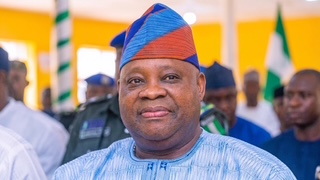
A political pressure group, G-100, has described Governor Ademola Adeleke’s re-election in Osun State as a model for opposition parties ahead of the 2027 general elections. In a statement issued on Sunday by Salihu Lukman, the group congratulated Adeleke and praised Osun voters for their determination during the governorship election. G-100 said the significance of Adeleke’s victory went beyond his return to office, arguing that the election demonstrated what opposition parties could achieve when they put aside personal interests and unite behind a common candidate. The group identified division among opposition parties and their leaders as their major challenge ahead of 2027, rather than a lack of public support. It noted that some opposition candidates in Osun had stepped down and backed Adeleke, describing the decision as an example of political maturity and willingness to prioritise the wider democratic interest over individual ambitions. G-100 therefore urged opposition leaders seeking to challenge the All Progressives Congress in 2027 to adopt the same approach at the national level. The group stressed that no individual candidate or political party should place its interests above the country, urging opposition politicians to demonstrate courage, compromise and unity. It said the Osun election had shown that cooperation among opposition forces could create a strong alternative to the ruling party when political leaders were willing to work together. The statement followed the Independent National Electoral Commission’s declaration of Adeleke as the winner of the August 15 Osun governorship election. Running on the platform of the Accord Party, Adeleke defeated the APC candidate, Bola Oyebamiji, in 19 of the state’s 30 local government areas.

Elections, Politics

Osun Decides 2026

Osun State voters are heading to the polls today to elect a governor who will lead the state for the next four years, with 15 political parties fielding candidates in the governorship election. The candidates were confirmed in the final list released by the Independent National Electoral Commission, following the addition of the Social Democratic Party to the ballot. The candidates include Accord’s Ademola Adeleke, Action Alliance’s Farinloye Olarenwaju, African Action Congress’ Esan Olajide, African Democratic Congress’ Najeem Salaam, African Democratic Party’s Adeagbo Opawoye, All Progressives Congress’ Bola Oyebamiji, APGA’s Adesina Adeyemi-Doro, Allied Peoples Movement’s Adewale Adebayo, Action Peoples Party’s Clement Adesuyi and Boot Party’s Masilo Adeleke. Others are Taofeek Adeleke of the New Nigeria Peoples Party, Saliu Oyelami of the Peoples Redemption Party, Francis Olugbenga of the Social Democratic Party, Ogunsakin Olalekan of the Young Progressives Party and Adefemi Adesuyi of the Zenith Labour Party. The APM and PDP candidates, Adebayo Adewale and Adedamola Adebayo, respectively, withdrew from the contest and endorsed incumbent Governor Ademola Adeleke. Although 15 candidates are on the ballot, the election is largely regarded as a three-way contest involving Adeleke of Accord, Oyebamiji of the APC and Salaam of the ADC. The Peoples Democratic Party and Labour Party are not participating in the election, despite the PDP winning the 2022 governorship poll with Adeleke as its candidate. Adeleke is now seeking re-election under the Accord platform following political realignments within the PDP. Ahead of the poll, the opposition APC and ADC expressed confidence in their chances, while Adeleke and his campaign team largely avoided commenting on their expectations. The ADC called on voters to remain peaceful and urged security agencies to maintain neutrality. Its campaign council spokesperson, Nurain Adebisi, also appealed to INEC to ensure transparency, proper logistics and strict adherence to electoral regulations. Similarly, the APC expressed confidence in its candidate, Bola Oyebamiji, citing his extensive campaign across the state. The party also called on security agencies to take firm action against political thugs and urged INEC to comply fully with the Electoral Act. Security concerns Security remains one of the major concerns surrounding the election following reports of political violence during the campaign period. Several areas, including Ede, Ilesa, Osogbo, Iwo and Ikirun, have witnessed clashes, attacks on campaign materials and disruptions of political activities. Security agencies, including the police, Department of State Services, Nigeria Security and Civil Defence Corps and military, have pledged to deploy personnel across the state’s 30 local government areas, 332 wards and 3,763 polling units. The Economic and Financial Crimes Commission is also expected to monitor the election and tackle vote-buying. Ede North and Ede South are regarded as key areas because of their significance to Adeleke’s political base. Ilesa East and Ilesa West are also being closely watched because of previous clashes and concerns over possible vote-buying. In Osogbo and Olorunda, where the three leading parties have strong grassroots structures, security agencies are expected to focus on polling centres and collation locations. Iwo and Ikirun are also considered potential flashpoints because of previous disputes involving supporters of rival parties. INEC’s preparedness and technology The election will also serve as a major test for INEC, particularly regarding the deployment of electoral technology. Officials are expected to ensure the timely arrival of election materials and personnel at polling units, while maintaining neutrality throughout the voting and collation processes. The Bimodal Voter Accreditation System and INEC Result Viewing portal will also come under scrutiny as voters and observers monitor the accreditation and transmission of results. Any significant delays, technical problems or unexplained interruptions could fuel suspicion among political parties and voters. Vote-buying concerns Another major issue is vote-buying, with concerns that economic hardship could make vulnerable voters susceptible to financial inducement. Reports of cash payments and distribution of food and household items by political agents have heightened concerns about the integrity of the process. Authorities will therefore face the challenge of preventing vote-buying while ensuring that enforcement is impartial and does not favour any political party. Neutrality of security agencies The credibility of the election will depend heavily on the neutrality of security personnel and the electoral commission. Security agencies are expected to protect voters, election officials, party agents and observers without favouring any candidate or political party. They are also expected to prevent intimidation, electoral violence and attempts to disrupt voting. INEC, on its part, must ensure transparent procedures, efficient logistics, credible accreditation and prompt transmission of results. Ultimately, the Osun election will test whether electoral institutions can guarantee a peaceful and credible process despite the intense political competition. The outcome will also provide an important indication of public confidence in Nigeria’s electoral system ahead of the 2027 general elections.

Education

How UTME disappointment led to my first-class degree — Babcock graduate

Nineteen-year-old Mafolayomi Otujiya, a first-class Public Administration graduate of Babcock University, has shared how she turned the disappointment of scoring 238 in the UTME into motivation to excel at university. Otujiya, who graduated with a CGPA of 4.52 as the best graduating student in her department, said she had expected to score above 300 in the UTME and was devastated when she received her result. According to her, the disappointment strengthened her determination to perform better at university. She said, “I was expecting a 300+ score in UTME, and I really worked towards it. So, seeing 238 was far below my expectations. I even cried when the UTME result came out. “I told myself I would do better in the university. I turned the disappointment into a higher level of focus and intentionality in the university.” Otujiya gained admission to Babcock University in 2022 at the age of 15. Although she initially wanted to study Law, she was offered Public Administration and eventually developed an interest in the course after researching its relevance. She recalled that her first semester result gave her confidence that graduating with a first class was possible, after she recorded a 4.55 GPA in her 100 Level. “I always imagined myself as a first-class student, but the point when I realised I could graduate with one was when my first result came out,” she said. She maintained a first-class CGPA throughout her university education, with her highest GPA reaching 4.74. Despite her academic success, Otujiya said her journey was not without difficulties. French was particularly challenging, as she recorded Cs in the three-unit course for three consecutive semesters. She also had to balance academics with leadership responsibilities. She served as assistant social director in 200 Level and vice president of her department in 300 Level. These roles, she said, sparked her interest in project management and helped her develop skills in teamwork, organisation and leadership. Otujiya also revealed that she sacrificed sleep, leisure and afternoon naps to keep up with her academic responsibilities. At some points, she remained in the library until 8 p.m. while also managing classes and research projects. She credited her family, lecturers and project supervisor, Dr Sunday Audu, for supporting her throughout her university journey. She also acknowledged the contribution of a senior colleague, Olafare Oluwanifemi, who helped her understand difficult course materials. Reflecting on being a 19-year-old graduate, Otujiya said she never allowed her age to limit her expectations. “I didn’t let my age dictate my potential. I knew that if I saw myself as younger than everyone else, it would hold me back, so I just focused on my capabilities rather than my age,” she said. Beyond academics, she participated in extracurricular activities, interviewed her university’s vice chancellor as a member of her chapel’s media team and received an award for meritorious service. She said studying Public Administration also changed her perspective on governance, particularly by exposing her to policy implementation gaps, bureaucracy and public-sector structures. After graduation, Otujiya said she is currently training in agile project management and product management while preparing to resume content creation as a faith-based fashion creator. She hopes to build a career in project management and corporate administration, saying her strengths lie in building structures, organising teams and achieving organisational goals. For students aspiring to graduate with first-class honours, she stressed the importance of discipline, consistency, prayer and intentionality. “If you’re naturally intelligent but not disciplined, you really can’t achieve anything,” she said, adding that students should surround themselves with environments that support their goals. Otujiya also advised students to believe in their abilities and visualise their goals before pursuing them, noting that her own academic achievement began with believing that it was possible.

Crime

Police arrest Accord Party lawmaker with 200+ PVCs, 146 suspects

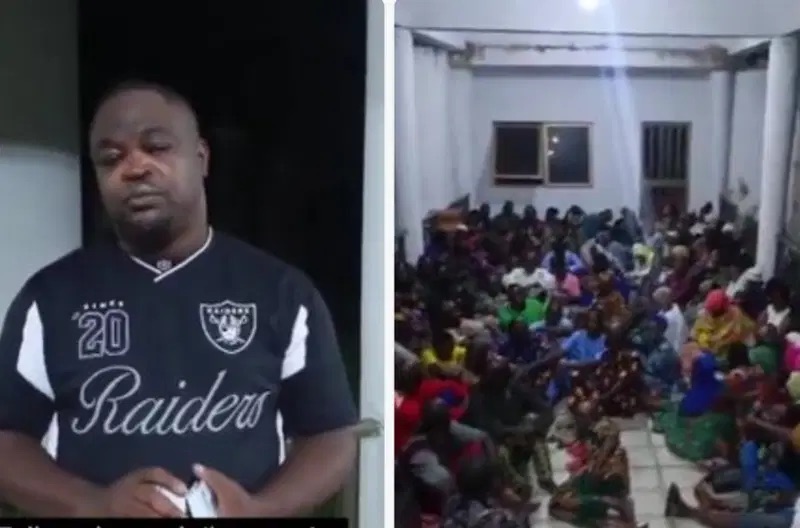
The Osun State Police Command has arrested a serving member of the state House of Assembly, Abiola Ibrahim Inaolaji, alongside 143 suspected electoral mercenaries allegedly camped at his residence in Ikire. Inaolaji, who represents the Irewole/Isokan State Constituency, was arrested on Friday night during a police operation. More than 200 Permanent Voter Cards were reportedly recovered from the location. A video released after the operation showed the lawmaker making a preliminary statement in which he identified himself and allegedly admitted to facilitating the movement of the suspects into Osun State from neighbouring states ahead of the election. The police said preliminary investigations indicated that the suspects were brought into the state from Ondo State to participate in alleged unlawful electoral activities. According to the command, some of the suspects told investigators that they were recruited by an unidentified politician who allegedly helped obtain voters’ cards for them and instructed them to vote in exchange for financial rewards. The arrest is part of intensified security operations aimed at preventing activities capable of undermining the credibility of the Osun election. The police spokesperson, Abiodun Ojelabi, confirmed the arrest and said investigations were underway to identify other suspected accomplices who remained at large. He added that the investigation would also determine the extent of the alleged network involved in the recruitment of electoral mercenaries, voter inducement and other related offences.

Entertainment

Diiadem, Dabota Lawson feud escalates over accusations

Beauty entrepreneur and former Real Housewives of Lagos star Adeola “Diiadem” Adeyemi and fellow entrepreneur Dabota Lawson have traded allegations online following the breakdown of their friendship. The dispute intensified after Diiadem revealed that Lawson had transferred N5m to her as a birthday gift in January 2026, but later requested that the money be returned. Diiadem shared transaction receipts showing the N5m transfer and subsequent refund, saying she initially acknowledged the gift publicly before being informed that the money was expected to be returned. She also accused Lawson of sharing information about her with bloggers and alleged that she had previously done something similar to fellow RHOLagos cast member Sophia Momodu. According to Diiadem, she had once asked Lawson to stay away from her but later reconciled with her after the intervention of her mentor, Eryca Freemantle. She subsequently urged Lawson to stop mentioning her and insisted that her business and reputation would not be destroyed by the alleged smear campaign. The disagreement also revived questions about the pair’s relationship after fans noticed that Diiadem did not publicly celebrate Lawson’s birthday in June, despite Lawson’s support during Diiadem’s 35th birthday earlier in the year. Lawson, however, responded with allegations of her own, accusing Diiadem of being jealous of her success and opportunities. She claimed that Diiadem had once asked her to invite wealthy men to her events and display money to create an impression of financial success. Lawson also disputed Diiadem’s account of the N5m gift, saying she spent more than that amount during Diiadem’s birthday celebration and brought other guests who sprayed money. The dispute later became more personal, with Lawson making claims about Diiadem’s alleged relationship with businessman Olakunle Churchill, the former husband of actress Tonto Dikeh. Lawson alleged that Diiadem travelled to Abuja and publicly displayed affection towards Churchill shortly after arriving. She also claimed that she processed visas for the pair for a trip to Bali and had warned Diiadem against attending Churchill’s son’s birthday. Diiadem acknowledged knowing Churchill but disputed Lawson’s account. She alleged that Lawson had previously tried to facilitate a relationship between Churchill and her friend, Ehi Ogbebor, while also attempting to introduce Diiadem to him. She further accused Lawson of making negative comments about Tonto Dikeh and attempting to influence her interactions with the actress. Lawson maintained that she had supported Diiadem at different stages of her life, including during her pregnancy, and repeated her claims about the Bali trip and other financial assistance she allegedly provided. Another former friend, Christian Kayode, popularly known as Berbiedoll, was subsequently drawn into the dispute. Berbiedoll described Diiadem as a “terrible friend” and alleged that she had supported and promoted her during their friendship. She further claimed that Diiadem had fired a team member for working with her and placed photographers and videographers in situations where they felt pressured to choose between the two women. Ehi Ogbebor also became involved after Diiadem referenced claims concerning Churchill. In a voice note circulating online, Ogbebor denied having a romantic relationship with Churchill and accused Diiadem of dragging her into the dispute. Ogbebor also made allegations about an alleged trip to Uyo more than a decade ago and past accommodation arrangements involving Diiadem and Churchill, while warning Diiadem against further involving her in the controversy. Diiadem later shared portions of Ogbebor’s voice note online as the dispute continued to unfold.

Education

Scholarship, accommodation offered to Anambra debate star after parents’ death

The Chairman of Aguata Local Government Area of Anambra State, Chibueze Ofobuike, has offered educational and financial support to Richard Emmanuel Ekene Ike, a former debate star who reportedly dropped out of school after losing his parents. Richard’s situation gained public attention after his former teacher, Joy Oñuchukwu Anopuechi, described him as a brilliant student and outstanding speaker who represented Aguata Zone at the 2021 Governor’s Debate. Ofobuike said the council had offered to sponsor Richard’s West African Senior School Certificate Examination, provide accommodation and assist with his other financial needs. He also disclosed that the founder of Okwumereze Foundation, Evans Emesim, popularly known as MC Okwumereze, had pledged to sponsor Richard’s JAMB examination and provide him with a full scholarship throughout his university education. Following a meeting with Richard and Anopuechi, it was agreed that he would first return to secondary school, complete his senior secondary education and sit for the relevant examinations before proceeding to university. The council chairman said arrangements had been made for Richard to resume at a secondary school in September 2026, subject to passing the school’s entrance examination. He added that the council would provide educational materials, including a smartphone, computer, books and other items required for his studies. Ofobuike also appealed for further assistance towards Richard’s daily upkeep, stating that any financial support would be paid directly into his account and monitored to ensure proper use. The chairman expressed hope that the intervention would help Richard realise his potential and encourage similar efforts to identify and support other talented young people facing difficult circumstances. The intervention comes after Richard’s story of dropping out of school and surviving through odd jobs, including bricklaying, attracted widespread attention on social media.