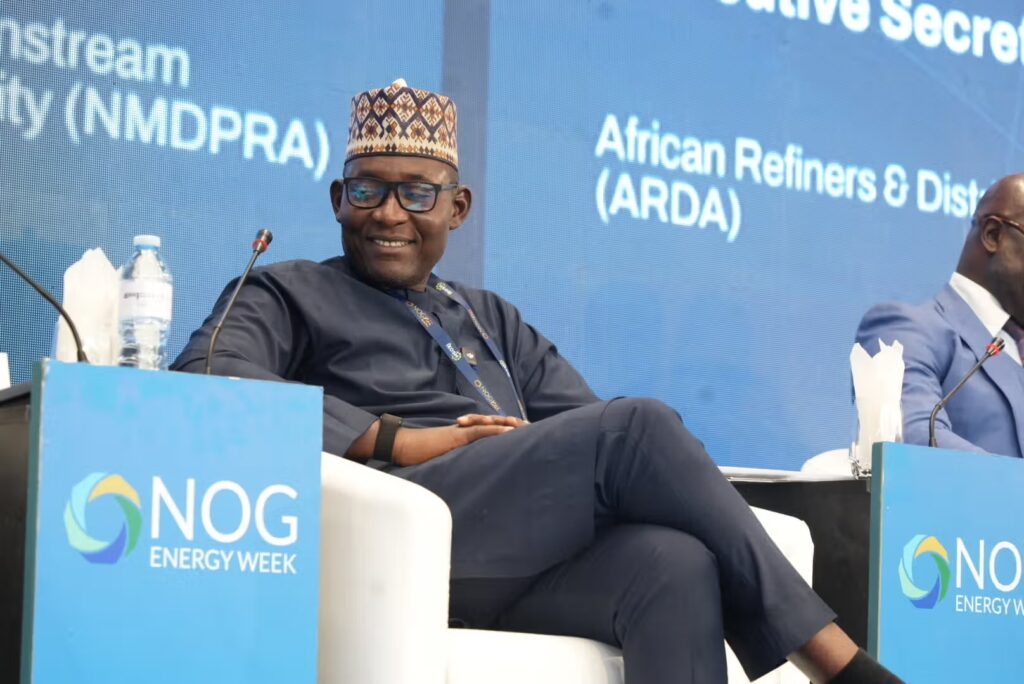
The Nigerian Midstream and Downstream Petroleum Regulatory Authority (NMDPRA) says Nigeria is repositioning its petroleum industry to focus on exporting refined petroleum products rather than crude oil as domestic refining capacity continues to grow.
Speaking at the 49th Nigeria Annual International Conference and Exhibition (NAICE) organised by the Society of Petroleum Engineers (SPE) Nigeria Council in Lagos, NMDPRA Chief Executive Officer, Rabiu Umar, said ongoing refinery projects and planned expansions are expected to transform Nigeria into a major refining hub for Africa.
According to Umar, the country’s refining capacity has reached its highest level and is projected to increase further as new projects come on stream. He expressed confidence that Nigeria could eventually refine all of its targeted crude oil production locally.
He explained that processing crude within the country would allow Nigeria to export higher-value refined petroleum products instead of raw crude, creating more economic benefits across the oil and gas value chain.
Umar described the development as a significant milestone that would strengthen collaboration between the upstream, midstream and downstream sectors while boosting value addition in the petroleum, gas and petrochemical industries.
He also disclosed that the NMDPRA is working closely with the Nigerian Upstream Petroleum Regulatory Commission (NUPRC) to enforce the Domestic Crude Supply Obligation, a policy designed to ensure local refineries receive adequate crude oil supplies.
According to him, expanding domestic refining capacity reduces the need to export crude oil and enables the country to maximise revenue by producing and exporting refined products.
Umar added that stronger integration across the petroleum industry would enhance Nigeria’s position as a regional refining hub, supported by both conventional and modular refineries.
Also speaking at the conference, the Chief Executive Officer of the NUPRC, Oritsemeyiwa Eyesan, stressed the importance of collaboration between regulators and industry stakeholders.
She said the commission regularly engages operators through monthly meetings and consultations when developing new regulations, guidelines and policy frameworks.
Eyesan noted that the global energy industry is evolving rapidly due to geopolitical developments, climate concerns, technological innovation, artificial intelligence, changing investment patterns and increasing energy demand.
She emphasised that sustained partnerships between regulators and industry players remain essential to building a resilient energy sector, attracting investment and supporting long-term growth.