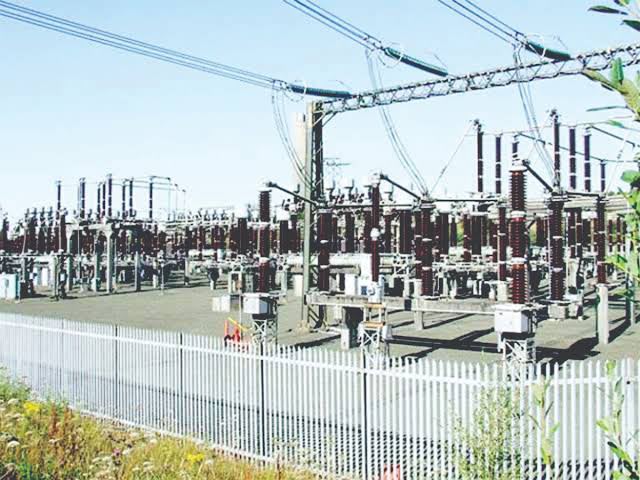
Nigeria’s only wholly state-owned power plant, Ibom Power Plc, has blamed a N28 billion debt owed by the Federal Government for the prolonged shutdown of its 191-megawatt facility in Akwa Ibom State.
Speaking in an interview with Platforms Africa, the Managing Director of Ibom Power, Camillus Umoh, revealed that the plant generated electricity for fewer than 30 days out of the last 360 days in 2025 due to a lack of gas supply.
According to Umoh, the crisis began after Acugas, the plant’s gas supplier, suspended deliveries over years of unpaid invoices and adopted a “pay-before-supply” policy to avoid accumulating further debts.
He explained that even during the few days the plant was operational, it often generated only 30 to 40 percent of its installed capacity because of limited gas availability.
Umoh said the debt owed to Ibom Power is part of the estimated N4 trillion legacy debt affecting Nigeria’s Electricity Supply Industry (NESI), where power generation companies are not fully paid for electricity supplied to the national grid.
He disclosed that the Federal Government has paid N12.3 billion of the N28 billion owed to the company, leaving an outstanding balance of N15.7 billion. However, he noted that the repayment arrangement includes both cash and bonds, with the bonds redeemable only at a discount. He also pointed out that the debts are being settled without interest or compensation for years of depreciation.
The prolonged liquidity challenges have also prevented the company from carrying out critical maintenance on its General Electric turbines, increasing operational risks.
Beyond the gas shortage, Umoh highlighted transmission constraints as another major obstacle. He said the 51-year-old Aba–Itu transmission line can evacuate only about 60MW, while the Calabar–Itu transmission line has remained out of service for four years following repeated vandalism.
Despite these setbacks, Umoh said the plant is capable of generating between 82MW and 83MW whenever gas is available more than Akwa Ibom State’s current electricity demand of between 65MW and 71MW. He added that the facility was originally designed to export electricity to other states and eventually expand its capacity to 685MW under a second phase.
He stressed that while the technical challenges are manageable, resolving the sector’s liquidity crisis and ensuring reliable payment for electricity generated remain essential to restoring stable operations and preventing similar disruptions across Nigeria’s power sector.