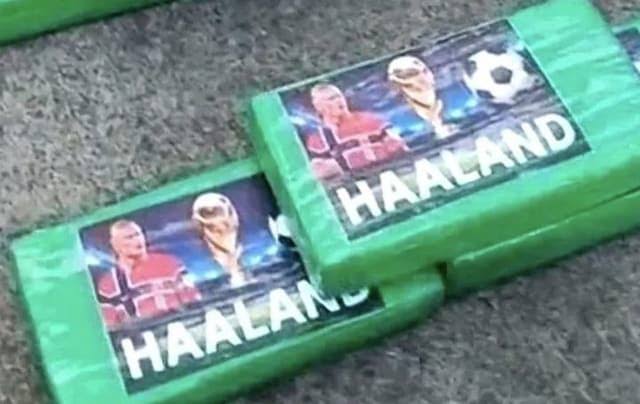
Ecuadorian authorities have seized 369kg of cocaine from a truck near the Colombian border, with the packages bearing images of Norwegian football star Erling Haaland.
The cocaine was recovered on Wednesday after anti-narcotics officers received an anonymous tip and stopped a suspicious truck on the Pan-American Highway. Police said they found 370 packages of cocaine hidden inside a false compartment in the vehicle and arrested the driver.
Footage released by Ecuadorian police showed the packages carrying stickers featuring Haaland, who was one of the standout players at the 2026 FIFA World Cup after scoring seven goals in four matches.
Authorities did not disclose why the footballer’s image was used on the drug packages. However, reports said drug trafficking organisations sometimes use images or names of famous athletes and celebrities to identify the criminal network responsible for a shipment or its intended recipient.
Haaland is not the only football star whose image has appeared on seized drug packages. The image of Argentina captain Lionel Messi has reportedly also been found on narcotics recovered during previous operations.
The latest seizure took place in the Guagua Negro area near Tulcán, about 246km north of Ecuador’s capital, Quito. Police also arrested a woman identified as María R., who was reportedly carrying Colombian identity documents.
Authorities estimated that the seized cocaine was worth nearly $11m in the United States and more than $19.6m in Europe.
Ecuador has become a major transit and logistics hub for international drug trafficking, with criminal groups linked to Colombian and Mexican cartels using the country to store and transport narcotics, particularly to the United States and Europe.
According to the report, about 80 per cent of the cocaine transported through Ecuador originates from Colombia, while the remaining supply comes from Peru.
Ecuadorian police said they seized approximately 80 tonnes of drugs during the first half of 2026. This compares with nearly 215 tonnes seized in 2025 and almost 295 tonnes in 2024, with cocaine accounting for the majority of the seizures.