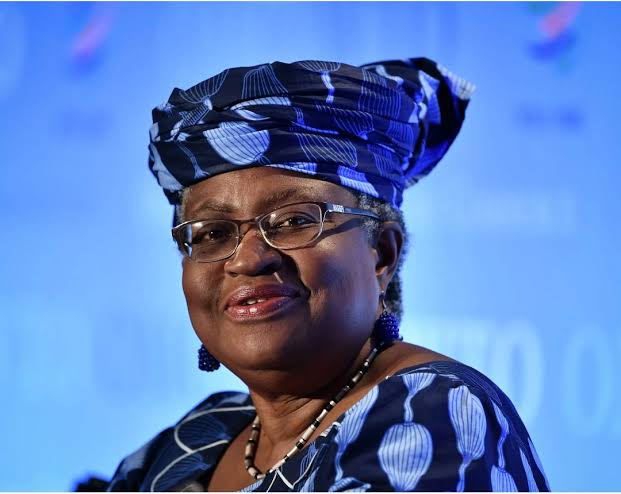
The Director-General of the World Trade Organization (WTO), Ngozi Okonjo-Iweala, has urged Nigeria to take advantage of changing global trade patterns by implementing reforms that will attract investment, boost industrialisation and strengthen its position in global value chains.
Speaking during a fireside chat with Central Bank of Nigeria Governor Olayemi Cardoso at the seventh Africa Emerging Markets Forum in Abuja, Okonjo-Iweala said increasing geopolitical tensions and the restructuring of global supply chains present significant opportunities for Nigeria and other African countries.
She acknowledged that the global economy is experiencing trade fragmentation and uncertainty but stressed that such challenges also create opportunities for countries willing to improve their competitiveness.
According to her, multinational companies are seeking to diversify their manufacturing and sourcing operations following lessons from the COVID-19 pandemic and ongoing geopolitical tensions. She said Africa should position itself as an attractive destination for these investments instead of allowing them to continue flowing mainly to Asia and Latin America.
Okonjo-Iweala also highlighted West Africa’s abundant critical mineral resources, noting that the region could build integrated supply chains for renewable energy technologies and electric vehicle batteries through greater regional cooperation. She argued that African countries should work together on processing and manufacturing rather than pursuing isolated national strategies.
Despite the opportunities, the WTO chief questioned whether Nigeria is prepared to undertake the governance, infrastructure and regulatory reforms needed to attract long-term investors. She called for the removal of bureaucratic obstacles that discourage businesses and urged policymakers to prioritise efficient leadership and a more investment-friendly environment.
On the Federal Government’s economic reforms, Okonjo-Iweala said their success would ultimately depend on whether Nigerians experience tangible improvements in their daily lives. While commending reforms introduced by the Central Bank of Nigeria, she stressed that macroeconomic stability must translate into job creation, business growth and improved living standards to earn public confidence.
She also advocated stronger implementation of the African Continental Free Trade Area (AfCFTA), saying increased trade among African countries would reduce dependence on external markets and stimulate regional economic growth. According to her, Africa’s growing middle class and youthful population could become major drivers of development if governments invest in skills development and employment opportunities.
Addressing concerns over recent United States tariff measures affecting Nigerian exports, Okonjo-Iweala said the country should focus less on tariff rates and more on expanding and diversifying its export base through value addition and increased production.
She further encouraged Nigeria to mobilise domestic capital rather than relying heavily on foreign investment, noting that global financial flows are becoming more constrained. She added that building investor confidence at home is essential, as domestic investment often serves as a signal that attracts international investors.
Okonjo-Iweala concluded that Nigeria has the resources and potential to achieve sustained economic growth but emphasised that success will depend on consistent reforms, stronger institutions and policies that encourage investment, industrialisation and regional trade.