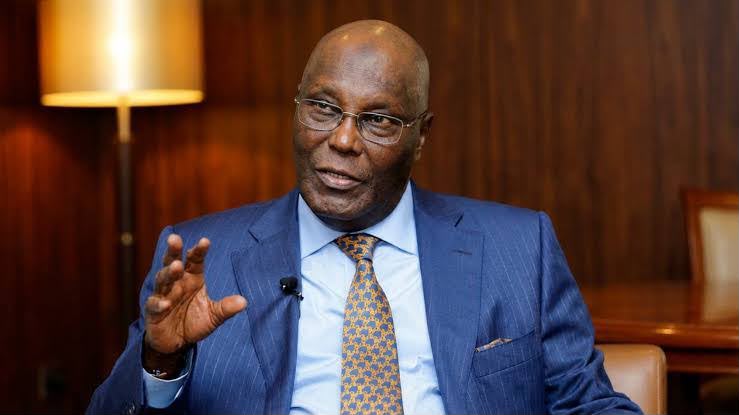
Former Vice President Atiku Abubakar has criticised the Tinubu administration over the alleged allocation of ₦8.05 billion for mosque- and church-related projects in the proposed 2026 budget, describing the expenditure as inappropriate at a time when millions of Nigerians are struggling with poverty.
In a statement issued by his Senior Special Assistant on Public Communication, Phrank Shaibu, Atiku said public funds should be managed transparently and questioned the rationale behind the allocations.
Citing an analysis by public accountability organisation Tracka, he said about ₦6.14 billion was earmarked for mosque-related projects, while ₦1.91 billion was allocated to church-related projects.
The African Democratic Congress (ADC) presidential candidate for the 2027 election said that although religion occupies an important place in society, it should not be used to shield public spending from scrutiny.
According to him, many of the budget provisions do not clearly identify the beneficiary churches, mosques or project locations, making independent verification difficult.
“Under Nigerian law, religious bodies generally operate as Incorporated Trustees with distinct legal identities. If public funds are appropriated for projects involving such bodies, Nigerians have a right to know exactly which churches, which mosques and in which communities those projects will be executed,” he said.
Atiku challenged the Federal Government to publish the names of all beneficiary institutions, project locations, implementing agencies and the legal basis for the allocations if the projects are legitimate.
He warned that failure to provide such details could strengthen public perceptions that religion was being used to conceal questionable public spending.
“The Tinubu administration has no moral or legal licence to hide behind the altar, the minbar or the sacred robes of our priests and imams to mask questionable appropriations. If these projects are genuine, publish the names of every beneficiary institution, disclose every project location and execute every project in full public view,” he said.
Reacting to the controversy, David Etim, Project Lead of Calabar and Gulf of Guinea Municipal and Trade Centre Ltd/Gte, described the allocations as a misplaced priority.
He argued that limited public resources should be directed toward critical sectors such as education and healthcare rather than religious projects, saying investments in schools and hospitals would have a greater impact on the lives of Nigerians.
“With millions of Nigerians living in multidimensional poverty, government resources should be used to improve education, healthcare and other essential services. Funding schools and hospitals would benefit far more people than financing churches or mosques,” he said.
Also commenting, the Alliance for Economic Research and Ethics (AERE) Ltd/Gte urged Nigerians to focus on broader fiscal challenges rather than the religious allocations alone.
In a statement, the group acknowledged reports that ₦6.14 billion had been allocated for 52 mosque projects and ₦1.91 billion for seven church projects but noted that the total represented just 0.0118 per cent of the proposed ₦68.32 trillion 2026 budget.
According to the organisation, Nigeria’s growing fiscal deficit and rising debt burden pose a far greater threat to the economy.
AERE said the Federal Government plans to finance about 46.1 per cent of the proposed budget through borrowing because projected revenues are insufficient to meet expenditure.
The group also expressed concern over the ₦15.8 trillion earmarked for debt servicing, noting that it accounts for about 23 per cent of total spending and roughly 43 per cent of projected government revenue.
It further questioned why religious projects were included in the budgets of ministries whose mandates are unrelated to such activities, including the Ministries of Agriculture, Labour, and Marine and Blue Economy.
The organisation called for stronger fiscal discipline, improved revenue generation and greater transparency in public spending, stressing that long-term economic stability depends on addressing structural weaknesses in Nigeria’s public finances rather than focusing solely on relatively small budget allocations.